Cookies

Showing posts with label Off-Broadway. Show all posts

Sunday, March 03, 2024

Bliss Street Releases Cast Album


Bliss Street cast


While theater is an art form with a shelf life — sometimes a show outlives its closing. Such is the story with Bliss Street, an Off-Broadway show at Theater for the New City that played from April 27 to May 14, 2023, which just released its cast recording last week. The production looked at the New York 70’s rock and roll scene and celebrated Paul Sub’s Coventry, a 5,000 square-foot music venue once located on Bliss Street in Queens, and hosted such bands as Kiss, The Ramones, Blondie and the New York Dolls.


Using Abra Bigham’s book based on Rich Brotman and Charlie Sub's concept, the show interwove Paul’s club experience with his son Charlie’s, who grew up immersed within the music scene. Charlie also wrote the words and lyrics for Bliss Street. The original show included virtual scenery by Carlos Almonte of MotionBlur, offering the audience a glimpse of how Charlie remembered that world.

His band, Charlie Sub & Sound Dogs, is featured on the album, “Bliss Street: The New Era.” The release offers songs from the show that embrace the vibe of glam rock, mixing it with a contemporary feel.

Bliss Street show at Ethyl's

The raucous music is feisty and fun but sometimes the beat seems stronger than the lyrics like in the number, “Built This House.” Still, there is much here to enjoy, such as “Coventry Tonight” with its simple piano intro and sweet duet recalling the venue’s significance.

Besides the album, Charlie keeps Bliss Street alive at Ethyl’s, his venue in Manhattan, which hosts a monthly show featuring Bliss Street music. You can hear the music of Bliss Street on the official YouTube channel.


Thursday, January 19, 2023

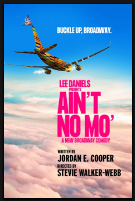
Ain't No Mo'

It was sad to see Ain't No Mo' come and go so quickly, but was Broadway the right place for it?

I get the attraction of Broadway. It's the place. But was there ever a chance that Ain't No Mo' would be profitable? 


Of course, that may not have been the point. Even a brief run on Broadway puts a play into a special category, and it probably improves the likelihood of other productions all over the country. Also, the chance for a Tony Award or two is certainly attractive.

But: wouldn't Ain't No Mo' fit Off-Broadway better? Might it still be running? 

Off-Broadway has two solid advantages: intimate space and cheaper tickets. I would personally be thrilled if most theatre occurred in small venues. For example, Merrily We Roll Along felt exactly right at NYTW, just as Kimberly Akimbo fit perfectly at the Atlantic. But with their fairly large casts, plus musicians, they need Broadway-size audiences to pay the bills. But Ain't No Mo', with its small cast, would be perfect for Off-Broadway. As would many other shows!

Wendy Caster

Friday, August 28, 2015

Looking Forward: The 2015/2016 Season

The 2015/2016 theater season has already begun, with the much lauded Broadway premiere of Hamilton (and the less-lauded debut of Amazing Grace) and the first new shows of the Off-Broadway season -- Annie Baker's highly acclaimed John, which Wendy and I both greatly admired, for instance -- cropping up. However, like kids going back to school, we often associate a theater season with a calendar that starts in September and ends in June, with the Tony Awards. And looking ahead, this promises to be a busy and interesting year on the Great White Way and beyond. A particularly busy fall season -- by my count, nineteen plays and revivals opening or beginning previews on Broadway between September 1 and December 31 -- gives way to a spring that will host the likes of Audra McDonald, Jessica Lange, Ben Whishaw, Frank Langella, Sophie Okonedo, Brian Stokes Mitchell, and Saorsie Ronan, to name just a few. Off-Broadway remains as vibrant as ever, with world premieres from David Lindsay Abaire, Michael John Lachiusa, Naomi Wallace, Danai Gurira, and Nick Payne on the docket, and appearances by Lupita N'yongo, Kristine Nielson, Mario Cantone, Mamie Gummer, Sherie Rene Scott, Dame Harriet Walter, and Holland Taylor.


To the folks at Show Showdown, the impending arrival of a new theater season makes us giddy as kids at Christmas. We're happy to each offer a brief overview of what excites us the most from the crop of upcoming shows.

Sunday, February 22, 2015

The Winter's Tale

The Winter's Tale is my personal favorite of Shakespeare's plays. It's also one of the hardest to stage well. Neither comedy nor tragedy, it's classified (alongside Cymbeline and The Tempest) as a "romance," that tricky category that often places the most extreme elements of the other two genres side by side. How should a director, or dramaturge, or company handle the tonal switch from Leontes' bombastic dismissal of Hermione to the slapstick humor of Autolycus and the Clown? Do you set a consistent tone early so that the final scene--to my mind, some of the most beautiful writing in the Western canon--is equally devastating and joyful? And just how are you going to handle that old "exit, pursued by a bear" matter? Of the dozen or so productions of The Winter's Tale that I've seen, none has ever hit the sweet spot and gotten it just right.

photo: Richard Termine
I'm sorry to say that the current Off-Broadway revival, presented by The Pearl Theatre Company at The Peter Norton Space, does not buck this trend; in fact, this is one of the most disappointing productions of the underappreciated masterpiece that I've ever seen. Directed by Michael Sexton and featuring numerous members of The Pearl's resident acting company, it often feels like a woeful attempt at cleverness, or an MFA thesis project that went off the rails. Presented (as most of Shakespeare's plays today are) in a two-act structure, the scenes in Sicilia take place in the well-appointed dining room of a contemporary house. The actors more closely resemble the literature faculty of a second-tier liberal arts college than a royal court; Hermione's trial could easily pass for a particularly heated meeting of the tenure and promotion committee. Bohemia, on the other hand, is depicted as a hayseed and trailer-park paradise, where men in long beards wear their jorts with suspenders and the Natty Light flows freely. After the intermission, the actors begin to deconstruct the proceedings; I guess we wouldn't be able to understand what was going on otherwise? Nothing kills a classic faster than a director who thinks his concept is superior to the work to which it's supposedly in service.

The performances range from strong to competent to downright embarrassing. The guest artists easily overshadow the members of the Resident Acting Company. Peter Francis James makes a fine Leontes, and Steve Cuiffo finds the funny in Autolycus' writing without going overboard (a rarity). Imani Jade Powers, though green, makes a lovely and sincere Perdita. No other actors merit specific mention.

[8th row center, press ticket]

Wednesday, February 11, 2015

Rasheeda Speaking

The central question of Joel Drake Johnson's Rasheeda Speaking, currently in previews at the Signature Center, in a production by The New Group, can be summed up by an utterance one character makes halfway through the play: "Why can't black people and white people just get along?" The person doing the asking is Jaclyn (Tonya Pinkins), an African American receptionist in the office of a white Chicago surgeon, who's figured out that her boss (played by Darren Goldstein, who's very good) has enlisted her co-worker, Ileen (Dianne Wiest), to find a reason to let Jackie go. Hiring Jackie was a mistake, he says. She doesn't fit in. She makes the patients nervous. He already has a replacement in mind, a better fit: a white woman. The dog whistle rings loud and clear.
photo: Monique Carboni
Ileen, at first, is reluctant. She considers Jaclyn a friend (a notion that, with a gimlet eye, Jaclyn rebukes), but more piquantly, she doesn't want to see herself as complicit in a racially-motivated act. Jaclyn is wise to the situation long before anyone says or does anything overt. Pinkins and Wiest play well off of each other; they imbue their benign small-talk with just the right amount of barbed double-speak. Unfortunately, the writing is not always up to the level of the fine actors tasked with performing it. The office interactions between Jaclyn and Ileen are meant to build tension in their banality, and they occasionally do, but more often than not, they just seem dull. By the time the play really starts to cook, in the final twenty minutes or so, you're left to wonder if all that exposition was necessary for such a fleeting pay-off.

The production is helmed by the actress Cynthia Nixon, in her maiden voyage as a director, and I'm afraid that her relative inexperience does no favors to the deficits in the writing. There is nothing visually or stylistically interesting about the staging; Wiest and Pinkins spend most of the ninety minutes seated at their tall desks, which eclipse much of their body language. It's hard to give a complete performance with such an impediment. It's a testament to the talents of the cast--which also includes Patricia Conolly as an elderly patient who, in her brief scenes with Pinkins, does more to answer the play's central question than anyone else--that they are able to bring the nuance to their performances that's largely missing from the writing and the direction.

[Rear orchestra, TDF]

Monday, December 29, 2014

A Particle of Dread (Oedipus Variations)

Photo: Matthew Murphy
Sam Shepard came to prominence chronicling the battered and bruised families of the American West, so it should come as no surprise that he would set his sights on the most dysfunctional family in the history of theatre. His latest play, A Particle of Dread, is, as its subtitle suggests, a duel reimaging of Sophocles' trilogy, transported to two of Shepard's favorite locales: Ireland (by way of Thebes) and the contemporary Southwest. The former is a fairly straightforward retelling of Oedipus the King, albeit with strong brogues; the latter, a bloody true crime mini-epic that could be the love child of Breaking Bad and True Detective. The two narrative strands unspool through interlocking scenes, sometimes with accentual erasure, in order to keep the audience sharp to the dramatic parallels. And while the elements don't always come together harmoniously, the high-octane proceedings are never boring. Shepard's gift for tight, menacing language is sharp as ever, and the crack cast (which includes Tony winner Brid Brennan and, as the Oedipus figure, the great Stephen Rea) is, to a person, superb. A Particle of Dread concludes its run at the Pershing Square Signature Center on West 42nd Street this Sunday; it is brief, engrossing, and well-worth the effort.

[Sixth row center, TDF]

Wednesday, December 24, 2014

2014: A Year in Review

Rebecca Hall and Morgan Spector in Machinal.
Photo: Joan Marcus
2014 was, like most theatre-going years, a grab bag of exquisite highs, painful lows, and a wide, bland middle. But as Wendy and Liz have both so rightly noted in their end-of-year essays, one of the beauties of being an unpaid blogger is that we have the luxury to focus on that which we enjoyed the most. Those who read my reviews regularly probably wish I would heed that advice more often--since rejoining this site over the summer, I've noticed that my negative columns seem to outweigh the positive--but I believe that one of the functions of this site, other than highlights and promoting the productions I absolutely love, is to advise readers to steer away from (or, at least, proceed with caution towards) that which I feel isn't worth the time and expense. Before I shower with praise the productions that lifted my spirits and transported me in the way that only good theatre can, I'll briefly highlight the hours of 2014 I spent in theatres, wishing I was somewhere else.

Wednesday, December 03, 2014

Pocatello


photo: Jeremy Daniel
Since his brilliant debut play, A Bright New Boise, had its New York premiere in 2010, Samuel D. Hunter's output has been both prodigious and prolific. At 32, he's already picked up an Obie, a Lucille Lortel Award, and a MacArthur "Genius" Grant. He's been averaging 2-3 new plays a year, including The Whale, a problematic, fascinating look at obesity and isolation, and The Few, a strange and satisfying little play that recalled early Sam Shepard. Time and again, Hunter has chronicled life in his home state of Idaho with the same gimlet eye that August Wilson once brought to Pittsburgh. All of which makes the spectacular failure of his latest work, Pocatello, so nakedly glaring. Set in a failing Italian chain restaurant (you know the one, even though it's never named), this boring and formless attempt at dark comedy is staler than a day-old breadstick.

Friday, November 21, 2014

Lost Lake

Lost Lake is a brief, largely unsatisfying two-hander that only catches fire in its final moments. As the title suggests, both Hogan (John Hawkes) and Veronica (Tracie Thoms) are lost: she's a widowed mother whose professional life quickly unravels in light of a stupid mistake, and he's the wayward caretaker of a dilapidated, largely unrentable lake house in Upstate New York. Longing for idyll and escape for herself and two children, and suffering from a shortage of cash, Veronica agrees to take Hogan's place for a week; she's his only renter for the season. The first seventy-five minutes of this ninety-minute one act unfold banally, with Hogan and Veronica alternatingly arguing over repairs he promised but failed to deliver and disclosing their personal troubles. We learn why Veronica lost her job; why Hogan is estranged from his daughter and essentially homeless; we learn the ways in which they're more alike than might seem at first. Unfortunately, Auburn's writing hardly strikes sparks, and while Thoms and especially Hawkes (under Daniel Sullivan's direction) do fine work, a majority of the play remains uninvolving.

The play's final scene, however, is another story. In fifteen minutes, Auburn is able to capture the depths to which these two people have fallen, and how painfully alone they feel. It's striking in its profound darkness; the playwright rejects the redemptive sluice so fully, and that in itself feels gratifying. I cannot say that it's enough to recommend the play overall, though. Would that Auburn had written an entire work worthy of those fifteen minutes.
[Running time: 90 minutes, no intermission. Last row, extreme side. TDF.]

Thursday, October 30, 2014

Sticks and Bones

photo: Monique Carboni
 
I wasn't around forty-three years ago, when David Rabe's Sticks and Bones premiered at Joseph Papp's Public Theater, the second work in his trio of plays about Vietnam (the other two being The Basic Training of Pavlo Hummel and Streamers). It quickly moved to Broadway, where it earned the Tony for Best Play of 1972 over a boulevard comedy by the then-almighty Neil Simon. It ran six months and was adapted into a TV movie for CBS, a controversial move that resulted in over half of the country's affiliates refusing to air the film. No, I wasn't around when this play premiered, but I can imagine the impact it had, because the first New York revival (being presented by The New Group at the Signature Theatre complex on West 42nd Street) stick packs one hell of a wallop.

Saturday, September 27, 2014

While I Yet Live

photo: James Leynse
 
Billy Porter, the talented, Tony-winning star of Kinky Boots, makes his playwriting debut with the autobiographical drama While I Yet Live. The production, directed by Sheryl Kaller and presented by Primary Stages, is handsomely staged and generally well-acted, but the play--like several of its central characters--suffers from an identity crisis. Porter doesn't seem to have known what he wanted to write: is it a kitchen-sink family drama, a coming-of-age (and coming out) story, a meditation on faith and its effect on black lives, a record of hard-won personal growth? In the end, he tries to incorporate all of these elements into one play, and the result is lopsided.