Cookies

Saturday, May 25, 2019

Tony Predictions: 2019

Best Musical
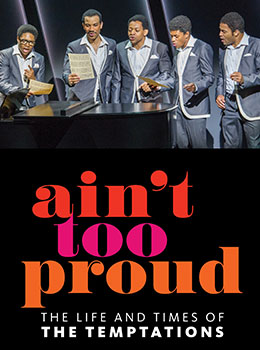
Ain’t Too Proud: The Life and Times of the Temptations
Beetlejuice
Hadestown
The Prom
Tootsie
  • Liz WollmanHadestown. Seriously, can we please celebrate a creative team that’s almost all women, along with an original book and score? I’m sure Tootsie’s great, but if we’re going to pretend the Tony’s honor the best of the genre, I’d love to see the award not go to another repurposed movie.
  • Sandra Mardenfield: Ditto. Even though Tootsie changed its movie scenario extensively, making it a better fit for the stage, Hadestown was the most original work.
  • Wendy Caster: I'm picking Hadestown not because I'm sure it'll win but because I loved it.


Best Play
Choir Boy
The Ferryman
Gary: A Sequel to Titus Andronicus
Ink
What the Constitution Means to Me
  • LW: This seems to be a race between Ferryman and Constitution, either one of which would be fine with me (and I suspect it will go to Ferrymanthough I admit to rooting for Constitution).
  • SM: I, too, think Ferryman will win, even though I prefer the underdog Constitution. Still, isn’t this what the Tony’s are about—finding new talent and rewarding it? I am hopeful.
  • WC: Okay, so I saw What the Constitution Means to Me and thought it was a nice little play that I was glad to have only paid $45 to see. I never expected it to get all the attention it's gotten, so what do I know? But I'm predicting Ferryman, just like Liz and Sandra.


Best Revival of a Musical
Kiss Me, Kate
Oklahoma!
  • LW: If this doesn’t go to Oklahoma! then civilization has ended, and that’s not an exaggeration at all.
  • SMKiss Me, Kate still feels antiquated despite the updates, and although I still love the music and all that tap, Oklahoma! should take it.
  • WC: Haven't seen Oklahoma!, but Kiss Me, Kate, was bland and unnecessary. Oklahoma! it is.


Best Revival of a Play
All My Sons
The Boys in the Band
Burn This
Torch Song
The Waverly Gallery
  • LW: I’m stumped, especially since I missed a bunch of these. I’ll be thrilled to see any of the contenders win, though I think I’d be extra-thrilled to see Boys win, so that’s my pick even though I’ll probably be wrong and it’ll more likely go to Waverley Gallery.
  • SM: I tend to think Liz is right with this one. Still, I’m going to cast my vote in the name of sentiment for All My Sons, the first play that made me cry in the theatre.
  • WC: I'm going with The Waverly Gallery.


Best Book of a Musical
Ain’t Too Proud: The Life and Times of the Temptations: Dominique Morisseau
Beetlejuice: Scott Brown and Anthony King
Hadestown: Anaïs Mitchell
The Prom: Bob Martin and Chad Beguelin
Tootsie: Robert Horn
  • LWHadestown, though I’d be happy to see Dominique Morisseau take a Tony home any day.
  • SM: I think Anais Mitchell for Hadestown will get it, but it could go to Robert Horn from Tootsie. Beetlejuice should have hired him to update their musical!
  • WC: While I loved Hadestown, I thought its book was its weak point. I'm going out on a limb with this one and predicting The Prom.


Best Original Score
Beetlejuice, music and lyrics: Eddie Perfect
Be More Chill, music and lyrics: Joe Iconis
Hadestown, music and lyrics: Anaïs Mitchell
The Prom, music by Matthew Sklar; lyrics by Chad Beguelin
Tootsie, music and lyrics: David Yazbek
To Kill a Mockingbird, music by Adam Guettel
  • LWHadestownhands (a long way) down.
  • SMHadestown. The musical was developed for years, and it shows with strong, emotional and impactful tunes.
  • WC: The gorgeous Hadestown.

Best Direction of a Play
Rupert Goold, Ink
Sam Mendes, The Ferryman
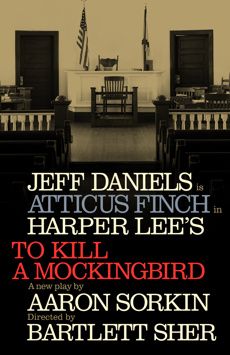
Bartlett Sher, To Kill a Mockingbird
Ivo van Hove, Network
George C. Wolfe, Gary: A Sequel to Titus Andronicus
  • LW: If for the baby- and animal-wrangling alone, I’m going to bet this will go to Sam Mendes for Ferryman
  • SM: I agree Sam Mendes for The Ferryman, but I also like George C. Wolfe for Gary: A Sequal to Titus Andronicus, who makes the grisliness of Shakespeare’s bloodiest play as campy and fun as its going to get.
  • WC: I agree: Sam Mendes.

Direction of a Musical
Rachel Chavkin, Hadestown
Scott Ellis, Tootsie
Daniel Fish, Oklahoma!
Des McAnuff, Ain’t Too Proud: The Life and Times of the Temptations
Casey Nicholaw, The Prom
  • LW: A tough one. Chavkin’s a genius with space and mood, but Fish has practically reinvented one of the most revered musical chestnuts without changing a word. I think Fish should get this one, but it’ll probably go to Chavkin (Hadestown).
  • SM: Can it be a tie? Both are deserving, but I go with Chavkin because of the structured beauty of each scene, for the overabundance of emotion in the vehicle, AND for her ability to make this downer of an ending uplifting and hopeful.
  • WC: I wish this would go to Chavkin, but I actually think Daniel Fish'll get it.

Best Leading Actor in a Play
Bryan Cranston, Network
Paddy Considine, The Ferryman
Jeff Daniels, To Kill a Mockingbird
Adam Driver, Burn This
Jeremy Pope, Choir Boy
  • LW: Cranston may get it because he’s easily the best thing about Network, though I’d love to see Pope get the award in a thrilling upset.
  • SM: I think Cranston for Network is the favorite here.
  • WC: This is a difficult one to predict, but I'm going with Adam Driver.


Best Leading Actress in a Play
Annette Bening, All My Sons
Laura Donnelly, The Ferryman
Elaine May, The Waverly Gallery
Janet McTeer, Bernhardt/Hamlet
Laurie Metcalf, Hillary and Clinton
Heidi Schreck, What the Constitution Means to Me
  • LW: Did you SEE Elaine May in Waverly? Because holy Moses the woman was just fucking extraordinary. If she doesn’t win, she sure as shit should have.
  • SM: Didn’t see Waverly, but I’m going with Heidi Schreck. The Tonys love a success story: from giving speeches about the Constitution to earn college tuition to opening a show about it on Broadway could be a plot to a new play next season.
  • WC: I'm still astonished that Glenda Jackson wasn't nominated, even though I didn't think she was all that good. I think it's Elaine May.


Best Leading Actor in a Musical
Brooks Ashmanskas, The Prom
Derrick Baskin, Ain’t Too Proud: The Life and Times of the Temptations
Alex Brightman, Beetlejuice
Damon Daunno, Oklahoma!
Santino Fontana, Tootsie
  • LW: I bet it’ll go to Fontana, but again, if there’s an upset and Daunno gets it, I wouldn’t throw anything at the television set or anything.
  • SM: Damon Daunno of Oklahoma or Santino Fontana from Tootsie—although, like Liz I think Fontana is the favorite.
  • WC: I agree: Santino Fontana


Best Leading Actress in a Musical
Stephanie J. Block, The Cher Show
Caitlin Kinnunen, The Prom
Beth Leavel, The Prom
Eva Noblezada, Hadestown
Kelli O’Hara, Kiss Me, Kate
  • LW: This is tough. Block and Leavel stand out most from where I sit—and I think Block is favored over Leavel, so I’ll bet it’ll be her.
  • SM: Definitely Block. She captured the legendary Cher perfectly.
  • WC: I agree: Stephanie Block.


Best Featured Actor in a Play
Bertie Carvel, Ink
Robin de Jesús, The Boys in the Band
Gideon Glick, To Kill a Mockingbird
Brandon Uranowitz, Burn This
Benjamin Walker, All My Sons
  • LW: I’d love to see Robin de Jesús win for “The Boys in the Band” though I haven’t seen a great many of the contenders and I suspect the dude nominated for Ink (Bertie Carvel) will get it instead.
  • SM: Ditto on Bertie Carvel for Ink.
  • WC: Although I was not impressed with Benjamin Walker personally, a lot of other people were.


Best Featured Actress in a Play
Fionnula Flanagan, The Ferryman
Celia Keenan-Bolger, To Kill a Mockingbird
Kristine Nielsen, Gary: A Sequel to Titus Andronicus
Julie White, Gary: A Sequel to Titus Andronicus
Ruth Wilson, King Lear
  • LW: Fionnula Flanagan was particularly memorable in The Ferryman, though I’d be happy to see any of these women win.
  • SM: Flanagan should get it or Celia Keenan-Bolger in To Kill a Mockingbird. She made a grown-up version of Scout believable and touching.
  • WC: I'm going with Ruth Wilson, who was the best thing in Lear.


Best Featured Actor in a Musical
André De Shields, Hadestown
Andy Grotelueschen, Tootsie
Patrick Page, Hadestown
Jeremy Pope, Ain’t Too Proud: The Life and Times of the Temptations
Ephraim Sykes, Ain’t Too Proud: The Life and Times of the Temptations
  • LW: C’mon, people, give André De Shields some love for this role and for a career as one of the hardest working men in show business, will you please? But if not, seriously, then Patrick Page, ditto. Then again, they’re all awesome and brilliant at what they do, so whatever.
  • SM: Love De Shields, but Patrick Page, and that deep voice from Hell should get it.
  • WC: I think it will be Andy Grotelueschen because he's the only one who won't be splitting the vote with someone else from his show.

Best Featured Actress in a Musical
Lilli Cooper, Tootsie
Amber Gray, Hadestown
Sarah Stiles, Tootsie
Ali Stroker, Oklahoma!
Mary Testa, Oklahoma!
  • LW: Don’t make me pick this one! Just give them all a prize for ending up in the most competitive competition in the whole goddamn Tony awards, maybe ever in all of history. Truly, choosing one feels like a betrayal to all the other astounding brilliance. But Ali Stroker, probably.
  • SM: Sorry Amber Gray from Hadestown. I truly loved your joyfulness and energy but it's Ali Stroker’s year.
  • WC: While I suspect Ali Stoker will indeed win, I cannot vote against Amber Gray, who strikes me as a great star in the making and whom I adored.

Best Scenic Design of a Play
Miriam Buether, To Kill a Mockingbird
Bunny Christie, Ink
Rob Howell, The Ferryman
Santo Loquasto, Gary: A Sequel to Titus Andronicus
Jan Versweyveld, Network
  • LW: I’m thinking it’ll go to The Ferrymanthough I haven’t seen Mockingbird.
  • SM: Rob Howell, The Ferryman
  • WCSanto Loquasto


Best Scenic Design of a Musical
Robert Brill and Peter Nigrini, Ain’t Too Proud: The Life and Times of the Temptations
Peter England, King Kong
Rachel Hauck, Hadestown
Laura Jellinek, Oklahoma!
David Korins, Beetlejuice
  • LW: For me it’s between Hadestown and Oklahoma! with a slight edge toward the latter.
  • SM: I gotta go with the monkey so Peter England from King Kong. Although Rachel Hauck of Hadestown is probably going to win
  • WC: Total guess: King Kong


Best Costume Design of a Play
Rob Howell, The Ferryman
Toni-Leslie James, Bernhardt/Hamlet
Clint Ramos, Torch Song
Ann Roth, To Kill a Mockingbird
Ann Roth, Gary: A Sequel to Titus Andronicus
  • LW: No clue. Ann Roth for one or the other? And will she be upset if she loses out to herself?
  • SM: I think  Ann Roth has the best odds …
  • WC:  Ann Roth for Gary


Best Costume Design of a Musical
Michael Krass, Hadestown
William Ivey Long, Tootsie
William Ivey Long, Beetlejuice
Bob Mackie, The Cher Show
Paul Tazewell, Ain’t Too Proud: The Life and Times of the Temptations
  • LW If Bob Mackie doesn't win, his life will be a total sham and we will all have to apologize to him, both collectively and personally.  
  • SM Bob Mackie all they way for The Cher Show.
  • WC: Who am I to argue:  Bob Mackie

Best Lighting Design of a Play
Neil Austin, Ink
Jules Fisher and Peggy Eisenhauer, Gary: A Sequel to Titus Andronicus
Peter Mumford, The Ferryman
Jennifer Tipton, To Kill a Mockingbird
Jan Versweyveld and Tal Yarden, Network
  • LW: Peter Mumford, The Ferryman
  • SM: Peter Mumford, The Ferryman
  • WC: Jan Versweyveld and Tal YardenNetwork


Best Lighting Design of a Musical
Kevin Adams, The Cher Show
Howell Binkley, Ain’t Too Proud: The Life and Times of the Temptations
Bradley King, Hadestown
Peter Mumford, King Kong
Kenneth Posner and Peter Nigrini, Beetlejuice
  • LW: I gasped aloud at a few moments during Hadestown, which is one of the most visually beautiful musicals I've ever seen. It should go to King.  
  • SM: It’s amazing how Bradley King changes the mood onstage with light adjustment in Hadestown.
  • WC: Kevin AdamsThe Cher Show


Best Sound Design in a Play
Adam Cork, Ink
Scott Lehrer, To Kill a Mockingbird
Fitz Patton, Choir Boy
Nick Powell, The Ferryman
Eric Sleichim, Network
  • LW I think the Ferryman will take this, if only for the slow sonic build at the end of the three-hour saga.  
  • SM: Fitz PattonChoir Boy.
  • WC: Eric SleichimNetwork

Best Sound Design in a Musical
Peter Hylenski, King Kong
Peter Hylenski, Beetlejuice
Steve Canyon Kennedy, Ain’t Too Proud: The Life and Times of the Temptations
Drew Levy, Oklahoma!
Nevin Steinberg and Jessica Paz, Hadestown
  • LW: I’m leaning toward Oklahoma!
  • SM: I think Nevin Steinberg and Jessica Paz for Hadestown.  
  • WC: Who knows? Ain’t Too Proud: The Life and Times of the Temptations

Best Choreography
Camille A. Brown, Choir Boy
Warren Carlyle, Kiss Me, Kate
Denis Jones, Tootsie
David Neumann, Hadestown
Sergio Trujillo, Ain’t Too Proud: The Life and Times of the Temptations
  • LW: I was delighted by Brown’s choreography for Choir Boy but suspect Tootsie.  
  • SM: Warren Carlyle for Kiss Me, Kate. The dancing is the best thing about the show—and he shows you why tap is still relevant as an art form.
  • WC: Sergio TrujilloAin’t Too Proud: The Life and Times of the Temptations


Best Orchestrations
Michael Chorney and Todd Sickafoose, Hadestown
Simon Hale, Tootsie
Larry Hochman, Kiss Me, Kate
Daniel Kluger, Oklahoma!
Harold Wheeler, Ain’t Too Proud: The Life and Times of the Temptations
  • LW: OMFG PLEASE PLEASE PLEASE LET THIS BE FOR OKLAHOMA!
  • SM: Liz seems so passionate with this one, so I’m gonna side with her. Oklahoma!
  • WC: Peer pressure! Oklahoma!

Wednesday, May 15, 2019

Pink Unicorn

Trisha Lee works as a cleaner in a hospital in Sparkton, Texas. She is a church-going Christian. She adored her late husband. The focus of her life is her 14-year-old daughter Jolene. Or is it Jo? And what does "gender fluid" mean? And will Trisha ever get used to calling Jolene, no, Jo, "they"?

Photo: JazelleArtistry

While Trisha is gob-smacked at Jo's announcement of gender fluidity, she responds totally from a place of love. Well, love mixed with confusion and fear. And when her pastor compares the LGBT community to Nazis, and the school system cancels all after-school activities rather than allow a Gay-Straight Alliance, Trisha finds herself turning into an activist, even while dragging her feet at every step.

Although playwright Elise Forier Edie, herself the parent of a trans child, occasionally leans toward "transgender 101" in Pink Unicorn, she also fills the play with love and compassion and knowledge and an important sense of the grays in which most people live, rather than the blacks and whites of the doctrinaire and the haters. 

Edie is most fortunate in having Amy E. Jones as her director and, particularly, Alice Ripley as Trish. Among other strengths, Jones utilizes the whole stage in Pink Unicorn, providing visual variety in this one-woman show while never having Trish's movements seem arbitrary. And Ripley imbues Trish with a deep humanity. One-person shows can be staid, but Ripley brings Pink Unicorn to life by reliving the story as she tells it to us.

Wendy Caster
(first row; press ticket)
Show-Score: 80

Saturday, May 11, 2019

Caroline, or Change

One of the themes of the gorgeous and heart-breaking Caroline, or Change, the story of an African-American maid working for a Jewish family in the 1960s South, is that "change come fast, change come slow, but change come." Caroline, written by Tony Kushner with music by Jeanine Tesori, premiered in 2003. Unfortunately, in 2019, in the superb production currently playing at APAC in Queens, another one of its themes is that change is still terribly needed.

Lauren Singerman, LaDonna Burns
Photo: Michael R. Dekker
Caroline's life is tediously difficult. She spends far too much of it cleaning and doing the Gellmans' laundry in a hot room in the hot South. She has four kids, and she would do anything for them--such as continuing to do the Gellmans' laundry in that purgatory of a laundry room. Larry, her oldest, is in Vietnam, "wherever that is." Her next oldest, Emmie, has a mind of her own, which terrifies Caroline but also makes her proud.

Noah, the 8-year-old son of the Gellman family, is always sad, but he is comforted by what he perceives as his friendship with Caroline. Noah's mother died a few years back, and his father married her best friend Rose. Noah's father is wraith-like nonpresence, and Noah hates Rose, mostly for not being his dead mother. But he adores Caroline despite her anger and unwillingness to be nice to him. Rose, whose good-heartedness is unfortunately dwarfed by her cluelessness, also tries to befriend Caroline.

Noah tends to leave change in his pockets when he puts his pants in the hamper. Rose decides to teach him a lesson, and to "help" Caroline, by telling Caroline to keep whatever money she finds. In Kushner's brilliant hands, this small, weird decision turns that awful laundry room into a crucible in which Caroline's heart and soul are tested.

Caroline combines theatrical magic realism (the washer and dryer are personified) with hard-hitting reality (Caroline's ex-husband being refused employment after the war because he's black; bills that can't be paid; buses that never come). It has humor and warmth amid the heartbreak, and its deep sadness is mitigated for the audience by its deep beauty. Tesori's thrilling score utilizes the sounds of Motown, spirituals, blues, Motown, and klezmer, with perfectly chosen quotes from well-known songs (e.g., "America, the Beautiful"). Kushner's book and lyrics work on many levels, with wit, compassion, and great humanity.


Caroline is not an easy show to do. It requires a first-class cast and a director with a sure hand. In the APAC production, it has both, along with a small but excellent band and solid production values.

The role of Caroline demands a tour de force performance that ranges from subtlety to raw power. LaDonna Burns' performance is frighteningly good. Even while keeping Caroline as closed-off and angry as she needs to be, Burns provides a three-dimensional portrait of a complex woman who is a hero with a horribly limited battlefield and no parades or medals. (To further attest to Burns' outstanding talent, she was an amazing Stella in APAC's Follies, funny and likeable.)

The rest of the cast is also top-notch, really as good as you could ask for. My only complaint was that a couple of people didn't project that well, but all in all it was an extreme pleasure to hear the casts' glorious voices unmiked.

Caroline is directed by Dev Bondarin, of whom I am a great fan. Bondarin goes to the heart of a show, understands it on all levels, and honors the work by presenting it in its best light. I saw Caroline, or Change both Off-Broadway and on, and thanks to Bondarin and everyone else involved, this production is every bit as amazing.

Wendy Caster
(first row, press ticket)
Show-Score: 98


Monday, April 29, 2019

Lady in the Dark

What an odd show is Lady in the Dark. Consisting largely of three dream sequences, it lacks forward propulsion and is frequently overdone and/or pointless and/or flabby, particularly in the first act. But it has some gorgeous songs, and the recent MasterVoices version had Victoria Clark in the lead role. She of course nailed the second act's two wonderful numbers, the energetic and funny "Saga of Jennie" and the wistful and lovely "My Ship."

Victoria Clark et al.
Photo: Richard Terminer

The plot, such as it is, is simple: Liza Elliott (Clark), editor of the fashion magazine Allure, is slowly unraveling and doesn't understand why. Her main symptom is her inability to decide between using "the Easter cover" or "the circus cover"; she has lost her certainty at work and in the world. Elliott lives with a married man and is glad of the limitations of the arrangement. She also goes on a few dates with a movie star. And then there is the advertising manager of the magazine, with whom she spars regularly and who seems to get who she really is. But she feels detached and at sea, so she goes into therapy, and her problems are solved in three sessions (if only!) via the dream sequences.

Ted Sperling who directed this Lady in the Dark and who runs MasterVoices, has spoken of wanting to do this show with Clark since they were teenagers. I'm glad for them that their dreams came true. However, the MasterVoices chorus was not well-served, particularly in the large and awkward City Center, where their 100-plus voices were lost amid the murky acoustics. (In contrast, in their most recent show, Night Songs and Love Waltzes, they could be heard loud and clear and were downright thrilling. But that was in Alice Tully Hall, whose acoustics are about a million percent better than City Center's.)

Sperling made at least a couple of other tactical blunders. One was having Clark sing "My Ship" sitting on the floor the stage. He has probably never sat in the balcony of City Center, but I have, so I know how mediocre the sight lines are up there. Even in theatres with good sight lines, many audience members will have trouble seeing someone sitting on the floor! It's a particularly questionable decision considering the importance of the song to the show. Another bad choice was having/allowing David Pittu to play a gay character in a wince-worthily fey performance that would have been cliché/offensive decades ago, let alone in 2019. (On All That Chat, sergius called his performance "gay minstrelsy," which sums it up perfectly.)

I enjoyed "Lady in the Dark" only intermittently. I'm not a huge fan of Ira Gershwin; I hated the choreography; I didn't like the costumes; and I thought the dream sequences were way too long. But many other people loved it, and I suspect this is a classic case of "to each her own."

I look forward to the next time I can actually hear the MasterVoices singers.

Wendy Caster
(1st row, grand tier, press ticket)
Show-Score: 70

Monday, April 22, 2019

King Lear

As you probably already know, in the old days theatre critics wrote their reviews right after seeing the performances. In fact, as the shows ended, the critics ran up the aisles to maximize their writing time before deadline.


If it were still the old days, and if I had written my review of King Lear right after seeing it, I would have given it an excellent review. I was caught up in the glow of a Saturday night performance in good seats watching a play I love starring many actors I deeply admire.

But time has passed, and the glow is gone. I have had time to realize that, yeah, the sound and fury did signify nothing. Glenda Jackson was great fun, but, really, Lear shouldn't be great fun. I respected and enjoyed her performance, but she didn't touch me. I thought that Ruth Wilson was quite good, while Elizabeth Marvel was not at her best (far from her best, really). The third sister, Aisling O'Sullivan, shrieked her way through the show; she was terrible, but I appreciated her commitment. (And, yeah, the three sisters all had different accents; consistency was not a characteristic of this production.) Jayne Houdyshell and John Douglas Thompson were excellent, as Jayne Houdyshell and John Douglas Thompson always are.

But what play was everybody in? Some seemed to be in Shakespeare's actual Lear; some seemed to be in a star-turn Lear; some seemed to be in a satire of Lear; and still others seemed to be in a college version directed by a young person with more imagination than skill.

This is not the first time I've seen such a distinguished cast end up in such a jambalaya of a classic. In fact, the criticism "they all seemed like they were in different shows" has become common in recent years, particularly when the cast is star-studded.

Way back when, in the days of affordable Broadway, before directors decided that their ideas are more important than the playwrights', classics weren't events. Instead, they were solid productions, true to the writing, with cast members all in the same time period and speaking the same language. Many of these productions lacked big stars, but they were excellent. I miss them.

Wendy Caster
(3rd row center; $159)
Show-Score: 70

The Pain of My Belligerence

My sister once said that, while the worst men are incredibly sleazy, the worst women are incredibly stupid. In the world premiere of The Pain of My Belligerence at Playwrights Horizons, writer Halley Feiffer spends 80 interminable, tedious, painful minutes demonstrating this point.

Feiffer, Linklater
Photo: Joan Marcus
The plot is simple: Cat, a needy woman, falls for an obnoxious, self-involved, asshole of a man named Guy who bites her, doesn't let her talk, and, oh, yeah, is married. They stay together for years. Time is marked--and faux significance is ham-handedly shoved into the show--by various elections, of course including that of Donald Trump. In her note in the program, Feiffer writes,
This play aims to explore the corrosive effects of the patriarchy on women and men alike—to examine the culture that has created the phenomenon of toxic masculinity and its insidious effects, and to start imagining ways we can break free...
Blah, blah, blah. Even the patriarchy deserves fairer representation than this boring, unpleasant play and the morons it depicts. Also, millions of humans have grown up in patriarchies but many still think for themselves, challenge themselves to grow, and take responsibility for their own behavior.

[spoiler]

In the third scene of The Pain of My Belligerence, Cat meets Guy's wife Yuki. She is a complicated, original character, and this scene is almost kinda sorta not terrible.

[end of spoiler]

Playwright Feiffer plays Cat; her acting is moderately better than her writing, but she lacks the sort of texture and subtlety that could make Cat bearable and/or sympathetic. Guy is played by Hamish Linklater, who is almost handsome enough to justify Cat's complete and voluntary subjugation to him. Yuki is beautifully played by Vanessa Kai, who brings way more class to the show than it deserves.

I have rarely hated a play as actively and deeply as I hated this one. The minutes nanometered along, and my desire to leave the theatre grew almost unbearable by the ninth hour of its ostensible 80 minutes. When it finally ended, I commented to my friend, "Of all the plays I've ever seen, this show would make the top 10 of shows I hated the most." She replied, "Top 5."

Wendy Caster
(third row on the aisle; press ticket)
Show-Score: 0

Wednesday, April 17, 2019

Hadestown

It's a sad song
It's a sad tale, it's a tragedy
It's a sad song
But we sing it anyway

'Cause here's the thing: 
To know how it ends 
And still begin to sing it again
As if it might turn out this time
I learned that from a friend of mine

See, Orpheus was a poor boy
But he had a gift to give: 
He could make you see how the world could be
In spite of the way that it is

Helen Maybanks
One of the many miracles of Hadestown, Anaïs Mitchell and Rachel Chavkin's strange, stunning folk opera at the Kerr, is the richly bittersweet way it manages to simultaneously lament and celebrate the endless repetitions that make up human lives. In so many ways, most all of them beautiful in execution, this haunting show teases out the endless redundancies and rituals that lead us from birth to death, pointing out along that way that cycles can be a drag, but also the source of joy and celebration. Life might seem futile in its repetitions, Hadestown implies, but so long as there's the potential for beauty, love and ritual, it isn't a waste.

Wednesday, April 10, 2019

Bathsheba's Psalms Or, a Woman of Unusual Beauty Taking a Bath

Tanyamaria. Background - Elizabeth Kenny, Marisela Grajeda Gonzalez, C. Bain.
Photo credit: Jody Christopherson


A fresh take on the Old Testament’s tale of King David and Bathsheba, April Ranger’s play, in its world premiere at The Tank, uses vulgarity and contemporary touchstones to create an occasionally provocative discussion on sex and power politics.

The play updates the traditional story of how King David, who already had several wives, spies Bathesheba bathing as he walks along his palace roof and decides he must bed her. The married beauty reluctantly engages in a tryst, and David purposely sends her soldier husband to the frontlines where he perishes. In the biblical version, David eventually shows remorse for his deeds, and accepts his punishment. The story represents God’s forgiveness and the possibility for redemption.

In Ranger’s version, no redemption is possible. David embraces his lascivious ways until the end of his life and no character ever moves forward. Bathesheba is never more than a pawn trapped in a culture where power, privilege and masculinity rule. Despite giving her story centerstage as actors quote from the imaginary “Bathsheba’s Psalms” and “The Book of Beauty,” Ranger’s take only reinforces the reality of life’s unfairness for women, offering little new perspective. Still, she allows us to see the familiar trope in all its ugliness. When messengers come to bring Bathsheba to King David, one states: “Come to the palace so the king can hold your breasts and ass and smell you and fuck you.” The strong language jostles the audience, plunging them into Bathesheba’s hardship: a moral dilemma with no real choice, but acquiescence. The harshness would work better if the play employed less cursing though. The show uses salty language so consistently that it eventually becomes ineffectual.

Bathesheba faces her situation with grace and humor—elaborately running away although she knows there is no escape. Despite her lack of options, she still must endure the judgment of society. When Bathesheba visits a pharmacy to obtain the morning-after pill after the king impregnates her, the clerk mocks her, saying, “We’re a Christian nation now. No more murdered babies on our hands.”

The hypocrisy exposed by the situation is unfortunately not unfamiliar and while Ranger updates the story with pop-culture nods to movies such as "Top Gun" and video games, she never moves the topic beyond simply acknowledging that time and modernity have not remedied the inequity of power.

Bathesheba, played by Tanyamari, embraces a graceful outlook on what life offers her—something the actress, who seemingly glows from within, conveys. Instead, Bathesheba finds beauty in the sunrise. Production designer Itohan Edoloyi casts lovely lighting across the sparse stage during these moments, allowing the audience to see the potential of the brand new day even as Bathesheba’s reality closes around her. The future mother of King Solomon has an overt sexuality that mingles with her dignity. She is sexy and she knows it, but that trait doesn’t define her as a woman, even if it’s how society labels her.

Christina Roussos’ direction introduces whimsy into the story, with missives dropping from the ceiling and a child’s playroom box of costumes on stage. Actors use the accessories to suggest characters, grabbing the crown to play David and a vest to become Uriah, Bathesheba’s husband. Rousso uses just four actors, a Greek chorus of sorts, that play all of the secondary characters, mixing and matching personas and genders. Some do better than others. While Marisela Grajeda Gonzalez flubbed too many words, C Bain consistently recites lines with fluidity and emotion.

“Bathesheba” ends April 21. The Tank is at 312 W. 36th St.

(Press ticket, third row).


Wednesday, April 03, 2019

The Cradle Will Rock

Marc Blitzstein's 1937 "play in music," The Cradle Will Rock, uses theatre as a political soapbox. Its scathing depictions of the hypocrisies of capitalism, religion, and other societal icons remain painfully apt today, and there is no doubt that it is an important work. It is also dull.

Lara Pulver
Photo: Joan Marcus
John Doyle's direction uses cutesy devices to try to liven up the evening, but he can't fight the reality that 90 minutes of in-your-face lecturing set to nonmelodious music is a slog.

It doesn't help that Ann Hould-Ward's costumes, with all of the performers wearing blue and gray work clothes, add a layer of monotony to the proceedings and remove the physical cues that help to distinguish not only character from character but also class from class.

The cast--Ken Barnett, Eddie Cooper, Benjamin Eakeley, David Garrison, Ian Lowe, Kara Mikula, Lara Pulver, Sally Ann Triplett, Rema Webb, and Tony Yazbeck--is excellent. It is a treat to hear their beautiful unmiked voices.

But a lecture is a lecture, and the evening simply doesn't work for me. (However, the show received an enthusiastic standing ovation the night I saw it.)

Wendy Caster
(2nd row, audience right, press ticket)
Show-Score: 70

Sunday, March 31, 2019

The White Devil


John Webster wrote The White Devil in the early 1600s, and 400 years later it remains relevant and great fun. Red Bull director Louisa Proske underlines the play's timeliness with a modern-dress production, complete with cell phones and Skype. The plot is as confusing as an episode of Game of Thrones and not dissimilar in mood: unnoble noblemen jockey for power, married person A wants to sleep with married person B, person C is a murderer but charming, the powerful use the powerless, everyone has secrets, hypocrisy reigns, blood is spilled. The largely well-acted production moves along swiftly, and I suspect that Webster would be most pleased.

Wendy Caster
(2nd row, audience right, press ticket)
Show-Score: 85

Wednesday, March 20, 2019

MasterVoices: Night Songs And Love Waltzes

MasterVoices (formerly known as the Collegiate Chorale) has a long history of presenting wonderful evenings of song and theatre, and Night Songs and Love Waltzes fit right in. (There's also every reason to believe that MasterVoices' presentation of Lady in the Dark, starring Victoria Clark, will also be wonderful. For more info, click here.)

Night Songs and Love Waltzes was the work of many people, and they all deserve shout-outs.

Ted Sperling. The artistic director and conductor, Sperling loves his work and shares that love generously. And his taste and conducting are superb. When I see his name, I relax in the knowledge that I'm going to have a good time.


Ted Sperling

MasterVoices Singers. I love big groups of people singing, and MasterVoices' 120 singers sound glorious together. It's a thrill whenever they sing.

The Soloists. Nicole Cabell (soprano), Kate Aldrich (mezzo-soprano), Nicholas Phan (tenor), and Nmon Ford (baritone) acquitted themselves nicely throughout. 

Stephen Sondheim. He's Stephen Sondheim, y'know? And his music for A Little Night Music is some of the most luscious in his brilliant and insanely rich oeuvre. Ted Sperling made an arrangement of those Night Music songs originated by its quintet/chorus--including a song that didn't make it to the finished show--and the result is sheer pleasure.

Ricky Ian Gordon. Gordon's music is often stunning, and his Life is Love, a song cycle to poems of Langston Hughes, is beautiful.

Anderson & RoeGreg Anderson and Elizabeth Joy Roe play piano(s) with proficiency, brilliance, energy, humor, and a touch of insanity. They are fabulous musicians and incredible showpeople.

Anderson (right) & Roe

Brahms, Mendelssohn, Schumann (Clara and Robert), and Schubert. At the risk of revealing my middle-brow-ness, I appreciated rather than loved their pieces. In truth, I was counting the minutes until the work of Sondheim, Gordon, or Anderson & Roe.

The Musicians. When I initially saw cellists Peter Sachon and Mairi Dorman and the horn quartet led by Zohar Schondorf, I thought they made up an odd combination of instruments. Sperling, of course, knows better than I, and the band was terrific and just right.

Alice Tully.  Alice Tully, who died in her early 90s in the early '90s, was originally a singer but ended up focusing on philanthropy once she inherited her family's significant fortune. She pretty much paid for Alice Tully Hall, where Night Songs and Love Waltzes was performed, but she only allowed it to be named after her once she made sure it was up to her standards in acoustics and leg room. The result is a perfect venue in which to hear music, and it is much warmer in mood than its larger siblings in Lincoln Center.

All in all, Night Songs and Love Waltzes soared.

Wendy Caster
(mid-orchestra center)

Wednesday, March 13, 2019

If Pretty Hurts Ugly Must Be a Muhfucka

First, behold the title: If Pretty Hurts Ugly Must Be a Muhfucka, sparkling with energy. Next, the structure: playwright Tori Sampson's dynamic, emotional play riffs on folklore, African music and dance, pop culture, teen competitiveness, overparenting, and African and Western ideas of beauty and its value, with a nod to Beyoncé (but, of course). While parts of it are familiar to anyone who has ever worried about her looks, the play is also something new, in turns thrilling, touching, and funny. This show is Sampson's New York professional debut, but we will hear from her again. (And again, and again, I hope.)


Níkẹ Uche Kadri, Leland Fowler
Photo: Joan Marcus
The story is simple. Seventeen-year-old Akim is held by popular opinion to be the prettiest girl in Affreakah-Amirrorikah. Her father is insanely protective of her. She has few friends. When she manages to gain a sliver of freedom she discovers that sexy, confident Kasim has a crush on her--and she is ready and eager to crush right back. Just one problem: Kasim is held by popular opinion (not including his) to "belong" to Massassi. Massassi and her friends Adama and Kaya "befriend" Akim in an attempt to get Kasim back for Massassi. 

The presentation is not simple: It is narrated by Akim's cell phone (humanized as a charming, silly young man wearing bejeweled specs). Magic plays a big role. And a truly wonderful, exciting dance (choreography by Raja Feather Kelly) makes the afterlife seem extremely attractive and a great deal of fun. [spoiler] Everyone in the afterlife wears the same plain mask, freeing them all from the tyranny of looks and looksism. [end of spoiler]


Maechi Aharanwa, Phumzile Sitole (behind Maechi),
Jason Bowen, Níkẹ Uche Kadri,
Rotimi Agbabiaka, Leland Fowler
Photo: Joan Marcus

For all of Sampson's playfulness and creativity, her sense of the cost of beauty and the lack thereof is deadly serious. Akim's father is a possessive idiot, but he is also correct about the dangers threatening his daughter (although his possessiveness actually makes her more vulnerable rather than less). Each of the teenaged girls knows exactly her worth on the awful, artificial, yet painfully real scale of perceived attractiveness. And the sheer exhaustion of being a young female is vividly etched throughout.

If Pretty Hurts Ugly Must Be a Muhfucka brought to mind the often mis-quoted line "money is the root of all evil." The actual quote, as found in the King James Bible, is "the love of money is the root of all evil." Similarly, neither "pretty" nor "ugly" needs to hurt. It is the exaltation of beauty--good-looking people making more money, being more popular, being perceived as better people--that causes the pain, particularly to the nonbeautiful. 


***

In all the discussions of parity in theatre, with percentages of women and people of color getting work, etc., the emphasis tends to be on giving talented people a fair chance. What is also important is giving audiences new voices, different points of view, new forms of art. As an old-ish white woman who has seen thousands of shows, I am thrilled to be challenged and entertained and broadened by writers such as Sampson and directors such as Leah C. Gardiner and performers such as Rotimi Agbabiaka, Maechi Aharanwa, Jason Bowen, Antoinette Crowe-Legacy, Leland Fowler, Níkẹ Uche Kadri, Mirirai Sithole, Phumzile Sitole, and Carla R. Stewart, all of whom contribute mightily to the many strengths of If Pretty Hurts Ugly Must Be a Muhfucka. We all benefit when more and different people are heard.

Wendy Caster
(8th row orchestra; press ticket)
Show-Score: 90

Boesman and Lena

It often occurs to me, especially lately, just how much the trajectory of any life comes down to dumb luck. Sure, people can work hard to change their lot in life, or screw up enough to piss everything away, but ultimately, it's a dizzyingly random combination of birthright, time, place, and culture that results in the access--or lack thereof--to food, water, education, safety from persecution, or parents who will buy your entry into Yale. The three characters in Boesman and Lena, Athol Fugard's 1969 masterwork currently running in a truly humbling revival at Signature Theater, are utterly devoid of luck, dumb or otherwise. Written in response to South Africa's apartheid laws, the play has only become more powerful and sad since apartheid ended. There's just so much need in the world.

Joan Marcus
Living in a place and time that has hierarchized its citizens according to how they look and to whom they've been born, the title characters have in many respects not only numbly accepted but also thoroughly internalized the sick logic that has conscripted their unrelentingly difficult lives. Boesman (Sahr Ngaujah, typically excellent) is brittle and angry and hard, and he regularly takes his powerlessness and frustrations out by beating his partner, Lena (Zainab Jah, remarkable). Lena's trauma manifests itself less violently than Boesman's, but it roils nonetheless: in early monologues, she takes careful count of her bruises and lists all the places she and Boesman have been forced from as a means of reminding herself of her own existence and remaining sanity. Both characters have to work awfully hard not to sink into despair, to give up, to destroy themselves or one another. When an old African man in his death throes (Thomas Silcott) arrives at their campsite, the tension between the couple spikes ever higher. 
  
This is a deeply unsettling and moving piece of immersive theater that's not easy to sit through and that you should nevertheless try your damnedest to see. I haven't stopped thinking about how painful and dignified it is, how beautifully performed, how shattering. At curtain call of the performance I saw, an old man in the front row stood and repeatedly thanked the actors, who didn't break character as they stood for applause. I was too stunned to chant along with him, but he spoke for me just the same. 

Monday, March 11, 2019

Operating Systems

I've had a challenging and satisfying few hours chewing on the ideas and questions posed by Gus Schulenburg's new play Operating Systems, which I saw this afternoon. The description of the piece on the Flux Theatre Ensemble's web page includes this:
Operating Systems wrestles with how internalized oppression often makes us reinforce oppressive systems even as we work toward justice. In a tokenizing system that often positions oppressed peoples against each other, can the relationships at the heart of the play survive? Is it better to leverage the resources of these systems in service of justice, or to burn the whole thing down? 
These are fascinating and important questions that couldn't be more timely. (In fact, while walking to the theatre, my niece and I chatted about Alexandria Ocasio-Cortez, with my niece ready to have AOC "burn the whole thing down" and me hoping that AOC will work more within the system.)

Morgan McGuire, Lori Elizabeth Parquet
Photo: Justin Hoch
In Operating Systems, Code Breakers is a not-for-profit organization (with an emphasis on not, per its CEO Benita) that teaches code to high school girls of color. Originated by dot-com whiz Stephen (think Bill-Stephen-Gates-Jobs with a drinking problem), Code Breakers fights the good fight. But when alumn Bel returns there to teach, ugly secrets are revealed.

Friday, March 01, 2019

By the Way, Meet Vera Stark

What a difference a director makes.


When By the Way, Meet Vera Stark was done at the Second Stage, directed by Jo Bonney, it was hysterically funny, yet hard-hitting and even heart-breaking. (Review here.) In its current incarnation at the Signature Theatre, directed by Kamilah Forbes, it is obvious, overdone, and totally lacking in emotional texture. And the second act is tedious.

The New York Times make it a critics' pick. I have no idea why.

Wendy Caster
($35 ticket; second row center)

Wednesday, February 27, 2019

League of Professional Theatre Women

It's easy to discuss the lack of gender parity in theatre, but what can be done about it? The League of Professional Theatre Women exists to answer that question and to make things happen, through oral history interviews, Women Count reports, meetings, awards, and generally advocating for women in theatre.

The oral history interviews are open to the public when they happen and then available through the Theatre on Film and Tape Archive at the New York Public Library for the Performing Arts at Lincoln Center. (The League plans to make the interviews available via streaming.)


In the most recent instance, theatre journalist Elisabeth Vincentelli interviewed brilliant playwright Lynn Nottage. It was everything you could want in an interview. Vincentelli asked smart and brief questions, leaving plenty of space for Nottage's thoughtful, often fascinating, frequently funny answers. Nottage spoke at length about her process, including the astonishing fact that she works on a comedy and a serious drama at the same time. (She said that she turns to the comedies when she doesn't feel like crying.) She also spoke about her activism and her private life. I could have listened to her for hours.

Lynn Nottage
Photo: Ashley Garrett
The League has interviewed an amazing who's who of theatre women. Here is an edited list:
Jane Alexander, Elizabeth Ashley, Zoe Caldwell, Kitty Carlisle Hart, Marge Champion, Betty Comden, Betty Corwin, Jean Dalrymple, Tyne Daly, Carmen De Lavallade, Christine Ebersole, Madeline Gilford, Uta Hagen, Susan Hilferty, Judy Kaye, Linda Lavin, Baayork Lee, Rosetta LeNoire, Judith Light, Laura Linney,  Judith Malina, Elizabeth McCann, Frances McDormand, Julia Miles, Charlotte Moore, Donna Murphy, Bebe Neuwirth, Chita Rivera, Mary Rodgers, Ann Roth, Daryl Roth, Mercedes Ruehl, Carole Shelley, Frances Sternhagen, Elaine Stritch, Kathleen Turner, and Paula Vogel.
The next Oral History will take place on May 6th.

The League's Women Count reports focus on Off-Broadway and provide numerical proof of how far we have to go to achieve parity. Stage managers and costume designers are majority women. However, in no other category do women hit 50% and in far too many categories, they don't get anywhere near 50%. This is important information to have.

For those of us who wonder what we can do to support women in theatre, the League provides these useful ten steps:
TEN WAYS TO ADVOCATE FOR THEATRE WOMEN:
How can we, individually and collectively, use our personal and professional networks to advance the cause of visibility and opportunity for women in the theatre?
1.  Talk about plays you’ve enjoyed that are by and about women.
2.  Subscribe to a theatre company that produces work by women (such as the Women’s Project, Three Graces, New Georges. Google to find others.)
3.  Use your theatre-going dollars to support women artists. Join the Meet-up Group Works-by-Women.  Join other women at the theatre on a group rate discount to see professional work by women writers, directors, and designers. http://www.meetup.com/WorksbyWomen/
4. Advocate for Blind Submissions of playwrights’ work.  Most major orchestras conduct blind auditions. Why not choose plays for prizes, grants, even productions, without regard to gender? Spread the word.
5.  If called upon to subscribe to a theatre ask, “How many women will be directing/designing/writing/performing in plays for you this season?” Tell them you prefer to support theatres that are working toward gender parity.
6.  Subscribe to NYTE to support its pledge to give parity to women in its coverage of theatre work. (It’s free!)
7. Join the DGA Women’s Initiative, New York Coalition of Professional Women in the Arts & Media, the League of Professional Theatre Women’s Advocacy Committee or 50/50 in 2020.
8. When you receive a brochure from a theatre company, count the women artists listed. Call the theatre to praise or critique them based on how close they are to parity.
9. Talk about non-traditional casting i.e. Judith Ivey as the Stage Manager in Our Town. Kathleen Chalfant as Mrs. Scrooge, Cate Blanchett as Hamlet, Fiona Shaw as Lear and Viola Davis as Gloucester. Talk, blog  and use social networks to suggest plays you’d like to see in which a woman plays the lead, or in which women play the majority of the roles.
10. Amplify these actions by passing these tips to others.
For more information on the League and what they offer, click here.

Wendy Caster