Cookies

Sunday, March 03, 2013

Belleville

A woman carrying a yoga mat comes home, drops her coat on the floor, starts stretching. She is startled to hear a noise in the bedroom when she is ostensibly alone. Her fear turns to annoyance when she discovers her husband--who is supposed to be at work--jerking off to a porn video.

This is our introduction to the couple at the center of Amy Herzog's odd, unsatisfying, but never uninteresting play Belleville, currently at the New York Theatre Workshop. We will soon see that they are Americans living in Paris, where the husband has an important position at Médecins Sans Frontières.  More importantly, we will learn that they are unraveling both as a couple and as individuals.

Abby (Maria Dizzia) has decided to go off her meds, leaving her particularly vulnerable to anxiety when her sister in the United States experiences a complication in her pregnancy. Abby would like nothing better than to fly to her sister--and to be able to celebrate Christmas at home--but she daren't leave. Zack (Greg Keller) made a mistake with their visas, and she might not be allowed back into France. Zack is concerned about Abby's decision not to take her meds and struggles with demons of his own.

The other two characters are their landlord Alioune (Phillip James Brannon), a French-Sengalese man with a matter-of-fact view of the world, and his wife Amina (Pascale Armand), who is even more matter of fact. They work hard. They take care of business, which is exactly what Abby and Zach cannot do.

Belleville is largely successful as a light thriller. Herzog metes out information carefully, keeping the audience in creepy semi-darkness for much of the show and utilizing French dialogue to add to the mystery/confusion (for those who do not speak French, anyway). It is an effectively disturbing piece.

Herzog also seems to be dissecting the self-focused triviality of entitled Americans abroad. But Amy and Zach are hardly representative Americans--they are specifically damaged people at a specifically difficult point in their lives.

As a thriller, Belleville is entertaining, but no big deal. As a piece of social commentary, it is unfair and unconvincing. And as an examination of the unraveling of a particular couple, it suffers from us never seeing them in a genuinely loving moment. Either we have to take it on faith that they were once a good couple, which is hard to do, or we have to accept them as having always had major problems that are now coming to a head, in which case it's hard to care. Perhaps if Dizzia and Keller had more chemistry together, they could overcome this deficit, but they don't. Ultimately Belleville is about an icky couple who spend 100 minutes getting ickier.

Herzog's recent play, The Great God Pan, is a superb piece. Belleville, although disappointing, is still the work of a first-rate playwright. I look forward to Herzog's next play.

(press ticket, seventh row, center)


Friday, March 01, 2013

Katie Roche

Watching Teresa Deevy's engrossing 1936 drama Katie Roche made this contemporary woman extremely grateful to be a contemporary woman. Katie is a servant in a small town in Ireland in the 1930s. She works for a nice woman; she is not abused; but as an uneducated woman of indeterminate heritage, she has few options.

Patrick Fitzgerald, Wrenn Schmidt
Photo: Richard Termine

Then life unexpectedly presents her with a choice, between two men, each with definite pluses and even more definite minuses. Can she make the right decision? Is there a right decision? As a young woman, does she have the experience and perspective to choose correctly? As a strong, sometime impetuous woman, who wants to be good, even saintly, can she force herself to be the person she needs to be to survive? Is it fair that she must live with the fallout of her youthful (often trivial) mistakes for the rest of her life? (Absolutely not. And yet she must.)

When Katie marries Stanislaus, a much older man, she briefly thinks that she has freed herself from her life in service, but then she realizes that her husband expects her to have much the same role in their marriage. She banishes her sad astonishment, though, and tries to make the most of her situation.  Over the next few years, Katie bounces between angry rebellion and humbled regret. All she can do is react and respond and act out; what she cannot do is shape her life to her own needs and desires (in particular, her desire to do something or be someone wonderful). Stanislaus, meanwhile, has no trouble reconciling his image of himself as a nice man with his willingness to run Katie's life as though she were his puppet. He's not physically abusive, but he's sure that his choices for her are correct and that her opinions about her own life simply don't matter.

Deevy vividly depicts the hopes, dreams, and limits of each of her characters, with a sense of a time and place that makes you feel that you've visited their world. She is much helped in this achievement by Jonathan Bank's smooth direction, Vicki R. Davis' attractive sets, Nicole Pearce's evocative lighting, and Martha Hally's character-defining costumes.

Wrenn Schmidt is superb as Katie, all nerves and resolution, sure and confused, restrained and (mildly) wild, trying desperately to be a good girl--or at least to understand what that would entail. In a role full of big moments, she gives a marvelously subtle performance. Patrick Fitzgerald as Stanislaus makes some odd choices, and it takes about two and a half acts to figure out what he is trying to do. I think he means to present Stan as someone who feels that he must always be "nice," no matter his actual emotions, and I think he ultimately pulls it off. John O'Creagh stands out in his comfortable and instantly real performance in a small but important role.

The people at The Mint have made a commitment to rediscovering Teresa Deevy and sharing her with the rest of us, and we have much to thank them for.

(press ticket; third row on the aisle)

Thursday, February 28, 2013

The Revisionist

Jesse Eisenberg's new play, The Revisionist, seems to be a predictable exploration of familiar territory: Uneasy young man, complete with cache of weed, visits much older female relative. Add WWII memories, stir.

It is much to Eisenberg's credit, however, that The Revisionist has its surprises. Even better, it isn't an entry in the increasingly-tasteless worst-Holocaust-story-ever sweepstakes that stretches from Sophie's Choice to Red Dog Howls. (Even better than that, Eisenberg spares us a cutesy "old woman gets stoned" scene.) Instead, it is a thoughtful, sometimes funny, often moving, examination of the interactions and frictions between someone who doesn't know what he has and someone who knows exactly what she has lost.
Vanessa Redgrave, Jesse Eisenberg
Photo: Sandra Coudert

Nicely directed by Kip Fagan, and well-designed by John McDermott (set) and Jessica Pabst (costume), The Revisionist's strongest asset is its cast. Vanessa Redgrave as the old woman is excellent (duh--although her bangs and glasses make it frustratingly difficult to see her face). Eisenberg is even better as the young man. His discomfort in his own skin is vivid, as are his reluctance to give in to his better side and his ongoing sense of entitlement. (Dan Oreskes does well by a small supporting role).

Perhaps the biggest compliment I can give The Revisionist is that I keep wondering if the old woman should have done this or the young man should have done this--not if Eisenberg should have written them differently. And I'd love to know what happens next.

(press ticket, 7th row)

Monday, February 25, 2013

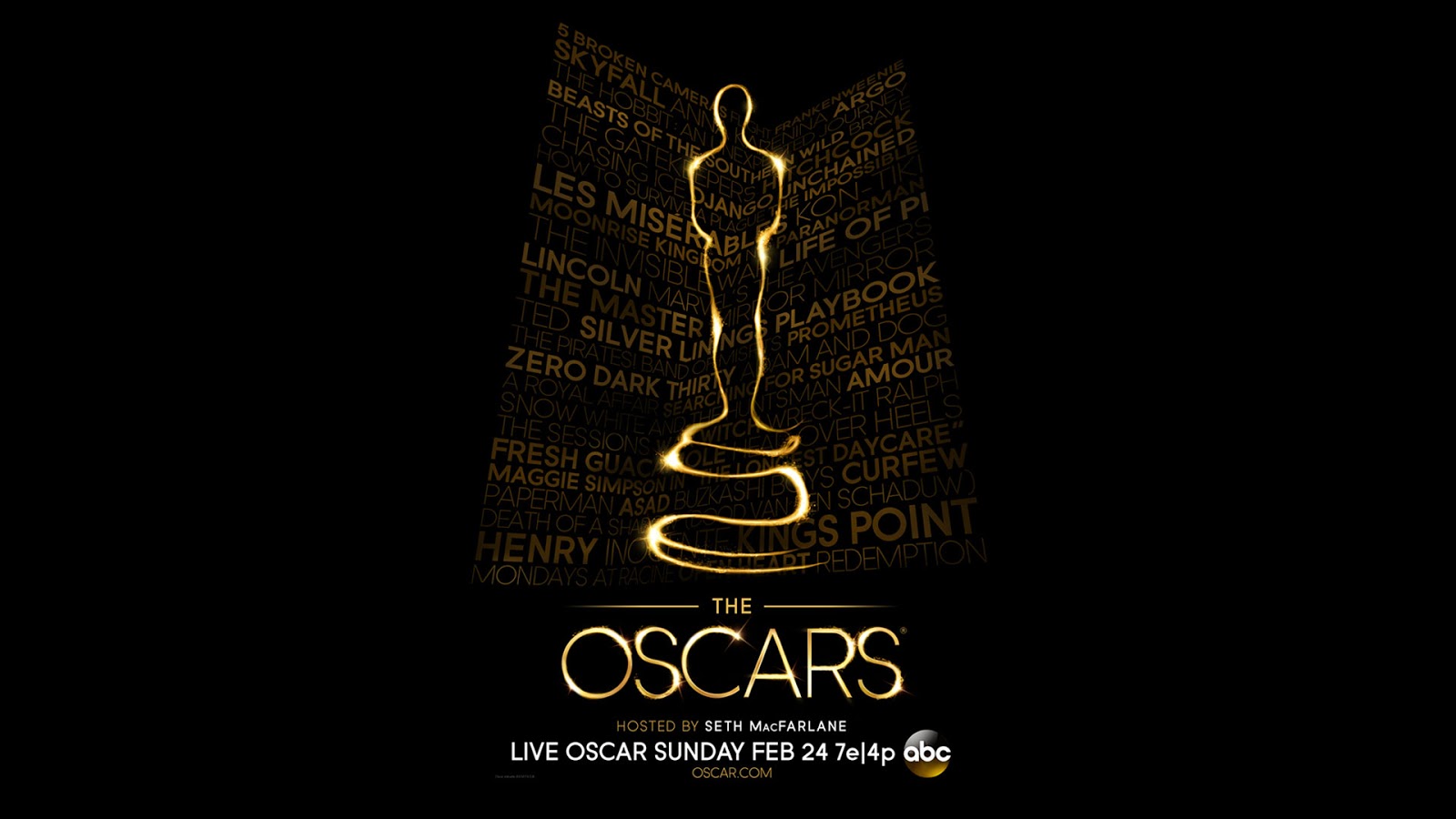
Things I Learned While Watching the 2013 Academy Awards


1) I have not set foot in a movie theater in a full calendar year, at least.

2) Nonetheless, missing the awards telecast was simply not a possibility.

3) Seth McFarlane is cute, charming, and all too often a walking justification for other peoples' casual racism, sexism, anti-Semitism, and/or homophobia.

4) Shirley Bassey is still alive.

5) Jack Nicholson no longer is, but his spirit roams the Earth in a deranged Merry Prankster sort of way, and he is only visible to living human beings once a year, on Oscar night.

6) Marvin Hamlisch is, apparently, the most important and revered dead person in Hollywood this year.

7) Men who work behind the scenes in Hollywood all have long, silky, Fabio-like hair.

8) The film version of Chicago is the most important, earth-shattering, significant movie musical ever made in the history of Hollywood.

9) Catherine Zeta-Jones lip syncs much better than she actually sings.

10) Catherine Zeta-Jones blinks her eyes on cue very well.

11) The Best Documentary award went to the most edgy, risky, political choice there was. Oh. Never mind.

12) Camera lenses are very interesting.

13) Dreams do come true, but they come true more often if  you are white, pretty, and raised by people with enormous wealth.

14) Channing Tatum and Jennifer Aniston are not going to appear in a movie that relies on romantic chemistry anytime soon.

15) A few people actually did see Life of Pi and, apparently, liked it very much.

16) Costume designers are the frumpiest, most poorly dressed people on the planet. I totally should have been a costume designer.

17) Quentin Tarantino is the reason the Earth spins on its axis, and everything he says is important, interesting, and not remotely irritating, ever.

18) Jew-baiting is cool if a dog puppet is the one doing it.

19) Russell Crowe really, truly cannot sing.

20) Anne Hathaway can, and also can do so with a smudged face and the presence of boogers, which is probably why she took home the award and had all her dreams come true.

21) I really do like Sally Field, and always will.

22) I can't WAIT for the Tony Awards.

Sunday, February 24, 2013

Old Hats

If you like Bill Irwin and David Shiner, you will like Old Hats. It has everything you could ask for: baggy pants, brilliant physical humor, sublime silliness, and the magical ability to walk down nonexistent stairs.

And if you like Nelly McKay, you will like Old Hats even more. Playing with the wonderful Alexi David on bass, Mike Dobson on percussion, Tivon Pennicott on sax and flute, and Kenneth Salters on drums, McKay makes the intervals between Irwin's and Shiner's routines into a bonus show--and a delightful one.

(full price ticket--$25 plus fees--first row)


Passion

John Doyle is where Sondheim musicals go to die. His Sweeney Todd, with its instrument-playing cast, fractured staging, and missing throat-slittings, wasn't Sweeney Todd, and his Company, with its instrument-playing cast, was cold, awkward and altogether too fond of characters marching around and around like target ducks in a shooting gallery. Now he has been given the opportunity to ruin Passion, and he has run with it.

[plot spoilers] Start with the cast. Judy Kuhn was theoretically an excellent choice--she was a brilliant Fosca in Washington, DC, in 2002 during the magical Sondheim celebration at the Kennedy Center. However, Doyle has directed her to a strong, sane, robust performance--three adjectives that absolutely do not describe Fosca. Ryan Silverman is a bland Georgio with a bland soap-opera-handsome face and a nice but bland voice. I can't imagine anyone waiting for him half an hour, let alone sacrificing her life for him. Melissa Errico is an equally bland Carla. (The one good thing about the miscasting and misdirection is that they ironically clarify Georgio's often puzzling choice of Fosca over Clara. This Fosca is more interesting and attractive in every way.)

Doyle's physical staging of Passion is flat-out annoying. For example, in perhaps the most significant scene in the show, when Fosca realizes that Georgio actually loves her, Fosca is placed so that an appreciable chunk of the audience cannot see her face. Granted, the CSC stage is a difficult one, but Doyle emphasizes the problematic sight lines as though he is taking the word "blocking" literally.

Another weird choice is to have men play two female roles ("Mother" and "Mistress"), denying the audience a variety of voice types and giving an important scene an unhelpful air of burlesque (and cheating an actress or two of a chance to work). If indeed it is necessary to keep the cast lean, why not have a woman/women play a man/men?

Oh, also: the costumes were unattractive and badly cut; the scenery was ugly and noisy.

I believe that, just as you shouldn't judge a book by its cover, you shouldn't judge a show by its poster. Now that I have seen Passion, however, I wish I had taken its tone-deaf, inappropriate poster as a warning. 


(CSC membership, seat B3, where I really should have been able to see more of what was going on! Preview.)