Cookies
Thursday, October 03, 2013
Mr. Burns, A Post-Electric Play
Anne Washburn's Mr. Burns, A Post-Electric Play is not warm or fuzzy or uplifting or heartbreaking. Its characters are not especially finely wrought or deeply nuanced, and do not Learn Something Important About Themselves Or Others by the curtain call. It is not propulsively plot-driven. Tidy exposition is never once slipped conveniently into the dialogue. The show is not really even about The Simpsons in the end--at least no more than, say, Gogol's "The Nose" is really about a nose.
Mr. Burns is mostly about how popular culture works, and the ways it flows, changes, and conforms--both immediately and in the long-term--to the changing needs of a changing populace. It is one of those dense, endlessly layered, brilliantly written pieces that commands your full attention and quietly blows your mind, even during passages when you don't fully understand what the hell is going on. And trust me, you won't always know what the hell is going on, because Washburn captures the way people talk--about pop culture, about themselves, about each other, about their world, about trauma and disaster--so exceptionally well that easy conveniences like exposition are sent packing. Which is as it should be, because when it comes to constructing and reconstructing cultural memory, being unable to fill in all of the gaps--or, sometimes, electing to fill the gaps with material that satisfies a collective need, even if it isn't as graceful or clear or accurate as it might be--is an enormous part of, if not the whole point.
What we do learn in the first act of the play, which is set "Near. Soon.": A random group of people have found one another after a series of nuclear disasters has wiped out most of the population of the country. As one would expect--since post-apocalyptic scenarios themselves are, after all, so deeply-rooted in American pop culture--supplies are dwindling; the power has failed; everyone carries guns and assumes the worst of strangers until convinced otherwise. The survivors don't have much to do but wait out the immediate future in the hopes that they will not die. Fighting off sorrow, dread and panic, they sit around a campfire and set about reconstructing as much of the "Cape Feare" episode from the fifth season of The Simpsons as they can. The act of linking themselves to a shared past, and thus to one another, is powerful balm for these mournful souls. Reconstructing a particularly beloved episode from an enormously popular show is certainly more pleasurable for them than the other activity they collectively engage in later in the scene, when a (friendly) stranger joins their group: taking turns listing the names and ages of their loved ones in hopes that the newcomer has seen or heard of them during his lonely, extensive wanderings. He hasn't. But he does have a really good memory, he performed in an amateur Gilbert and Sullivan troupe before disaster struck, and he knows some of the choicest lines from The Simpsons episode in question. And so, just like that, he becomes a member of the group.
This first scene is talky in the best sense of the term. Washburn's talent for dialogue is immediate and seductive. The scene also relies on spare, effective use of subtle movement: a furtive glance or the touch of a shoulder keys the audience in to the fact that two of the women in the group are deeply concerned about a sadder, more distant third. We learn little about these characters' bigger pictures--their pasts, their identities. One was married; one was from a very small town; one lived in the house the group is camping outside of. The gaps in their stories are--and remain--tantalizingly absent, but then, we don't share our lives with one another in times of crisis, now, do we? We worry after relative strangers, we dedicate ourselves to the issues at hand, we take care of what needs to be done, we help one another survive. And part of helping lies in working together toward the kind of comfort that camaraderie and shared memories provide.
The second act, set seven years later, has the same group--plus one new wanderer--frantically rehearsing what they've managed to reconstruct from the "Cape Feare" episode, complete with commercials. Again, we get only just enough backstory: the country is still a dangerous, semi-anarchical place; radiation sickness is still a cripplingly terrifying concern; a few of the characters seem to have paired off romantically; a few are less obviously traumatized than they were in act I. Accurate memories of popular culture before the disaster have become precious commodities that competing troupes will pay for and jealously guard. Clearly, it is not just this group of survivors that prioritizes collective memory; the greater community does, too. As it rebuilds itself, then, this futuristic society gamely looks to the future while burying itself in the cozy, fleeting comforts of the increasingly-distant past.
Yet as preciously guarded as they are, the carefully amassed cultural indicators of the past have nevertheless begun to transform, to fuse into one another, to start to mean different things. Little details that no longer matter have begun to get lost as the past grows more distant (does it really matter, anymore, to this group of survivors that The Simpsons premiered in the 1990s, and not the 1970s?). Other details not only refuse to die, but have become larger, more relevant, more precious. The commercial the troupe rehearses in this act neatly demonstrates all of this, especially as it becomes clear it is not being used to sell anything. The commercial, which features a woman eager to take a long, hot bath after a hard day in the office, initially seems to be for a Calgon-like product. But as it plays out, it not only goes on for much longer than any contemporary commercial does, it also devolves into a long, chatty list of creature comforts that Americans once held dear, and that are slowly trickling away: hot baths, chilled wine, cans of soda, ice cubes . . . and the whole complicated structure of commerce that came along with it all. Commodity fetishism has become a weirdly longed-for phantom limb.
The final act, set 75 years later, is a full performance of "Cape Feare," which has changed slowly, if dramatically, over the many years that have passed. Like most aging popular culture references, it has been subject to a generations-long game of telephone, and now resembles a Kabuki-tinged operetta-cum-morality play, shot through with a dizzying number of pop culture references that have been drawn liberally (and not always accurately) from the 19th, 20th, and early 21st centuries. Washburn's packed, referential "script" has departed from the original episode in telling ways: Sideshow Bob has slowly morphed into Mr. Burns. Bart is the sole survivor in his family's struggle against this personification of evil "nucular" power. The show is still enormously layered and referential, but it is no longer funny. As an added plus, it features musical numbers by Michael Friedman, who is easily the most meta theater composer working today. References to songs, expressions, and actions that just will not die--lines from HMS Pinafore, sports chants, the macarena, that damned Des'ree song--float through the air and, just as you place them in their original time and setting, pop like soap bubbles.
What makes this play, and its show-within-a-show (within a show), so satisfying, intelligent, and effective is how brilliantly it demonstrates the symbiotic and sometimes directly contradictory relationship a culture has--and, Washburn implies, always will have--to its popular entertainments. We change them, they change us. They comfort us, they challenge us. They isolate us, they bring us closer together. They generate nostalgia, they propel us forward. They take us out of our lives, they become central to our lives. In short, to quote what I think I remember Homer saying once, in an episode I saw a long time ago, Mr. Burns, A Post Electric Play is funny because it's true.
Wednesday, September 25, 2013
The Metamorphosis
Kafka's The Metamorphosis is, for all its terse language, sparse emotional display, and brevity, a tale with some pretty huge themes about family dynamics, the personal and professional world, the nature of routine, and the mind-soul-body connection. Its simple, even flat, prose and its curiously passive main character work to contradict the horror of its central plotline: a profoundly ordinary man who lives a life of deadening routine goes to sleep one night, has some bad dreams, and wakes up a huge bug who can understand but can no longer communicate with the people he comes into contact with. His horrified family locks him into his room, where he remains for most of his slow, sad demise. His sister and mother initially attempt to connect with him in their own ways, while his father, never close to him, spurns him, sometimes violently, and always with rage. Eventually, the entire family tires of him, and his only visitor becomes the family's new charwoman, who suffers no nonsense and barely cleans his increasingly filthy room. Aware of what a burden he has become, he dies, mournfully and alone.
When I read The Metamorphosis in college, I don't remember being able to get past the basic outrageousness of the tale: "Oo, dude's a bug. Gross. His family rejects him. Lame. He dies. Bummer." But now, having re-read it in middle age, I can only see it as a metaphor for serious, incapacitating illness, and its impact not only on the individual but on the extended family and the community. To say, then, that the tale feels realer, scarier, more haunting to me now than it did then is a vast understatement.
A stunning interpretation of The Metamorphosis is being performed at the Joyce through September 29, and if you get the chance--even if, like me, you're typically more confused than you are thrilled by dance--you should rush out to see it. The big picture is worth the price of admission, really: Edward Watson, who plays Gregor, is an astoundingly limber, flexible, intuitive dancer who was clearly born to perform this piece; the supporting cast is excellent, too. The choices the production has made--to update the piece to the 1950s; to imply more overtly than the book does that Gregor's transformation is, indeed, symbolic of some kind of grave illness; to make Grete a dancer instead of a violinist; to gradually cover the stage with oozing, brown muck; to suggest a slightly different (if still devastatingly sad) ending--are daring, but they all worked for me. So too did the strange and appropriate score, played entirely by the multi-instrumentalist Frank Moon, and the bits of humor that frequently lightened the piece (the three boarders were awesome, and the charwoman, hilarious in the book, transferred perfectly to the stage).
But for all the astoundingly limber bodies, the big sounds that emanated from Moon's one-man-band (set up off stage right, and often as fascinating as what was happening on stage), and the jerky movements Watson--an enormous man with a strange, believably insect-like physique--executed throughout the piece, I was moved most frequently by the subtlest of moments. Throughout the piece, various characters haltingly reach out to touch Gregor as a means to connect with him despite his transformation, or look sorrowfully at one another, or stare blankly at the television, the wall, one another. The sorrowful looks only intensify; the attempts to connect with Gregor dissolve into frustration, exhaustion, disgust. It is the touching of hands, and then the absence of such touching, that lingers with me, as does the haunted, sorrowful way that Gregor--bathed in muck, fully isolated, and tucked pitifully into an almost improbably tight fetal position--looks dully up at the light when the charwoman opens his window for him and lets in a little light just prior to his death. Such tiny moments serve as important, if endlessly haunting, reminder of how fragile human connections are, and how devastating their absence can be.
Tuesday, September 24, 2013
Shakespeare's Sister
In her sweet mash-up Shakespeare's Sister, director/adaptor Irina Brook serves the audience Virginia Woolf, Marguerite Duras, and actual soup.
As the audience enters, five women are already onstage, which is an attractive, fully equipped kitchen. They chop, they stir, they cook, they sing, they dance. And they talk and talk. The words are those of Woolf and Duras, and many are familiar.
In fact, there is a dated-ness to the piece, as though it were the 1970s instead of the 2010s. On the other hand, the content is unfortunately still timely, particularly to Brook, who herself balances the many quotidian and extraordinary responsibilities that are the lot of the female artist. And it is certainly true that most woman still lack a "room of one's own" (as do most men, really).
Beyond reminding us of the intricate pressures of being a woman--and the joys of being women together--it is hard to understand totally what Brook is trying to do here. The dances are fun, but it's not clear why they are there or what they signify. The sexual interlude is downright confusing: is it satire, is it self-expression, is it something else altogether? It feels as though Brook is trying for something deep and expressive, yet the results are more pleasant than hard-hitting.
The quintet of performers are Winsome Brown, Joan Juliet Buck, Nicole Ansari, Yibin Li (who also plays violin), and Sadie Jemmett (who also plays guitar and sings). In many ways, they don't coalesce as a whole--not in tone, talent, personalities, or technique. However, the heterogeneity is part of the charm of the piece. The inviting set design is by Noelle Ginefri.
It is possible that the constant pairing of Brook's name with that of her legendary father, director Peter Brook, does her a disservice, setting inappropriate expectations. I understand the publicity value of this connection, but it's an odd way to sell a piece that is so strongly about women.
(press ticket; 8th row on the aisle)
As the audience enters, five women are already onstage, which is an attractive, fully equipped kitchen. They chop, they stir, they cook, they sing, they dance. And they talk and talk. The words are those of Woolf and Duras, and many are familiar.
In fact, there is a dated-ness to the piece, as though it were the 1970s instead of the 2010s. On the other hand, the content is unfortunately still timely, particularly to Brook, who herself balances the many quotidian and extraordinary responsibilities that are the lot of the female artist. And it is certainly true that most woman still lack a "room of one's own" (as do most men, really).
Beyond reminding us of the intricate pressures of being a woman--and the joys of being women together--it is hard to understand totally what Brook is trying to do here. The dances are fun, but it's not clear why they are there or what they signify. The sexual interlude is downright confusing: is it satire, is it self-expression, is it something else altogether? It feels as though Brook is trying for something deep and expressive, yet the results are more pleasant than hard-hitting.
The quintet of performers are Winsome Brown, Joan Juliet Buck, Nicole Ansari, Yibin Li (who also plays violin), and Sadie Jemmett (who also plays guitar and sings). In many ways, they don't coalesce as a whole--not in tone, talent, personalities, or technique. However, the heterogeneity is part of the charm of the piece. The inviting set design is by Noelle Ginefri.
It is possible that the constant pairing of Brook's name with that of her legendary father, director Peter Brook, does her a disservice, setting inappropriate expectations. I understand the publicity value of this connection, but it's an odd way to sell a piece that is so strongly about women.
(press ticket; 8th row on the aisle)
Philip Goes Forth
George Kelly's Philip Goes Forth at the Mint is an uneven production of an uneven play that nevertheless entertains and satisfies. Written in 1931, Philip Goes Forth treads familiar ground with its story of a young man, the titular Philip, who chooses to become a playwright rather than go into his father's business, much to his father's dismay and anger. Philip ends up at a boardinghouse with the customary artists and eccentrics, each of whom represents a way of going for your dream: living it, faking it, failing at it, letting it go. Philip becomes friends with them, gets a day job, and works on his plays at night.
In some ways, Philip Goes Forth seems to be in the tradition of Holiday (1928), the movie version of Stage Door (1936), and You Can't Take It With You (1936), but it has a pragmatic underpinning that those lack. It is a tribute to working toward one's dreams, but only as long as one has the drive and the talent to achieve them. Where Holiday has the famous, "If he wants to come back and sell peanuts, Lord how I'll believe in those peanuts," Philip Goes Forth would
have, "If he wants to come back and sell peanuts, we'll have to see if
he's any good at selecting the best peanuts, setting up a stand, and
making it work."
Or, as the landlady says,
![]() |
| Rachel Moulton Photo: Rahav Segev |
Or, as the landlady says,
You know, there are millions of people all over the world that are spoiling their lives regretting that they didn't do something, or take up something, or keep on with something; when it's the blessing of God that the majority of them did just what they did; for they'd have only found out what you are finding out—that liking a thing, or talking a lot about it, is not an ability to do it.Ouch.
Sunday, September 15, 2013
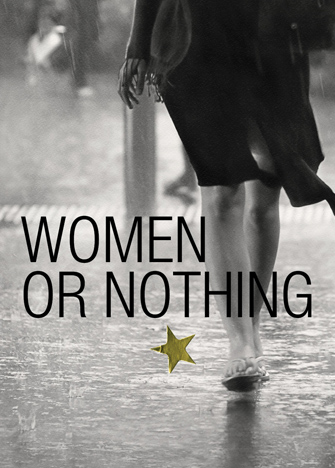
Women or Nothing
I went to see Ethan Coen's Women or Nothing with some misgivings due to its tagline: "Women or Nothing is a play about two women so desperate to have a child that one of them will even sleep with a man." Stories written by men about lesbians sleeping with men tend to be tedious and/or annoying and very much about the men, with the lesbians almost as props rather than people.
As it turns out, Women or Nothing is so bad and so pointless that for it to be annoying in that way would have been a step up.
Here are some of the problems with Women or Nothing--with spoilers, I suppose, but how can you spoil something that is no good to begin with?
As it turns out, Women or Nothing is so bad and so pointless that for it to be annoying in that way would have been a step up.
Here are some of the problems with Women or Nothing--with spoilers, I suppose, but how can you spoil something that is no good to begin with?
- The title makes no sense.
- The premise--that a woman, Gretchen, would push her partner, Laura, to sleep with her coworker Chuck because she mistrusts the genes that might come with anonymous sperm--is dumb.
- The many reasons that Gretchen gives Laura to get her to sleep with Chuck are unconvincing, pointless, and stupid.
- That Laura would succumb, when she doesn't want to sleep with Chuck and has never slept with a man, is ridiculous.
- Although we are supposed to believe that Gretchen and Laura are a much-in-love couple, there is nothing in the writing or acting to support this.
- The couple--Halley Feiffer as Gretchen and Susan Pourfar as Laura--have no chemistry, which further makes their relationship unconvincing.
- Chuck does not know that Laura is Gretchen's significant other or that Gretchen is gay. It seems unlikely to me that Gretchen would be closeted at work, but, okay, I'll accept that one.
- Laura does indeed have sex with Chuck, after telling him that she is a "gold star lesbian" (i.e., that she has never slept with a man).
- The all-important discussion between her telling them that and their ending up in bed is missing. Wouldn't he find it weird that she wanted to go to bed with him after knowing him 45 minutes or so? Wouldn't he find it strange to have sex with her in what he has been led to believe is Gretchen's apartment and bed? Wouldn't he put on a condom????
- If they did have unsafe sex, wouldn't he wonder what's going on, since it's unlikely that a gold star lesbian would be on the pill or have a diaphragm?
- Doesn't it occur to Laura--and Gretchen--that although that Chuck is a nice guy, he still might unknowingly have one of the many sexually transmitted diseases that can be symptom-less in men?
- Why are Gretchen and Laura so sure that Laura will become pregnant? Laura is 40, an age at which many women do not easily conceive.
- Why is Dorene, Laura's mother, even in the play? And how could Coen, a person at least partially responsible for the brilliant Fargo, write such a one-dimensional, sitcom version of a human being? Dorene comes across as a Neil Simon character trying to be edgy. It is not a pretty picture.
- And why would Chuck have decided not to father a child with his (now ex-) wife because there's depression in his family? Choosing to have your wife use anonymous sperm instead of your own is a great big deal. Depression can be awful and devastating, but enough to have a stranger father your child? In order for me personally to buy this reasoning, there would have to have been depression and the breast cancer gene and serial murderers in Chuck's family. (Obviously, Coen is seeking irony, since we know that Gretchen has chosen Chuck because she thinks his daughter is wonderful and wants Laura's child to have those genes. But, really!)
- And why would Chuck put Dorene's wet umbrella in the closet of what he believes to be Gretchen's home? (Other than Coen wanting him to see some photos that are stashed there?) Who even opens the closet door of an apartment they've never been in?
- And, once Chuck has seen the photos, which presumably reveal that Getchen and Laura are a couple, why does he not react? Here's a man who doesn't want to father his own child; wouldn't he be pissed that he possibly just fathered someone else's?
- And wouldn't Gretchen show the teeniest-tiniest bit of jealousy when she learns that Chuck and Laura had sex more than once?
Saturday, September 14, 2013
You Never Can Tell
Watching the delightful production of George Bernard Shaw's You Never Can Tell being presented by the Pearl Theatre Company and the Gingold Theatrical Group, I had to periodically remind myself that I was not watching a play by Oscar Wilde. Following The Importance of Being Earnest by two years, You Never Can Tell shares its cheerful skewering of societal mores, its witty dialogue, and even a character declaiming fervently, "On my honor I am in earnest." The Importance of Being Earnest is probably the better play; You Never Can Tell has occasional languors, and Shaw's laugh/minute ratio doesn't quite equal Wilde's (whose does?). On the other hand, Shaw's politics are more interesting; for example, written in 1897, You Never Can Tell both teases and respects feminism.
What's most important is that You Never Can Tell is great fun. It includes romance, a family reunion, a costume ball, dentistry, and an entirely satisfying denouement, courtesy of an attorney-ex-machina. As directed (and lightly adapted) by David Staller, it moves along at a good clip (except for those languors) and lands its laughs with joyful precision. Some parts are a little overdirected and cutesy, but it's a small fault, and Staller's use of music and dance to sail through scenery changes is charming. (The scenery itself is a fabulous example of the wonders that a smart and tasteful designer, Harry Feiner in this case, can create on a limited budget.)
A show like this relies heavily on its cast to navigate that thin line between heightened acting and overacting. Under Staller's leadership, the Pearl stalwarts and non-Pearl-ians all acquit themselves energetically, earnestly (!), and with excellent timing. Particularly impressive are Sean McNail (who is always particularly impressive), Amelia Pedlow (who brings a sincerity to her role of reluctant lover that adds poignancy to the humor), and Zachary Spicer (who is perfect in a small but pivotal role).
I've said this before, and I hope I get the opportunity to say this again: The aptly named Pearl is a shining jewel in the New York theatre scene.
(2nd row center; press ticket)
What's most important is that You Never Can Tell is great fun. It includes romance, a family reunion, a costume ball, dentistry, and an entirely satisfying denouement, courtesy of an attorney-ex-machina. As directed (and lightly adapted) by David Staller, it moves along at a good clip (except for those languors) and lands its laughs with joyful precision. Some parts are a little overdirected and cutesy, but it's a small fault, and Staller's use of music and dance to sail through scenery changes is charming. (The scenery itself is a fabulous example of the wonders that a smart and tasteful designer, Harry Feiner in this case, can create on a limited budget.)
A show like this relies heavily on its cast to navigate that thin line between heightened acting and overacting. Under Staller's leadership, the Pearl stalwarts and non-Pearl-ians all acquit themselves energetically, earnestly (!), and with excellent timing. Particularly impressive are Sean McNail (who is always particularly impressive), Amelia Pedlow (who brings a sincerity to her role of reluctant lover that adds poignancy to the humor), and Zachary Spicer (who is perfect in a small but pivotal role).
I've said this before, and I hope I get the opportunity to say this again: The aptly named Pearl is a shining jewel in the New York theatre scene.
(2nd row center; press ticket)
Subscribe to:
Comments (Atom)