Cookies

Monday, December 03, 2018

The Tricky Part

Well-deserved raves for Martin Moran's heart-breaking solo piece, The Tricky Part, can be found at the Times, Theater Mania, and the Fordham Observer. I'm more interested in the why of the show.

Art design by Leah Vautar.

One-person pieces can be theatrical stand-up comedy (think Lily Tomlin or Rob Becker), stories of actual people's lives (think Will Rogers or Emily Dickinson), or recreations of novels or other stories, with the actor often playing dozens of roles (think Charles Dickens, Mark Twain, or Alan Cumming's solo Macbeth). With the advent of Spalding Gray, Holly Hughes, and other soloists of the later 20th century, solo performance expanded into memoir and performance art. These pieces are frequently personal, revealing, and devastating.

Sunday, December 02, 2018

King Kong

While I appreciate it as a landmark in both film making and scoring, I've otherwise never much understood the appeal of King Kong. Sure, there's incredibly cool stop-motion animation and over-the-top Max Steiner aural grooviness, both of which are even more admirable since this is 1933 we're talking about. But otherwise, the movie has always seemed strongest as a genuinely depressing racist allegory, garnished with enormous doses of sexism and greed. The plot itself is hogwash: mercenary film director Carl Denham takes wannabe starlet Ann Darrow to the mysterious Skull Island to film a picture. There, they encounter deeply offensive "native" stereotypes, some prehistoric creatures, and the titular ape, who lusts after and kidnaps Ann. She screams endlessly, gets rescued, and then Kong is drugged and brought back to New York for Denham to put on display. In New York, the ape completely loses his shit, destroys large amounts of Manhattan, recaptures Ann, climbs the Empire State Building with her, and then gets shot down, surely crushing many innocent onlookers as he plummets to his death. In the film's final moments, Denham, who started all the mayhem in the first place, gets all faux-philosophical but reveals he's totally incapable of self-reflection or personal growth: he blames everything on Ann with a famous last line that makes no sense considering everything that's just happened. Come on, Carl, you dumbass: beauty didn't do shit. You did.

Special effects seem to dominate all remakes of the film; they are, I suppose, the point of revisiting King Kong in the first place. An awful lot of people, it seems, will tolerate steaming mountains of racist, sexist crap if they get to watch enough shit blowing other shit up in the process.

Joan Marcus

Spectacle certainly dominates the stage version of King Kong, which may not be the most well-balanced or wholly satisfying production, but is not without its pleasures and small victories. I appreciate the production for trying to rid the plot of at least some of its most offensive parts. Gone, in this iteration, are the grunting, monosyllabic, dark-skinned natives of Skull Island, and with them at least some of the stereotypes the movie played on. Gone too is the stupid line at the end about how beauty killed the beast. There's more of an attempt at moral trajectory: Denham (Eric William Morris, doing what he can), it's implied, will suffer economic ruin and isolation for his actions. Also, he doesn't blame everything on Ann; his famous "'tis beauty killed the beast" line is referenced in one of the show's exceptionally forgettable songs (songs are by Eddie Perfect; the persistent and weirdly porny electronic score is by Marius De Vries). But it no longer serves as the last line.

While the image of Kong being shackled and shipped far from his home will never not reference both the slave trade and the vilest of persistent racist tropes, some of the sting of the latter is offset in the production by Christiani Pitts, who plays Ann. Pitts is black, and thus not the traditional pale-blond, uber-Caucasian Ann of previous Kong iterations (Fay Wray; Jessica Lange; Naomi Watts). The choice works to temper at least a few layers of racist assumption that can be inferred in what was previously an allegory about primal, predatory black men and their insatiable lust for pure, helpless white women; the musical tries instead to paint Ann as smart, independent and headstrong--a modern woman before her time. Her connection with Kong, it is suggested, becomes a knowing friendship between two lost, misunderstood, disenfranchised fellow travelers.

Any attempt to expose and excise stereotypes is noble, but in addressing King Kong's problem areas as superficially as it does, the production opens up newer, bigger holes in a plot already full of them. Pitts does as much as any human can with the role as it's been rewritten, but hers is a thankless task. If Ann is now so insightful and level-headed and wise, what the hell convinced her that getting on a boat for months on end with a penny-ante director she talks with for five minutes in a diner is a good life choice? Yeah, sure, whatever, she's hungry and desperate for work. Get a fucking grip, all-male creative team: you can't have a modern, independent heroine who occasionally doubles as a shrieking damsel in distress. Pitts' Ann doesn't scream and play helpless as convincingly (or as endlessly) as Fay Wray did, but she is no more nuanced or developed a character, either: here, Ann bonds with Kong, then immediately sells him out, then feels remorse, then sings a song about how She Has Learned Something About Herself and Others. But what has she learned, exactly? That directors who hang out in diners are not to be trusted? That the world is cruel? That love is blind? That nature abhors a vacuum? That crime does not pay? Where's the build, the conflict, the cohesive story?

Anyway, whatever, story schmory; clearly, we're here to see spectacle. In this iteration, as in all iterations past, Kong is truly the star of the show, and while it's a shame he has to die, he at least gets the final bow here. The production's Kong is impressive: he's about the size of the stage and is operated by ten black-clad puppeteers who yank pulleys, manipulate the ape's body, and see to it that its hands and feet land correctly lest some poor cast member be crushed beneath its truly impressive weight. Another three dudes operate the facial expressions and the sounds Kong makes from a booth at the back of the theater. If you are solely interested in watching the puppet, and go to see King Kong with no other expectations at all, I suspect you won't be disappointed.

But heat? Conflict? Tension? Emotion? Forget it. The show, like the film, left me cold. Oh, except for two moments: in one scene depicting Kong's captivity in New York, his facial expressions were so real and so sad that I felt genuine pity for the character, stuck as he was in yet another exploitative entertainment that didn't do him justice. There was a smaller, more profound moment, as well, during which one of the puppeteers took exceptional care in placing Kong's left hand on the floor of the stage. It was the gentle, lovingly tender act of someone who has bonded deeply with the character they're responsible for giving life to. It was beautiful and one of the sweetest moments in the show for me. If only the company had been able to figure out how to extend such genuine sentiment throughout the entire musical.

Sunday, November 25, 2018

The Waverly Gallery

A friend of mine often uses the expression "pretty little play" to describe a show that's easy to digest, not especially profound or layered, and pretty satisfying nonetheless. The Waverly Gallery is very much a pretty little play--one I confess I probably wouldn't have gone out of my way to see, had my parents not been big enough fans of Nichols and May to have followed both their careers for decades. After they read about Elaine May's depiction of Gladys Green, an elderly gallery owner nearing the end of her life, they asked if I might like to se it with them. I'm a sucker for free theater and, ultimately, for hanging out with my folks. I'm so glad I didn't miss this one--and especially May's performance, which kicks brilliant, glorious, 86-year-old-woman ass up Waverly Place and back down again.


Marc J. Franklin

Directed by Lila Neugebauer and performed by a strong and likeable cast, the Broadway production accepts Lonergan's early piece (it was written in 1999) for what it is: a gentle, unfussy memory play about somebody's gradual loss of it. This production is as straightforward as the play itself: scenes unfold in chronological order; set changes take place behind a scrim on which projections of the city--grainy, black and white, and generic enough to be timeless--drift slowly from one side to the other before dissipating like smoke, accompanied by fittingly melancholy music by Gabriel Kahane. At times, the play is basic enough to feel almost pageant-like: Gladys's grandson Daniel (Lucas Hedges) steps forward during a few scene changes to address the audience with direct-address prose about his family, their relationships to one another and to his grandmother, and various other expository points that aren't spelled out in the dialogue.

Still: basic and straightforward are not necessarily bad or amateur, and in this case both work exceptionally well. Lonergan's play doesn't need to dig all that deep to resonate, after all: dementia affects a lot of people, which is why plays, films, tv shows and books about it prevail in popular culture. An awful lot of such stories, in fact, aren't nearly as effective as this comparatively low-key one. The strong acting, of course, helps a lot: Hedges is blunt but never stiff or self-conscious, whether interacting with other characters or during his confessional curtain-speeches, wherein he admits how difficult it is for him to spend time with Gladys, even as he clearly adores her. The same goes for the rest of the cast: Joan Allen and David Cromer play Gladys's daughter and son-in-law; both are believably caring, kind, boneheaded, and impatient with Gladys in equal doses. Michael Cera rounds out the cast as Don, the last artist to display his works at Gladys's small gallery. A kind and well-meaning drifter whose life hasn't worked out especially well, Don is the sole denialist of the bunch in insisting that Gladys's memory lapses are entirely the fault of what he assumes are sub-par hearing aids. His opinions, however, don't get in the way of his loyalty to Gladys or his willingness to help her and her family as she declines.

At the center is Gladys, played downright majestically by May who, much like the production she anchors, never forces anything, even though it would be incredibly easy to. It's so much more typical to play aging, addled characters in bellowing, raging, do-not-go-gentle fashion--or as one-dimensional punchlines. But May's portrayal is solidly dignified, and all the more remarkable since Gladys is a fairly big personality to begin with: she's as endlessly chatty, headstrong, opinionated and irritating as she is bighearted and smart and endearing. Aided with small, gradual changes to her appearance--a graying wig here, an alarmingly roomy dress there--her Gladys starts to diminish in ways that feel no less sad or unfair, but are a whole lot more convincing for the actor's excellent choices: favorite expressions start getting repeated ad-nauseum like so many tics; remembering the right words or finding the house keys becomes harder; recognizing dear friends and close relatives grows frustratingly challenging. May never lets Gladys become a caricature or cruel joke, even as she becomes less coherent or independent.

There may be nothing remarkable about aging, or even about losing your memory as you do. But of course, something as commonplace as decline can still pack a punch. This quiet, lovely production of The Waverly Gallery is all the stronger and more resonant for never once forgetting that. 


Thursday, November 15, 2018

Art Times: What We Can Do When We Work Together

My latest essay is up at Art Times
I just voted, and I’m a nervous wreck. The sad truth is that no matter who wins, it’s not going to be pretty. We seem to have lost the ability as a country to work together toward a common goal, if indeed we ever had it. 
And that’s one of the many reasons I adore theatre.
[keep reading]


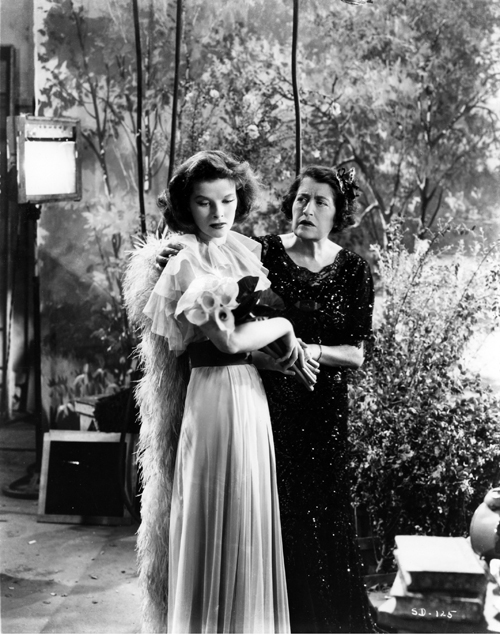
Katharine Hepburn and Constance Collier
in Stage Door

Monday, November 05, 2018

The Thanksgiving Play

I see political correctness as largely a good thing. For me, it connotes trying to honor other people and their needs; calling people by their chosen names; respecting that people with different backgrounds have different experiences; and so on. On the other hand, political correctness can be taken waaay too far. Larissa FastHorse's wonderful new comedy, The Thanksgiving Play, takes place on the other hand.

Greg  Keller,  Jennifer  Bareilles, 
Jeffrey  Bean,  Margo  Seibert
Photo: Joan Marcus
Four people assemble to develop a thanksgiving play for an elementary school. They are to be the writers and the performers. Logan (Jennifer Bareilles) is the director. She works at the school, and the posters on the walls (the witty scenic design is by Wilson Chin) attest to her theatre tastes and values. Her boyfriend, Jaxton, self-righteously humble, is so thrilled to be involved that he is performing without pay. Caden (Jeffrey Bean), a history teacher and playwright wannabe, knows all about the truth of the "real Thanksgiving," which of course was not exactly full of turkeys, stuffing, cranberry sauce, and good will. The fourth writer/performer is Alicia (Margo Seibert), a well-known actress who has been promised a big paycheck. Logan and the others defer to her since she is Native American and therefore her opinions must come first.


Inner Voices 2018

Every couple of years, the theatre company Premieres commissions three sung monologues. The writers are given no limitations in terms of content or theme. The latest three monologues, Inner Voices 2018, display a remarkable range of styles, voices, and content. Two are terrific; the third less so. But all are worth seeing, and it's a unique evening in the theatre.


The first show of the evening, Window Treatment, was my favorite. Farah Alvin plays a kind of sweet stalker who is in love with a man who lives across the way. He doesn't have curtains, and she watches him, lovingly and creepily, with binoculars. She has also followed him in the real world, but has never spoken to him. Written by Deborah Zoe Laufer (words) and Daniel Green (music), the show is stuffed full of psychological insight and humor. Alvin's performance makes the most of her amazing voice, excellent acting, and heartfelt clowning. It's a real treat.