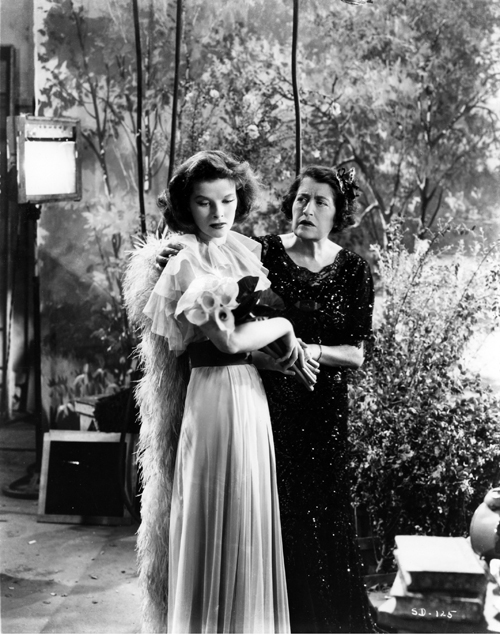
What a difference a director makes.
When By the Way, Meet Vera Stark was done at the Second Stage, directed by Jo Bonney, it was hysterically funny, yet hard-hitting and even heart-breaking. (Review here.) In its current incarnation at the Signature Theatre, directed by Kamilah Forbes, it is obvious, overdone, and totally lacking in emotional texture. And the second act is tedious.
The New York Times make it a critics' pick. I have no idea why.
Wendy Caster
($35 ticket; second row center)
Cookies
Friday, March 01, 2019
Wednesday, February 27, 2019
League of Professional Theatre Women
It's easy to discuss the lack of gender parity in theatre, but what can be done about it? The League of Professional Theatre Women exists to answer that question and to make things happen, through oral history interviews, Women Count reports, meetings, awards, and generally advocating for women in theatre.
The oral history interviews are open to the public when they happen and then available through the Theatre on Film and Tape Archive at the New York Public Library for the Performing Arts at Lincoln Center. (The League plans to make the interviews available via streaming.)
In the most recent instance, theatre journalist Elisabeth Vincentelli interviewed brilliant playwright Lynn Nottage. It was everything you could want in an interview. Vincentelli asked smart and brief questions, leaving plenty of space for Nottage's thoughtful, often fascinating, frequently funny answers. Nottage spoke at length about her process, including the astonishing fact that she works on a comedy and a serious drama at the same time. (She said that she turns to the comedies when she doesn't feel like crying.) She also spoke about her activism and her private life. I could have listened to her for hours.
![]() |
| Lynn Nottage Photo: Ashley Garrett |
Jane Alexander, Elizabeth Ashley, Zoe Caldwell, Kitty Carlisle Hart, Marge Champion, Betty Comden, Betty Corwin, Jean Dalrymple, Tyne Daly, Carmen De Lavallade, Christine Ebersole, Madeline Gilford, Uta Hagen, Susan Hilferty, Judy Kaye, Linda Lavin, Baayork Lee, Rosetta LeNoire, Judith Light, Laura Linney, Judith Malina, Elizabeth McCann, Frances McDormand, Julia Miles, Charlotte Moore, Donna Murphy, Bebe Neuwirth, Chita Rivera, Mary Rodgers, Ann Roth, Daryl Roth, Mercedes Ruehl, Carole Shelley, Frances Sternhagen, Elaine Stritch, Kathleen Turner, and Paula Vogel.The next Oral History will take place on May 6th.
The League's Women Count reports focus on Off-Broadway and provide numerical proof of how far we have to go to achieve parity. Stage managers and costume designers are majority women. However, in no other category do women hit 50% and in far too many categories, they don't get anywhere near 50%. This is important information to have.
For those of us who wonder what we can do to support women in theatre, the League provides these useful ten steps:
TEN WAYS TO ADVOCATE FOR THEATRE WOMEN:
How can we, individually and collectively, use our personal and professional networks to advance the cause of visibility and opportunity for women in the theatre?
1. Talk about plays you’ve enjoyed that are by and about women.
2. Subscribe to a theatre company that produces work by women (such as the Women’s Project, Three Graces, New Georges. Google to find others.)
3. Use your theatre-going dollars to support women artists. Join the Meet-up Group Works-by-Women. Join other women at the theatre on a group rate discount to see professional work by women writers, directors, and designers. http://www.meetup.com/WorksbyWomen/
4. Advocate for Blind Submissions of playwrights’ work. Most major orchestras conduct blind auditions. Why not choose plays for prizes, grants, even productions, without regard to gender? Spread the word.
5. If called upon to subscribe to a theatre ask, “How many women will be directing/designing/writing/performing in plays for you this season?” Tell them you prefer to support theatres that are working toward gender parity.
6. Subscribe to NYTE to support its pledge to give parity to women in its coverage of theatre work. (It’s free!)
7. Join the DGA Women’s Initiative, New York Coalition of Professional Women in the Arts & Media, the League of Professional Theatre Women’s Advocacy Committee or 50/50 in 2020.
8. When you receive a brochure from a theatre company, count the women artists listed. Call the theatre to praise or critique them based on how close they are to parity.
9. Talk about non-traditional casting i.e. Judith Ivey as the Stage Manager in Our Town. Kathleen Chalfant as Mrs. Scrooge, Cate Blanchett as Hamlet, Fiona Shaw as Lear and Viola Davis as Gloucester. Talk, blog and use social networks to suggest plays you’d like to see in which a woman plays the lead, or in which women play the majority of the roles.
10. Amplify these actions by passing these tips to others.For more information on the League and what they offer, click here.
Wendy Caster
Wednesday, February 20, 2019
The Price of Thomas Scott
The invaluable Mint Theater Company has found another underappreciated playwright from early in the last century. Elizabeth Baker grew up in an extremely religious household and didn't see her first play until she was 30--theatre was considered immoral in her home.
In Baker's The Price of Thomas Scott, Thomas Scott, very much the head of his household, is deeply religious and deeply conservative, keeping a tight leash on his children. No theatre, no dancing, no fancy clothing. The family has a millinery shop that is barely getting by. The son would like to go to a good school; the daughter would love to go to Paris to learn more about hats; and the wife would love to retire. An almost miraculous solution to their situation appears when a company offers a fortune to buy their home and shop. Only one problem: that company will turn the space into a dance hall.
The Price of Thomas Scott is a thin play in some ways; it would have been an excellent short piece. Even at only 90 minutes, it is repetitive and slow. Nevertheless, it is also quite involving. I found myself rooting against my own beliefs because Baker does such an excellent job at showing the roots and honor of other people's beliefs.
As always, the Mint production is top-notch and well-directed, although there are two dance numbers that are just wrong. They feel like winks at the audience: "We're not as backward as these characters," director Jonathan Bank seems to be saying.
Also as always, the production values are wonderful and evocative. The set is by Vicki R. Davis; the costumes by Hunter Kaczorowski; the lighting by Christian DeAngelis; and the sound and musical arrangements by Jane Shaw.
For a third "as always," the cast ranges from solid to outstanding. They are Donald Corren, Andrew Fallaize, Emma Geer, Josh Goulding, Mitchell Greenberg, Nick LaMedica, Jay Russell, Tracy Sallows, Mark Kenneth Smaltz, Ayana Workman, and Arielle Yoder.
The Mint plans to produce two more full productions of Baker's plays, as well as readings of some of her one acts. I'm looking forward to all of them!
Wendy Caster
(5th row; press ticket)
Show-Score: 88
![]() |
| Donald Corren and Tracy Sallows Photo: Todd Cerveris |
The Price of Thomas Scott is a thin play in some ways; it would have been an excellent short piece. Even at only 90 minutes, it is repetitive and slow. Nevertheless, it is also quite involving. I found myself rooting against my own beliefs because Baker does such an excellent job at showing the roots and honor of other people's beliefs.
As always, the Mint production is top-notch and well-directed, although there are two dance numbers that are just wrong. They feel like winks at the audience: "We're not as backward as these characters," director Jonathan Bank seems to be saying.
Also as always, the production values are wonderful and evocative. The set is by Vicki R. Davis; the costumes by Hunter Kaczorowski; the lighting by Christian DeAngelis; and the sound and musical arrangements by Jane Shaw.
For a third "as always," the cast ranges from solid to outstanding. They are Donald Corren, Andrew Fallaize, Emma Geer, Josh Goulding, Mitchell Greenberg, Nick LaMedica, Jay Russell, Tracy Sallows, Mark Kenneth Smaltz, Ayana Workman, and Arielle Yoder.
The Mint plans to produce two more full productions of Baker's plays, as well as readings of some of her one acts. I'm looking forward to all of them!
Wendy Caster
(5th row; press ticket)
Show-Score: 88
Sunday, January 27, 2019
The Cher Show
In lots of ways, The Cher Show is remarkably similar to Summer: The Donna Summer Musical. Both are big, shiny, spectacular jukebox musicals about iconic female superstars, created by overwhelmingly male creative and production teams. Both feature three actresses playing different versions of the star in question at various points in her life. And for whatever reason, both use a great deal of blue lighting and trapdoor lifts, though Summer's excessive reliance on the latter ultimately kicks The Cher Show's measly, single-trap ass. In every other way, though, The Cher Show is the superior production.
Don't misunderstand me: The Cher Show is not Brilliant Art. It's silly and breezy and light, so skip it if the idea of a fun if slightly flimsy couple of hours in the theater offends you. This is the kind of jukebox musical that elicits gleeful applause at the opening notes of a pop standard, or when an actor manages a passable impersonation of a beloved celebrity (that's quite the groovy Sonny Bono voice you've nailed down, Jerrod Spector!). Still, it works in ways that Summer, which was weirdly tentative and frustratingly convoluted in execution, did not.
In the first place, Cher has a concept, however basic, that it doesn't veer from. It knows what makes its subject simultaneously larger than life and appealingly vulnerable. It recognizes that Cher has had thrilling highs and devastating lows, and it plays to them. It wisely lingers on the stuff that is most dramatically viable: her discovery by and relationship with Bono, her shifting personae, her diverse career, her relationship with her wise, tough mother--without dwelling for too long on any one thing, or attempting to dig too deep. It also knows how to make fun of itself from the outset. Having the three Chers greet the audience at the top of the first act by calling us all bitches before immediately confronting how bizarre it is, even to them, that there are three Chers hanging around onstage pretty much establishes the tone. In fact, this tactic won me over immediately, even as I remain uncertain as to why the hell there were three Chers up there, or what they were all supposed to be representing. But then, seriously now, who the hell cares? I certainly don't plan to lose sleep over the question, and I'm sure none of the three Chers give a shit, either--truly, I feel pretty secure in the notion that they all just want the spectators to enjoy looking at the shiny Bob Mackie costumes, some of which got their very own huge and elaborate production number. Reader, enjoy them I did.
Another enormously important thing The Cher Show gets right is its audience, which is largely if not entirely gay and/or female. The creative team might be just as male as Summer's was, but at least this show doesn't pander or condescend. There was something decidedly off-putting, for example, about how Summer tried to present itself as inclusive and empowering, even as as it quickly swept its heroine's infamous born-again-influenced homophobia under the rug with a few glib platitudes.
The Cher Show is hardly deep: you won't get much about Cher's life here that you couldn't learn from a glance at her Wikipedia page; probably the Wiki would tell you more. A sister is mentioned only once and in passing. Cher's relationships with her children are almost entirely off-limits. Her romances are all surfaces: they form, peak, and wither. Sonny remains an important force in her life after their divorce, but how, why, and in what ways aren't plumbed; nor is anything about Bono save that he was ambitious, business-minded, and extraordinarily controlling. Only Cher's mom (played by a fine Emily Skinner) has some depth; anyway, she seems like she was a consistent, positive force in Cher's life, whether that's true or not. Still, the show's constant nod to the importance of women doing shit for themselves--or, whatever, for their daughters, especially when their daughters turn out to be Cher--speaks volumes. So do the costumes, the huge wigs, and the autotune.
In short, this is a fluffy bauble that knows exactly what it is and exactly how to entertain. Kind of like its title character. Have fun, bitches, or stay home.
![]() |
| Joan Marcus |
In the first place, Cher has a concept, however basic, that it doesn't veer from. It knows what makes its subject simultaneously larger than life and appealingly vulnerable. It recognizes that Cher has had thrilling highs and devastating lows, and it plays to them. It wisely lingers on the stuff that is most dramatically viable: her discovery by and relationship with Bono, her shifting personae, her diverse career, her relationship with her wise, tough mother--without dwelling for too long on any one thing, or attempting to dig too deep. It also knows how to make fun of itself from the outset. Having the three Chers greet the audience at the top of the first act by calling us all bitches before immediately confronting how bizarre it is, even to them, that there are three Chers hanging around onstage pretty much establishes the tone. In fact, this tactic won me over immediately, even as I remain uncertain as to why the hell there were three Chers up there, or what they were all supposed to be representing. But then, seriously now, who the hell cares? I certainly don't plan to lose sleep over the question, and I'm sure none of the three Chers give a shit, either--truly, I feel pretty secure in the notion that they all just want the spectators to enjoy looking at the shiny Bob Mackie costumes, some of which got their very own huge and elaborate production number. Reader, enjoy them I did.
Another enormously important thing The Cher Show gets right is its audience, which is largely if not entirely gay and/or female. The creative team might be just as male as Summer's was, but at least this show doesn't pander or condescend. There was something decidedly off-putting, for example, about how Summer tried to present itself as inclusive and empowering, even as as it quickly swept its heroine's infamous born-again-influenced homophobia under the rug with a few glib platitudes.
The Cher Show is hardly deep: you won't get much about Cher's life here that you couldn't learn from a glance at her Wikipedia page; probably the Wiki would tell you more. A sister is mentioned only once and in passing. Cher's relationships with her children are almost entirely off-limits. Her romances are all surfaces: they form, peak, and wither. Sonny remains an important force in her life after their divorce, but how, why, and in what ways aren't plumbed; nor is anything about Bono save that he was ambitious, business-minded, and extraordinarily controlling. Only Cher's mom (played by a fine Emily Skinner) has some depth; anyway, she seems like she was a consistent, positive force in Cher's life, whether that's true or not. Still, the show's constant nod to the importance of women doing shit for themselves--or, whatever, for their daughters, especially when their daughters turn out to be Cher--speaks volumes. So do the costumes, the huge wigs, and the autotune.
In short, this is a fluffy bauble that knows exactly what it is and exactly how to entertain. Kind of like its title character. Have fun, bitches, or stay home.
Monday, January 21, 2019
Choir Boy
Tarell Alvin McCraney's Choir Boy, just extended at the Friedman, is poignant, moving, and lovely. A coming-of-age drama set in an exclusive all-male, all-black boarding school, the swift 100-minute show focuses on Pharus Jonathan Young, a queer high-school senior whose greatest pride and source of comfort is his role as leader and star tenor of the school choir. Played by a truly exceptional Jeremy Pope, Pharus is deeply nuanced and often highly contradictory: smart, headstrong and self-possessed; unsure of who he is and where he belongs in the world.
Much like McCraney's Moonlight, Choir Boy places focus on the personal development of a single gay, black, male character over time; whereas Moonlight followed Chiron from youth to adulthood, Choir Boy covers events that take place in the course of a single year. Scenes are frequently punctuated by choreographed choral arrangements of gospel chestnuts, many of which touch on the character's situations or emotional highs and lows. Some of the choral arrangements are more sophisticated than others, but the concept works consistently, and some of the numbers are particularly effective.
The general consensus among critics about Choir Boy is that Pharus is far better developed than the characters who surround him, and who alternately make high school life less or more difficult for him. But I don't care, even a little bit, about the fact that the supporting characters don't have the depth or nuance of Pharus. They're engaging enough; the company is well-cast and talented to a man. And anyway, this is Pharus's story, and his very real ups and downs are well worth the audience's attention. How many times, after all, have characters like Pharus been made secondary, flimsy, shoved off to the side, reduced to two dimensions and a couple of stereotypical gestures designed to amuse spectators?
![]() |
| Matthew Murphy |
Much like McCraney's Moonlight, Choir Boy places focus on the personal development of a single gay, black, male character over time; whereas Moonlight followed Chiron from youth to adulthood, Choir Boy covers events that take place in the course of a single year. Scenes are frequently punctuated by choreographed choral arrangements of gospel chestnuts, many of which touch on the character's situations or emotional highs and lows. Some of the choral arrangements are more sophisticated than others, but the concept works consistently, and some of the numbers are particularly effective.
The general consensus among critics about Choir Boy is that Pharus is far better developed than the characters who surround him, and who alternately make high school life less or more difficult for him. But I don't care, even a little bit, about the fact that the supporting characters don't have the depth or nuance of Pharus. They're engaging enough; the company is well-cast and talented to a man. And anyway, this is Pharus's story, and his very real ups and downs are well worth the audience's attention. How many times, after all, have characters like Pharus been made secondary, flimsy, shoved off to the side, reduced to two dimensions and a couple of stereotypical gestures designed to amuse spectators?
Thursday, January 03, 2019
Best Performances of 2018
I am frequently blown away by the depth and quality of the New York acting community. Brilliant performances are everywhere.
(I've linked to my reviews for shows I did indeed review.)
THE ENSEMBLES
In the following shows, everyone was wonderful.
A Chorus Line
Band’s Visit
Dance Nation
Desperate Measures
Follies
Hello Dolly
Ordinary Days
The Possibilities/The After-Dinner Joke
ENSEMBLES, PLUS
In the following shows, everyone was wonderful but one or two people stood out, usually in lead roles.
Conflict--great cast, especially Jeremy Beck
Fabulation--great cast, especially Cherise Boothe
Happy Birthday, Wanda June--great cast, especially Jason O'Connell and Kate MacCluggage
Holy Ghosts--great cast, especially Oliver Palmer
Jerry Springer The Opera--great cast, especially Will Swenson
INDIVIDUAL PERFORMANCES
And then there are two individual performances I want to single out.
Farah Alvin was a new discovery for me in Inner Voices 2018. I think she can do pretty much anything.
In contrast, Ethan Hawke has long been a favorite of mine. I enjoy his all-in, balls-to-the-wall commitment to his roles, and I enjoy even more that he knows when to pull back. In True West, he is mesmerizing.
SECOND THOUGHTS?
Now I'm wondering if I should have included Jerry Springer The Opera, Ordinary Days, and The Possibilities/The After-Dinner Joke on my "best of" list. They were all wonderful. But what would I have removed from the existing list to make room?
Wendy Caster
(I've linked to my reviews for shows I did indeed review.)
THE ENSEMBLES
In the following shows, everyone was wonderful.
A Chorus Line
Band’s Visit
Dance Nation
Desperate Measures
Follies
Hello Dolly
Ordinary Days
The Possibilities/The After-Dinner Joke
ENSEMBLES, PLUS
In the following shows, everyone was wonderful but one or two people stood out, usually in lead roles.
Conflict--great cast, especially Jeremy Beck
Fabulation--great cast, especially Cherise Boothe
![]() |
| Ian Lassiter and Cherise Boothe Photo: Monique Carboni |
Happy Birthday, Wanda June--great cast, especially Jason O'Connell and Kate MacCluggage
Holy Ghosts--great cast, especially Oliver Palmer
Jerry Springer The Opera--great cast, especially Will Swenson
INDIVIDUAL PERFORMANCES
And then there are two individual performances I want to single out.
Farah Alvin was a new discovery for me in Inner Voices 2018. I think she can do pretty much anything.
![]() |
| Farah Alvin Photo: Russ Rowland |
In contrast, Ethan Hawke has long been a favorite of mine. I enjoy his all-in, balls-to-the-wall commitment to his roles, and I enjoy even more that he knows when to pull back. In True West, he is mesmerizing.
SECOND THOUGHTS?
Now I'm wondering if I should have included Jerry Springer The Opera, Ordinary Days, and The Possibilities/The After-Dinner Joke on my "best of" list. They were all wonderful. But what would I have removed from the existing list to make room?
Wendy Caster
Tuesday, January 01, 2019
Best of 2018
Before making this list, I did a quick grading of the shows I saw. It was a good year: 27 rated A; 28 rated B; 7 rated C; and 12 rated D. I didn't rate any of them F, because I love and admire theatre and the people who make theatre happen.
This is not a top ten. It's a top 13, and I managed to actually include 18 shows. In cases where I reviewed the show, I've linked to the review. Oh, and I certainly understand that this is really a list of "shows I liked best of the shows I saw" and not truly a "best of" list. But calling these lists "best of" is the custom, and I'm going along with that.
The list is alphabetical.
A Chorus Line: It was a truly extraordinary experience to get to see a first-class production of this wonderful show in such an intimate setting. Kudos to the Gallery!
Monday, December 24, 2018
Dr. Jekyll & Mr. Hyde
![]() |
| Cooper Bates Photography |
Based on Robert Louis Stevenson's classic novella, this version sought to insert moments of laughter into the traditional story, which takes place in London around the 1860s where Dr. Jekyll explores the academic question of “what is the nature of morality” after his brother is executed as a serial killer. Grinstead tackled the dual role of Dr. Jekyll and Mr. Hyde admirably.
Especially well done were the transformation scenes where his body changed dramatically from one character to the next. With a jerk of his foot and the stretching of his hands, Mr. Hyde appeared - even as Grinstead simply changed the sets in shadow, an edge of malevolence in each deliberate movement.
The clever set, in interlocking sections, opened to reveal bookshelves, cabinets - even a fireplace of sorts - was manipulated in a swirl of careful choreography. When Mr. Hyde stamped through the audience, leering into their eyes, people laughed as they became part of the spectacle.
Gags lighten up some of the somber material. For instance, Stromberg "accidentally" left an apron on for a scene as a male. Grinstead communicated the costume problem with a deliberate look and she smoothly whipped it off without losing character.
The production team included Terry Collins (Set Construction), Burt Grinstead (Sound & Set Design), Matt Richter and Adam Martin (Original Lighting Design) and Anna Stromberg (Costume Design).
The show also gave context to the story by exploring Dr. Jekyll's friendships and relationships. Especially poignant is Dr. Jekyll's interactions with his maid, who ultimately becomes his moral conscience as the story navigates to its conclusion.
The show earned six Hollywood Fringe Festival Awards including Best Comedy, winner of the 2CentsTheatre Award for Distinctive Voices, and winner of the Soho Playhouse Fringe Encore Series Award.
For more info you can visit https://www.BlanketFortEntertainment.com
The production team included Terry Collins (Set Construction), Burt Grinstead (Sound & Set Design), Matt Richter and Adam Martin (Original Lighting Design) and Anna Stromberg (Costume Design).
The show also gave context to the story by exploring Dr. Jekyll's friendships and relationships. Especially poignant is Dr. Jekyll's interactions with his maid, who ultimately becomes his moral conscience as the story navigates to its conclusion.
The show earned six Hollywood Fringe Festival Awards including Best Comedy, winner of the 2CentsTheatre Award for Distinctive Voices, and winner of the Soho Playhouse Fringe Encore Series Award.
For more info you can visit https://www.BlanketFortEntertainment.com
Sunday, December 23, 2018
Liz's Top Ten of 2018
While I can't say I'll miss a whole lot of things that went down in 2018, it's worth acknowledging just how good the theater was, at least in these parts. Whereas past seasons have been pretty weak, I had a lot of trouble whittling my list down to a top ten this year. Some of the ones I finally settled on weren't so easy to call: many just narrowly edged out other excellent productions (sorry, Network, Our Lady of 121st Street, Soft Power and Boys in the Band, you all kicked truly impressive ass--but something or another ended up taking your spot. I'm sure you'll forgive me. Soft Power, I'm especially eager to see you again when you're just a teeny bit clearer on what you want to be).
Anyway, thanks for the memories, 2018, at least as far as escaping to the theater goes.
To a happier and more peaceful new year--and another strong season!
SpongeBob SquarePants
My initial review was tepid, I admit it. But then, (a) the first time I saw the show, I went alone on a Wednesday afternoon, I was prepared to dislike everything I saw, and I was seated behind four ladies who all promptly fell asleep, so I was not exactly in the ideal headspace. Also, and way more importantly, (b) I did not have my son and nephew with me. Watching the show through their (very wide) eyes a second time made me realize that I'd stumbled on the perfect way to see it. My concerns about corporate soullessness vanished, especially once my son started bouncing up and down in his seat and singing along with "Best Day Ever" (we shushed him, but we all had a great time. And he wasn't the only one singing, either). Inventive, sweet, well-meaning and probably deserving of a longer run than it got, the show may remain a corporate behemoth--but it's one that had a great deal of charm, love and magic to it.
The Ferryman
The Ferryman was structured almost exactly the way Butterworth's Jerusalem was: the same loose, sweeping, frequently comedic scenes that gradually cohered into something bigger, less naturalistic, more intensely explosive--replete, even, with the same sonic build in the last scenes. The pacing thus felt lifted from the earlier (and, to me, ever-so-slightly-better) epic. Still, truly, this is the only criticism I can come up with (though I'm sure that, were I Irish, I might find plenty more to gripe about). The Ferryman is gripping, beautifully acted (even by a baby, a bunny, and a goose, for chrissakes), and I felt like I knew and cared for its many characters by the end of a fleeting three-plus hours. Butterworth might work on changing up the pacing of his future plays, but then, he's written two sweeping, huge, long, extraordinary plays, and I have never written a damn scene in my life. He totally wins this round.
Anyway, thanks for the memories, 2018, at least as far as escaping to the theater goes.
To a happier and more peaceful new year--and another strong season!
SpongeBob SquarePants
My initial review was tepid, I admit it. But then, (a) the first time I saw the show, I went alone on a Wednesday afternoon, I was prepared to dislike everything I saw, and I was seated behind four ladies who all promptly fell asleep, so I was not exactly in the ideal headspace. Also, and way more importantly, (b) I did not have my son and nephew with me. Watching the show through their (very wide) eyes a second time made me realize that I'd stumbled on the perfect way to see it. My concerns about corporate soullessness vanished, especially once my son started bouncing up and down in his seat and singing along with "Best Day Ever" (we shushed him, but we all had a great time. And he wasn't the only one singing, either). Inventive, sweet, well-meaning and probably deserving of a longer run than it got, the show may remain a corporate behemoth--but it's one that had a great deal of charm, love and magic to it.
The Ferryman
The Ferryman was structured almost exactly the way Butterworth's Jerusalem was: the same loose, sweeping, frequently comedic scenes that gradually cohered into something bigger, less naturalistic, more intensely explosive--replete, even, with the same sonic build in the last scenes. The pacing thus felt lifted from the earlier (and, to me, ever-so-slightly-better) epic. Still, truly, this is the only criticism I can come up with (though I'm sure that, were I Irish, I might find plenty more to gripe about). The Ferryman is gripping, beautifully acted (even by a baby, a bunny, and a goose, for chrissakes), and I felt like I knew and cared for its many characters by the end of a fleeting three-plus hours. Butterworth might work on changing up the pacing of his future plays, but then, he's written two sweeping, huge, long, extraordinary plays, and I have never written a damn scene in my life. He totally wins this round.
Wednesday, December 12, 2018
The Net Will Appear
At the beginning of Erin Mallon's The Net Will Appear, 75-year-old Bernard climbs out of his second-story window to use the roof of the first floor as a deck. He sets up his camping chair and pours himself what he will later refer to as his "Jim Beam juice." Not long afterward, 9-year-old next-door-neighbor Rory climbs out of her second-story window, full of questions and stories and malapropisms. He's crabby, though of course he has a heart. She's cheerful, despite plenty of reasons not to be. It quickly becomes clear that (1) she will win him over; (2) the play will offer no surprises along the way; and (3) the production will nevertheless provide a sweet little evening in the theatre.
Author Mallon writes by the numbers, but she does so competently and with feeling. Richard Masur's performance as Bernard is also by the numbers, but he's a skillful, likable actor and it works. Eve Johnson as Rory talks very, very, very fast, often losing intelligibility along the way, and she could use some lessons in comic timing. She's not great, but she's good enough and also likable; in quieter scenes, she shows a level of promise that made me wish that director Mark Cirnigliaro had been able to elicit better work from her.
The physical production is fine, with the exception of the between-scenes music, which grows more and more annoying as time passes.
I don't mean to damn with faint praise here. The Net Will Appear is a nice, old-fashioned evening in the theatre, and Richard Masur's performance alone is worth the low-priced ticket. It is what it is, and it's a solid version thereof.
Wendy Caster
(4th row, press ticket)
Show-Score: 80
![]() |
| Richard Masur Photo: Jody Christopherson |
Author Mallon writes by the numbers, but she does so competently and with feeling. Richard Masur's performance as Bernard is also by the numbers, but he's a skillful, likable actor and it works. Eve Johnson as Rory talks very, very, very fast, often losing intelligibility along the way, and she could use some lessons in comic timing. She's not great, but she's good enough and also likable; in quieter scenes, she shows a level of promise that made me wish that director Mark Cirnigliaro had been able to elicit better work from her.
![]() |
| Eve Johnson Photo: Jody Christopherson |
The physical production is fine, with the exception of the between-scenes music, which grows more and more annoying as time passes.
I don't mean to damn with faint praise here. The Net Will Appear is a nice, old-fashioned evening in the theatre, and Richard Masur's performance alone is worth the low-priced ticket. It is what it is, and it's a solid version thereof.
Wendy Caster
(4th row, press ticket)
Show-Score: 80
Tuesday, December 11, 2018
Clueless, The Musical
"What, another musical based on a late 20th-century movie?" you may ask. Well, yeah. But here's the thing: it's really good.
Writer/lyricist Amy Heckerling made a series of smart decisions in bringing Clueless, her funny-yet-heartfelt movie to the stage. The first was using well-known 90's songs, to which she added sharp, funny lyrics. The familiar melodies establish the time period perfectly, and they feel/sound like old friends.
The second smart decision was to be true to the original movie, which is one of those wonderful pieces that manage to nest real dilemmas, character growth, and a moral stance into yummy cotton candy.
The third smart decision was to work with director Kristin Hanggi and choreographer Kelly Devine. Hanggi's direction is well-paced and -focused. She balances the silliness and meaning perfectly. And Hanggi's choreography is energetic, playful, and great fun--exactly what the piece needs.
And the forth smart decision was the excellent casting. Dove Cameron is perfect as Cher, melding the character's complex combination of savvy and shallowness, altruism and egotism, and courage and fear into a completely lovable heroine. She handles the direct-to-audience dialogue beautifully, and her singing voice is gorgeous. Other standouts in the cast include Will Connolly as the adorable stoner Travis, Chris Hoch in multiple roles as the male grown-ups, and Dave Thomas Brown as ex-step-brother Josh, though the whole cast is excellent.
So, I didn't love the scenery and lighting. There were moments that would have benefited from better enunciation. Heckerling's lyrics include occasional half-rhymes that would land better as full rhymes. (I'm of the school that musicals need real rhymes to help the audience catch and enjoy every word.) The opening number runs a little long. But these are small complaints in the context of how much genuine delight the show provides.
I imagine that Clueless, The Musical will move to Broadway. Catch it at the New Group if you can. The intimacy of a small theatre is an added plus to Clueless's already fabulous experience.
Wendy Caster
(press ticket, row k)
Show-Score: 93
![]() |
| Zurin Villanueva, Dove Cameron Photo: Monique Carboni |
Writer/lyricist Amy Heckerling made a series of smart decisions in bringing Clueless, her funny-yet-heartfelt movie to the stage. The first was using well-known 90's songs, to which she added sharp, funny lyrics. The familiar melodies establish the time period perfectly, and they feel/sound like old friends.
The second smart decision was to be true to the original movie, which is one of those wonderful pieces that manage to nest real dilemmas, character growth, and a moral stance into yummy cotton candy.
The third smart decision was to work with director Kristin Hanggi and choreographer Kelly Devine. Hanggi's direction is well-paced and -focused. She balances the silliness and meaning perfectly. And Hanggi's choreography is energetic, playful, and great fun--exactly what the piece needs.
And the forth smart decision was the excellent casting. Dove Cameron is perfect as Cher, melding the character's complex combination of savvy and shallowness, altruism and egotism, and courage and fear into a completely lovable heroine. She handles the direct-to-audience dialogue beautifully, and her singing voice is gorgeous. Other standouts in the cast include Will Connolly as the adorable stoner Travis, Chris Hoch in multiple roles as the male grown-ups, and Dave Thomas Brown as ex-step-brother Josh, though the whole cast is excellent.
So, I didn't love the scenery and lighting. There were moments that would have benefited from better enunciation. Heckerling's lyrics include occasional half-rhymes that would land better as full rhymes. (I'm of the school that musicals need real rhymes to help the audience catch and enjoy every word.) The opening number runs a little long. But these are small complaints in the context of how much genuine delight the show provides.
I imagine that Clueless, The Musical will move to Broadway. Catch it at the New Group if you can. The intimacy of a small theatre is an added plus to Clueless's already fabulous experience.
Wendy Caster
(press ticket, row k)
Show-Score: 93
Monday, December 10, 2018
Noura
I expected to like Noura, Heather Raffo's play at Playwrights Horizon. I knew it was about a Christian Iraqi family living in the US, which I found intriguing, and that it delves into assimilation and loss, individualism versus community, and lies and secrets, topics that are endlessly delve-able. In addition, it riffs on A Doll's House, opening all sorts of possibilities. I was optimistic going in.
As the play unfolded, I found I had questions. "Is he her father or her husband?" "What did she just say?" "Why do they keep walking around that large table instead of going straight to where they're going?" "Why does she keep standing around?" "Why isn't that recorded voice-over loud enough to hear clearly?"
Then more serious questions came in. "Would anyone really do that?" "Would anyone really say that?" "Is she speaking Arabic or just mumbling?" "Why don't they ever close their front door?" "Why is she mad at him for being angry when she was angry too?" "Where did the Play Station come from?"
And then came the worst questions. "Is Raffo really pulling out that old soap-opera-y trope?" "Can't she at least do a better job of it?" "What is this play about, anyway?" "And why should I care?"
Noura has received good reviews in previous productions, so there may be more to it than I perceived. However, my plus-one liked it less than I did, and the applause the night I saw it was tepid. Oh well.
Wendy Caster
(press ticket, row J)
Show-Score: 60
As the play unfolded, I found I had questions. "Is he her father or her husband?" "What did she just say?" "Why do they keep walking around that large table instead of going straight to where they're going?" "Why does she keep standing around?" "Why isn't that recorded voice-over loud enough to hear clearly?"
Then more serious questions came in. "Would anyone really do that?" "Would anyone really say that?" "Is she speaking Arabic or just mumbling?" "Why don't they ever close their front door?" "Why is she mad at him for being angry when she was angry too?" "Where did the Play Station come from?"
And then came the worst questions. "Is Raffo really pulling out that old soap-opera-y trope?" "Can't she at least do a better job of it?" "What is this play about, anyway?" "And why should I care?"
![]() |
| Heather Raffo Photo: Joan Marcus |
Wendy Caster
(press ticket, row J)
Show-Score: 60
Monday, December 03, 2018
The Tricky Part
Well-deserved raves for Martin Moran's heart-breaking solo piece, The Tricky Part, can be found at the Times, Theater Mania, and the Fordham Observer. I'm more interested in the why of the show.
One-person pieces can be theatrical stand-up comedy (think Lily Tomlin or Rob Becker), stories of actual people's lives (think Will Rogers or Emily Dickinson), or recreations of novels or other stories, with the actor often playing dozens of roles (think Charles Dickens, Mark Twain, or Alan Cumming's solo Macbeth). With the advent of Spalding Gray, Holly Hughes, and other soloists of the later 20th century, solo performance expanded into memoir and performance art. These pieces are frequently personal, revealing, and devastating.
![]() |
| Art design by Leah Vautar. |
One-person pieces can be theatrical stand-up comedy (think Lily Tomlin or Rob Becker), stories of actual people's lives (think Will Rogers or Emily Dickinson), or recreations of novels or other stories, with the actor often playing dozens of roles (think Charles Dickens, Mark Twain, or Alan Cumming's solo Macbeth). With the advent of Spalding Gray, Holly Hughes, and other soloists of the later 20th century, solo performance expanded into memoir and performance art. These pieces are frequently personal, revealing, and devastating.
Sunday, December 02, 2018
King Kong
While I appreciate it as a landmark in both film making and scoring, I've otherwise never much understood the appeal of King Kong. Sure, there's incredibly cool stop-motion animation and over-the-top Max Steiner aural grooviness, both of which are even more admirable since this is 1933 we're talking about. But otherwise, the movie has always seemed strongest as a genuinely depressing racist allegory, garnished with enormous doses of sexism and greed. The plot itself is hogwash: mercenary film director Carl Denham takes wannabe starlet Ann Darrow to the mysterious Skull Island to film a picture. There, they encounter deeply offensive "native" stereotypes, some prehistoric creatures, and the titular ape, who lusts after and kidnaps Ann. She screams endlessly, gets rescued, and then Kong is drugged and brought back to New York for Denham to put on display. In New York, the ape completely loses his shit, destroys large amounts of Manhattan, recaptures Ann, climbs the Empire State Building with her, and then gets shot down, surely crushing many innocent onlookers as he plummets to his death. In the film's final moments, Denham, who started all the mayhem in the first place, gets all faux-philosophical but reveals he's totally incapable of self-reflection or personal growth: he blames everything on Ann with a famous last line that makes no sense considering everything that's just happened. Come on, Carl, you dumbass: beauty didn't do shit. You did.
Special effects seem to dominate all remakes of the film; they are, I suppose, the point of revisiting King Kong in the first place. An awful lot of people, it seems, will tolerate steaming mountains of racist, sexist crap if they get to watch enough shit blowing other shit up in the process.
Spectacle certainly dominates the stage version of King Kong, which may not be the most well-balanced or wholly satisfying production, but is not without its pleasures and small victories. I appreciate the production for trying to rid the plot of at least some of its most offensive parts. Gone, in this iteration, are the grunting, monosyllabic, dark-skinned natives of Skull Island, and with them at least some of the stereotypes the movie played on. Gone too is the stupid line at the end about how beauty killed the beast. There's more of an attempt at moral trajectory: Denham (Eric William Morris, doing what he can), it's implied, will suffer economic ruin and isolation for his actions. Also, he doesn't blame everything on Ann; his famous "'tis beauty killed the beast" line is referenced in one of the show's exceptionally forgettable songs (songs are by Eddie Perfect; the persistent and weirdly porny electronic score is by Marius De Vries). But it no longer serves as the last line.
While the image of Kong being shackled and shipped far from his home will never not reference both the slave trade and the vilest of persistent racist tropes, some of the sting of the latter is offset in the production by Christiani Pitts, who plays Ann. Pitts is black, and thus not the traditional pale-blond, uber-Caucasian Ann of previous Kong iterations (Fay Wray; Jessica Lange; Naomi Watts). The choice works to temper at least a few layers of racist assumption that can be inferred in what was previously an allegory about primal, predatory black men and their insatiable lust for pure, helpless white women; the musical tries instead to paint Ann as smart, independent and headstrong--a modern woman before her time. Her connection with Kong, it is suggested, becomes a knowing friendship between two lost, misunderstood, disenfranchised fellow travelers.
Any attempt to expose and excise stereotypes is noble, but in addressing King Kong's problem areas as superficially as it does, the production opens up newer, bigger holes in a plot already full of them. Pitts does as much as any human can with the role as it's been rewritten, but hers is a thankless task. If Ann is now so insightful and level-headed and wise, what the hell convinced her that getting on a boat for months on end with a penny-ante director she talks with for five minutes in a diner is a good life choice? Yeah, sure, whatever, she's hungry and desperate for work. Get a fucking grip, all-male creative team: you can't have a modern, independent heroine who occasionally doubles as a shrieking damsel in distress. Pitts' Ann doesn't scream and play helpless as convincingly (or as endlessly) as Fay Wray did, but she is no more nuanced or developed a character, either: here, Ann bonds with Kong, then immediately sells him out, then feels remorse, then sings a song about how She Has Learned Something About Herself and Others. But what has she learned, exactly? That directors who hang out in diners are not to be trusted? That the world is cruel? That love is blind? That nature abhors a vacuum? That crime does not pay? Where's the build, the conflict, the cohesive story?
Anyway, whatever, story schmory; clearly, we're here to see spectacle. In this iteration, as in all iterations past, Kong is truly the star of the show, and while it's a shame he has to die, he at least gets the final bow here. The production's Kong is impressive: he's about the size of the stage and is operated by ten black-clad puppeteers who yank pulleys, manipulate the ape's body, and see to it that its hands and feet land correctly lest some poor cast member be crushed beneath its truly impressive weight. Another three dudes operate the facial expressions and the sounds Kong makes from a booth at the back of the theater. If you are solely interested in watching the puppet, and go to see King Kong with no other expectations at all, I suspect you won't be disappointed.
But heat? Conflict? Tension? Emotion? Forget it. The show, like the film, left me cold. Oh, except for two moments: in one scene depicting Kong's captivity in New York, his facial expressions were so real and so sad that I felt genuine pity for the character, stuck as he was in yet another exploitative entertainment that didn't do him justice. There was a smaller, more profound moment, as well, during which one of the puppeteers took exceptional care in placing Kong's left hand on the floor of the stage. It was the gentle, lovingly tender act of someone who has bonded deeply with the character they're responsible for giving life to. It was beautiful and one of the sweetest moments in the show for me. If only the company had been able to figure out how to extend such genuine sentiment throughout the entire musical.
Special effects seem to dominate all remakes of the film; they are, I suppose, the point of revisiting King Kong in the first place. An awful lot of people, it seems, will tolerate steaming mountains of racist, sexist crap if they get to watch enough shit blowing other shit up in the process.
![]() |
| Joan Marcus |
Spectacle certainly dominates the stage version of King Kong, which may not be the most well-balanced or wholly satisfying production, but is not without its pleasures and small victories. I appreciate the production for trying to rid the plot of at least some of its most offensive parts. Gone, in this iteration, are the grunting, monosyllabic, dark-skinned natives of Skull Island, and with them at least some of the stereotypes the movie played on. Gone too is the stupid line at the end about how beauty killed the beast. There's more of an attempt at moral trajectory: Denham (Eric William Morris, doing what he can), it's implied, will suffer economic ruin and isolation for his actions. Also, he doesn't blame everything on Ann; his famous "'tis beauty killed the beast" line is referenced in one of the show's exceptionally forgettable songs (songs are by Eddie Perfect; the persistent and weirdly porny electronic score is by Marius De Vries). But it no longer serves as the last line.
While the image of Kong being shackled and shipped far from his home will never not reference both the slave trade and the vilest of persistent racist tropes, some of the sting of the latter is offset in the production by Christiani Pitts, who plays Ann. Pitts is black, and thus not the traditional pale-blond, uber-Caucasian Ann of previous Kong iterations (Fay Wray; Jessica Lange; Naomi Watts). The choice works to temper at least a few layers of racist assumption that can be inferred in what was previously an allegory about primal, predatory black men and their insatiable lust for pure, helpless white women; the musical tries instead to paint Ann as smart, independent and headstrong--a modern woman before her time. Her connection with Kong, it is suggested, becomes a knowing friendship between two lost, misunderstood, disenfranchised fellow travelers.
Any attempt to expose and excise stereotypes is noble, but in addressing King Kong's problem areas as superficially as it does, the production opens up newer, bigger holes in a plot already full of them. Pitts does as much as any human can with the role as it's been rewritten, but hers is a thankless task. If Ann is now so insightful and level-headed and wise, what the hell convinced her that getting on a boat for months on end with a penny-ante director she talks with for five minutes in a diner is a good life choice? Yeah, sure, whatever, she's hungry and desperate for work. Get a fucking grip, all-male creative team: you can't have a modern, independent heroine who occasionally doubles as a shrieking damsel in distress. Pitts' Ann doesn't scream and play helpless as convincingly (or as endlessly) as Fay Wray did, but she is no more nuanced or developed a character, either: here, Ann bonds with Kong, then immediately sells him out, then feels remorse, then sings a song about how She Has Learned Something About Herself and Others. But what has she learned, exactly? That directors who hang out in diners are not to be trusted? That the world is cruel? That love is blind? That nature abhors a vacuum? That crime does not pay? Where's the build, the conflict, the cohesive story?
Anyway, whatever, story schmory; clearly, we're here to see spectacle. In this iteration, as in all iterations past, Kong is truly the star of the show, and while it's a shame he has to die, he at least gets the final bow here. The production's Kong is impressive: he's about the size of the stage and is operated by ten black-clad puppeteers who yank pulleys, manipulate the ape's body, and see to it that its hands and feet land correctly lest some poor cast member be crushed beneath its truly impressive weight. Another three dudes operate the facial expressions and the sounds Kong makes from a booth at the back of the theater. If you are solely interested in watching the puppet, and go to see King Kong with no other expectations at all, I suspect you won't be disappointed.
But heat? Conflict? Tension? Emotion? Forget it. The show, like the film, left me cold. Oh, except for two moments: in one scene depicting Kong's captivity in New York, his facial expressions were so real and so sad that I felt genuine pity for the character, stuck as he was in yet another exploitative entertainment that didn't do him justice. There was a smaller, more profound moment, as well, during which one of the puppeteers took exceptional care in placing Kong's left hand on the floor of the stage. It was the gentle, lovingly tender act of someone who has bonded deeply with the character they're responsible for giving life to. It was beautiful and one of the sweetest moments in the show for me. If only the company had been able to figure out how to extend such genuine sentiment throughout the entire musical.
Sunday, November 25, 2018
The Waverly Gallery
A friend of mine often uses the expression "pretty little play" to describe a show that's easy to digest, not especially profound or layered, and pretty satisfying nonetheless. The Waverly Gallery is very much a pretty little play--one I confess I probably wouldn't have gone out of my way to see, had my parents not been big enough fans of Nichols and May to have followed both their careers for decades. After they read about Elaine May's depiction of Gladys Green, an elderly gallery owner nearing the end of her life, they asked if I might like to se it with them. I'm a sucker for free theater and, ultimately, for hanging out with my folks. I'm so glad I didn't miss this one--and especially May's performance, which kicks brilliant, glorious, 86-year-old-woman ass up Waverly Place and back down again.
Directed by Lila Neugebauer and performed by a strong and likeable cast, the Broadway production accepts Lonergan's early piece (it was written in 1999) for what it is: a gentle, unfussy memory play about somebody's gradual loss of it. This production is as straightforward as the play itself: scenes unfold in chronological order; set changes take place behind a scrim on which projections of the city--grainy, black and white, and generic enough to be timeless--drift slowly from one side to the other before dissipating like smoke, accompanied by fittingly melancholy music by Gabriel Kahane. At times, the play is basic enough to feel almost pageant-like: Gladys's grandson Daniel (Lucas Hedges) steps forward during a few scene changes to address the audience with direct-address prose about his family, their relationships to one another and to his grandmother, and various other expository points that aren't spelled out in the dialogue.
Still: basic and straightforward are not necessarily bad or amateur, and in this case both work exceptionally well. Lonergan's play doesn't need to dig all that deep to resonate, after all: dementia affects a lot of people, which is why plays, films, tv shows and books about it prevail in popular culture. An awful lot of such stories, in fact, aren't nearly as effective as this comparatively low-key one. The strong acting, of course, helps a lot: Hedges is blunt but never stiff or self-conscious, whether interacting with other characters or during his confessional curtain-speeches, wherein he admits how difficult it is for him to spend time with Gladys, even as he clearly adores her. The same goes for the rest of the cast: Joan Allen and David Cromer play Gladys's daughter and son-in-law; both are believably caring, kind, boneheaded, and impatient with Gladys in equal doses. Michael Cera rounds out the cast as Don, the last artist to display his works at Gladys's small gallery. A kind and well-meaning drifter whose life hasn't worked out especially well, Don is the sole denialist of the bunch in insisting that Gladys's memory lapses are entirely the fault of what he assumes are sub-par hearing aids. His opinions, however, don't get in the way of his loyalty to Gladys or his willingness to help her and her family as she declines.
At the center is Gladys, played downright majestically by May who, much like the production she anchors, never forces anything, even though it would be incredibly easy to. It's so much more typical to play aging, addled characters in bellowing, raging, do-not-go-gentle fashion--or as one-dimensional punchlines. But May's portrayal is solidly dignified, and all the more remarkable since Gladys is a fairly big personality to begin with: she's as endlessly chatty, headstrong, opinionated and irritating as she is bighearted and smart and endearing. Aided with small, gradual changes to her appearance--a graying wig here, an alarmingly roomy dress there--her Gladys starts to diminish in ways that feel no less sad or unfair, but are a whole lot more convincing for the actor's excellent choices: favorite expressions start getting repeated ad-nauseum like so many tics; remembering the right words or finding the house keys becomes harder; recognizing dear friends and close relatives grows frustratingly challenging. May never lets Gladys become a caricature or cruel joke, even as she becomes less coherent or independent.
There may be nothing remarkable about aging, or even about losing your memory as you do. But of course, something as commonplace as decline can still pack a punch. This quiet, lovely production of The Waverly Gallery is all the stronger and more resonant for never once forgetting that.
![]() |
| Marc J. Franklin |
Still: basic and straightforward are not necessarily bad or amateur, and in this case both work exceptionally well. Lonergan's play doesn't need to dig all that deep to resonate, after all: dementia affects a lot of people, which is why plays, films, tv shows and books about it prevail in popular culture. An awful lot of such stories, in fact, aren't nearly as effective as this comparatively low-key one. The strong acting, of course, helps a lot: Hedges is blunt but never stiff or self-conscious, whether interacting with other characters or during his confessional curtain-speeches, wherein he admits how difficult it is for him to spend time with Gladys, even as he clearly adores her. The same goes for the rest of the cast: Joan Allen and David Cromer play Gladys's daughter and son-in-law; both are believably caring, kind, boneheaded, and impatient with Gladys in equal doses. Michael Cera rounds out the cast as Don, the last artist to display his works at Gladys's small gallery. A kind and well-meaning drifter whose life hasn't worked out especially well, Don is the sole denialist of the bunch in insisting that Gladys's memory lapses are entirely the fault of what he assumes are sub-par hearing aids. His opinions, however, don't get in the way of his loyalty to Gladys or his willingness to help her and her family as she declines.
At the center is Gladys, played downright majestically by May who, much like the production she anchors, never forces anything, even though it would be incredibly easy to. It's so much more typical to play aging, addled characters in bellowing, raging, do-not-go-gentle fashion--or as one-dimensional punchlines. But May's portrayal is solidly dignified, and all the more remarkable since Gladys is a fairly big personality to begin with: she's as endlessly chatty, headstrong, opinionated and irritating as she is bighearted and smart and endearing. Aided with small, gradual changes to her appearance--a graying wig here, an alarmingly roomy dress there--her Gladys starts to diminish in ways that feel no less sad or unfair, but are a whole lot more convincing for the actor's excellent choices: favorite expressions start getting repeated ad-nauseum like so many tics; remembering the right words or finding the house keys becomes harder; recognizing dear friends and close relatives grows frustratingly challenging. May never lets Gladys become a caricature or cruel joke, even as she becomes less coherent or independent.
There may be nothing remarkable about aging, or even about losing your memory as you do. But of course, something as commonplace as decline can still pack a punch. This quiet, lovely production of The Waverly Gallery is all the stronger and more resonant for never once forgetting that.
Thursday, November 15, 2018
Art Times: What We Can Do When We Work Together
My latest essay is up at Art Times:
I just voted, and I’m a nervous wreck. The sad truth is that no matter who wins, it’s not going to be pretty. We seem to have lost the ability as a country to work together toward a common goal, if indeed we ever had it.
And that’s one of the many reasons I adore theatre.[keep reading]
![]() |
| Katharine Hepburn and Constance Collier in Stage Door |
Monday, November 05, 2018
The Thanksgiving Play
I see political correctness as largely a good thing. For me, it connotes trying to honor other people and their needs; calling people by their chosen names; respecting that people with different backgrounds have different experiences; and so on. On the other hand, political correctness can be taken waaay too far. Larissa FastHorse's wonderful new comedy, The Thanksgiving Play, takes place on the other hand.
Four people assemble to develop a thanksgiving play for an elementary school. They are to be the writers and the performers. Logan (Jennifer Bareilles) is the director. She works at the school, and the posters on the walls (the witty scenic design is by Wilson Chin) attest to her theatre tastes and values. Her boyfriend, Jaxton, self-righteously humble, is so thrilled to be involved that he is performing without pay. Caden (Jeffrey Bean), a history teacher and playwright wannabe, knows all about the truth of the "real Thanksgiving," which of course was not exactly full of turkeys, stuffing, cranberry sauce, and good will. The fourth writer/performer is Alicia (Margo Seibert), a well-known actress who has been promised a big paycheck. Logan and the others defer to her since she is Native American and therefore her opinions must come first.
![]() |
| Greg Keller, Jennifer Bareilles, Jeffrey Bean, Margo Seibert Photo: Joan Marcus |
Inner Voices 2018
Every couple of years, the theatre company Premieres commissions three sung monologues. The writers are given no limitations in terms of content or theme. The latest three monologues, Inner Voices 2018, display a remarkable range of styles, voices, and content. Two are terrific; the third less so. But all are worth seeing, and it's a unique evening in the theatre.
The first show of the evening, Window Treatment, was my favorite. Farah Alvin plays a kind of sweet stalker who is in love with a man who lives across the way. He doesn't have curtains, and she watches him, lovingly and creepily, with binoculars. She has also followed him in the real world, but has never spoken to him. Written by Deborah Zoe Laufer (words) and Daniel Green (music), the show is stuffed full of psychological insight and humor. Alvin's performance makes the most of her amazing voice, excellent acting, and heartfelt clowning. It's a real treat.
Waiting for Godot
The superb Druid production of Waiting for Godot, which is part of the Lincoln Center White Light festival, is damn close to perfect. Garry Hynes's meticulous direction exquisitely balances the pain and humor of Beckett's heartbreakingly funny play. While the famous review of Godot, saying that "nothing happens...twice," is not untrue, the show is full of emotion and meaning. What exactly it means has been debated, but certain themes seem clear: Life is meaningless and absurd. Most of us nevertheless choose to go on living. Human connection helps.
Godot hits particularly hard this time around, with the rich bully Pozzo, full of bluster and in desperate need of constant flattery, being a scarily effective stand-in for our 45th president.
Aaron Monaghan as Estragon and Marty Rea as Vladimir combine their wonderful sometimes-subtle, sometimes-broad acting with a physical grace that is a sheer joy to watch. Another gift for the eyes is the gorgeous set (designed by Francis O'Connor), which turns Beckett's tree, stone, and road into a Van Gogh-esque landscape of barren beauty.
Everyone affiliated with the production provides top-notch work, including Rory Nolan as Pozzo, Garrett Lombard as Lucky, and designers James F. Ingalls (lighting) and Gregory Clarke (sound). A special tip of the hat to movement director Nick Winston, whose work deliciously blends clowning and grace.
This production only runs through November 13, which is a pity.
(Aside: in an article in the program, designer O'Connor says that Beckett's specific scenery descriptions turned out to be liberating. He adds, "They made us ask fundamental questions, to investigate those few things he allows and how they interact. We asked, What is 'tree"? What is 'stone'? What is 'road'?" Really? Really?? It seems like laughable nonsense to me, and yet O'Connor's set is a work of art. So, what do I know?)
Wendy Caster
(8th row, press ticket)
Show-Score: 97
![]() |
| Aaron Monaghan, Marty Rea Photo: Richard Termine |
Godot hits particularly hard this time around, with the rich bully Pozzo, full of bluster and in desperate need of constant flattery, being a scarily effective stand-in for our 45th president.
Aaron Monaghan as Estragon and Marty Rea as Vladimir combine their wonderful sometimes-subtle, sometimes-broad acting with a physical grace that is a sheer joy to watch. Another gift for the eyes is the gorgeous set (designed by Francis O'Connor), which turns Beckett's tree, stone, and road into a Van Gogh-esque landscape of barren beauty.
![]() |
| Photo: Wendy Caster |
Everyone affiliated with the production provides top-notch work, including Rory Nolan as Pozzo, Garrett Lombard as Lucky, and designers James F. Ingalls (lighting) and Gregory Clarke (sound). A special tip of the hat to movement director Nick Winston, whose work deliciously blends clowning and grace.
This production only runs through November 13, which is a pity.
(Aside: in an article in the program, designer O'Connor says that Beckett's specific scenery descriptions turned out to be liberating. He adds, "They made us ask fundamental questions, to investigate those few things he allows and how they interact. We asked, What is 'tree"? What is 'stone'? What is 'road'?" Really? Really?? It seems like laughable nonsense to me, and yet O'Connor's set is a work of art. So, what do I know?)
Wendy Caster
(8th row, press ticket)
Show-Score: 97
Saturday, November 03, 2018
Big Apple Circus
If you have any interest in circuses; if you love the daring young people on the flying trapeze; if you are entertained by amazing juggling or impressed by feats of strength or fascinated by people who can bend their bodies like proverbial pretzels or balance way high in the air, go see the Big Apple Circus!
The Big Apple Circus provides the chills, thrills, laughs, and ooohs and aaaahs of a three-ring circus in one small ring, with a level of intimacy that adds to the fun. The ringmaster, who doesn't actually do much, is the fabulous Stephanie Monseu, with a haircut like Annie Lennox's, a huge smile, and a ton of presence. The clowns (new style clowns, without painted faces) are genuinely funny. The performers are completely amazing. And there's a new act, called Wall Trampoline, which is unlike anything I've ever seen before. No description could do it justice. Just go see it!
I can't guarantee that "a good time will be had by all," but I'd bet on "a good time will be had by at least 99%."
Wendy Caster
(2nd row, press ticket)
| Photo: Amy Schachter |
The Big Apple Circus provides the chills, thrills, laughs, and ooohs and aaaahs of a three-ring circus in one small ring, with a level of intimacy that adds to the fun. The ringmaster, who doesn't actually do much, is the fabulous Stephanie Monseu, with a haircut like Annie Lennox's, a huge smile, and a ton of presence. The clowns (new style clowns, without painted faces) are genuinely funny. The performers are completely amazing. And there's a new act, called Wall Trampoline, which is unlike anything I've ever seen before. No description could do it justice. Just go see it!
I can't guarantee that "a good time will be had by all," but I'd bet on "a good time will be had by at least 99%."
Wendy Caster
(2nd row, press ticket)
Subscribe to:
Posts (Atom)