Cookies

Saturday, August 26, 2017

The Suitcase Under the Bed

Playwright Teresa Deevy lived from 1894 to 1963. The youngest of 13 children, she lost her hearing in her late teens, roughly at the same time that her family's financial situation became much reduced. She used theatre as as a way to practice her lip-reading (she read the play first, when possible) and soon felt inspired to write plays herself. When she had trouble getting her work produced, she switched to writing radio plays. She went to mass every day, yet was critical of the restrictions placed on women by the Catholic church. The limited biographical information available does not mention any romance.

She must have been a fabulous lip-reader and an even better reader of people, as her plays are wise, subtle, and full of psychological insight.

Mace and Deaver in The King of Spain's Daughter
Photo: Richard Termine
If not for Jonathan Bank and the invaluable Mint, Deevy and her work might be unknown, which would be a big loss for audiences and theatre history. Bank has not only revived Deevy's work; he has also been instrumental in tracking down copies of lost plays. Bank's latest evening of Deevy's work, The Suitcase Under the Bed, features four one-acts that were found in the titular location.

Thursday, August 17, 2017

Van Gogh's Ear

Waiting for Van Gogh's Ear to start is a pleasure, since it gives you time to really examine Vanessa Jame's open and elegant set. It's all black and white, with dramatic strips of wide glistening material stretching down walls and across the floor. The upstage center area, arranged for musicians, is dominated by a striking white grand piano. Stage left features a small room, a pared-down version of Van Gogh's famous bedroom.

The Bedroom by Vincent Van Gogh

Soon the show starts, and the black-and-white set swirls with color as the white bands become screens for stunning projections (David Bengali) that envelope the audience in Van Gogh's gorgeous brush strokes.


Chad Johnson, Carter Hudson
Photo: Shirin Tinati

But Van Gogh's Ear is interested in more than showing Van Gogh's world; it also wants us to hear it. For the synesthetic Van Gogh, musical notes were colors, and he perceived painting as parallel to composing. Van Gogh's Ear includes live music by Claude Debussy, Gabriel Fauré, Ernest Chausson and César Franck, beautifully played and sung by Henry Wang (violin), Yuval Herz (violin), Chieh-Fan Yiu (viola), Timotheos Petrin (cello), Max Barros (piano), Renana Gutman (piano), Renée Tatum (soprano), and Chad Johnson (tenor). Van Gogh's dialogue is culled from his letters, which brings yet another dimension to the show.

Friday, August 11, 2017

Groundhog Day

Humorless buzzkill that I am, I've never been a big fan of the 1993 movie Groundhog Day, even though just about everybody else on the planet seems to think that it's one of the most brilliant comedy films ever made. Also, while I appreciated the stage adaptation of Matilda, and found its Tim Minchin score inoffensive, that musical, too, ultimately left me kind of tepid, if not utterly cold. For both of these reasons, I've been a little slow in getting around to seeing the Broadway musical version of Groundhog Day, which is Minchin and director Matthew Warchus's followup collaboration.

Joan Marcus

I can't say I loved every minute of the musical, or that it totally changed my life, or even my opinions about the musical version of Matilda or the film version of Groundhog Day. But I certainly enjoyed it. It has a lot of strengths, and at least one number that I haven't stopped thinking about. Sure, there are weak links: the set and sound are both a little murkier than they should be at various points, and the whole production came off as a little too darkly lit. The first act gets a little bogged down with a lot of exposition and the constant repetition that's part of the fabric of the plot. And many of Minchin's lyrics and melodies just don't stick with me, even after repeated listening (truly, I tried).

But the cast is strong and committed. The car chase, done with little car puppets and black light, made me laugh, and there were some excellent stage tricks during the suicide attempts. And if you have never seen Andy Karl on stage, you're missing out. As Phil, the arrogant and condescending weatherman who learns to be a mensch by the end of the show, he's endlessly appealing. In everything I've seen him do, I'm newly struck by how gifted Karl is both as a verbal and physical comedian. Here, his talents and his charisma are put to excellent use, especially since he walks the same fine line Bill Murray managed so well in the film (and just as a general proposition): Karl's Phil is never enough of a smarmy, insufferable dick that you genuinely hate him, but he's just enough of one that his gradual transformation and self-actualization into a reasonably good guy remain consistently engaging.

Then there's the wonderful "Playing Nancy," which pretty much made the musical for me. Performed at the top of the second act with absolutely no fanfare by a secondary character who previously has been fooled into sleeping with and subsequently dismissed by Phil, the piece is beautiful, delightfully meta, and astoundingly forthright in its commentary. I loved it, I haven't stopped thinking about it, I listen to it often and fondly. Thanks, Tim Minchin. You might not be my alltime favorite Broadway composer, but with this song, you've earned my respect. Hats off to you for considering, even momentarily, the roles women play in the most heralded and blockbustery and revered of mass entertainments, which are ultimately and almost always about men--and for writing a song that doesn't flinch, pander, or condescend. I'd make like Bill Murray and sit through all of your future musicals twice in a row, anytime, as long as you keep writing songs like this.

Tuesday, August 08, 2017

Barbara Cook: 1927-2017

I was not a huge Barbara Cook fan. It would never occur to me to play a CD of hers. I certainly didn't consider her the premiere cabaret singer ever or the best interpreter ever.

Yet every time I saw her, she blew me away. (And, obviously, she was one of the best.)

Seth Wenig, File AP Photo

I saw her three times: at the Vivian Beaumont; at Feinstein's when it was still at the Regency; and giving a master class at Cooper Union.

There's nothing I can say about her singing that others haven't said, and better than I could. But I do want to talk about two things: her skills and generosity as a teacher and her grace as she dealt with the changes of aging.

At the master class, Cook was faced with students with gorgeous voices and limited interpretation skills. She told them that they didn't have to show us that their voices were wonderful, because we could hear that. And then she focused on what the songs were about. And little by little, the students would go from making beautiful noises to telling stories (while still, of course, making beautiful noises).

One young man just couldn't loosen up. She gave him all sorts of suggestions and tips, but he couldn't let go of the formality of his singing. Finally, she pulled over two chairs for them, and she faced him and held his hand. "Just sing to me," she said. "Just tell me." It was a lovely, lovely moment. I don't even remember if the young man ever really let go. But I won't forget her generosity, openness, and willingness to put herself on the line.

(I also won't forget that the one student who really impressed her was the one I liked least. Go figure.)

When it came to aging, Cook turned loss into humor. At Lincoln Center, she sang a glorious "Glitter and Be Gay." She didn't have the high notes, and she didn't try to. Instead, when it was time for the pyrotechnics, she put on a tape of herself singing the song years ago, and spent her time donning all of Cunegonde's rings and necklaces. It was funny, touching, silly, and wonderful.

At Feinstein's she was no longer able to navigate the steps to the stage. Her solution? Get two hunky men to basically lift her into place as she joked and laughed. Again: funny, touching, silly, and wonderful.

Somehow, Barbara Cook managed to combine goddess and gal, lady and broad. And, yes, she was a heck of a singer.

Wendy Caster

Sunday, July 30, 2017

Trust the Author!


My latest essay is up at Art Times:
I walked out on a production of the brilliant comedy Cloud Nine the other night. The problem? The performers were trying too hard to be funny.
I recognize that my last sentence may seem counterintuitive. After all, isn’t the actor’s job in a comedy to be funny? Not always. Not even most of the time.

Saturday, July 29, 2017

Pity in History

It is telling that the line from which this play's title comes is "No pity in history." It's the 17th Century, during a civil war in Britain, and of course the war is not remotely civil. A cook has been shot--possibly by "friendly fire"--and is dying noisily, full of kvetching and insight. A mason tries to stay outside the fray, working on tombs in a church, but the fray finds him. The army believes that they are the strongest and will win because God is on their side. The opposing army would describe itself in much the same way.

Jonathan Tindle, Christopher Marshall
Photo: Stan Barough
Pity in History runs a packed 65 minutes, and its depth and breadth are remarkable. It has much to say about war, religion, human nature, and art, and it is wise and frequently funny. The production at PTP/NYC, running through August 5, unfortunately does not do it justice. While there is some excellent acting (in particular, Steven Dykes as the mason and Jonathan Tindle as the cook), and some of the direction (Richard Romagnoli) and design is effective, the dialogue is too frequently unintelligible, particularly when the soldiers speak in unison. Pity in History was initially a radio play, with impressively economical writing, and every word counts. Or would count if we could hear them. I read the script this morning and would say that the PTP/NYC production loses at least 20% of the plot, meaning, and wit. (A friend said that, because there was so much she could not understand, she ended up checking out and barely watching the show.)

Steven Dykes, Matt Ball
Photo: Stan Barouh
I regret that this review is ending up to be so harsh, because the play is truly impressive and parts of the production are excellent, but unintelligibility is the fault that can perhaps most completely derail a play.

Wendy Caster
(4th row, press ticket)

Sunday, July 23, 2017

Arcadia


Just twice in four decades of theatre have I bought the show's script during
intermission, and Tom Stoppard's Arcadia in 1995 was one of them (Shadowlands by
William Nicholson was the other). The most emotional play in Stoppard's cannon, it
offers a mystery told through two intertwining stories that touch on many topics
before its solution, including academic jockeying, the making of history, landscape
gardening, Byron, Newtonian physics and nonlinear mathematics.


Andrew William Smith (Septimus Hodge), Caitlin Duffy (Thomasina Coverly)

Photo credit: Stan Barouh

PTP/NYC's (Potomac Theatre Project) flawed, but enjoyable, revival of Arcadia captures its comedic intellectualism but not its visceral core. The play's two time frames -1809 and the present - both take place in the same country estate, Sidley Park, inhabited by two sets of characters and occasionally the same props, including a tortoise named Plautus or Lightning, depending on the century. The beginning scenes alternate the two periods until the second act where the separate sections unfold simultaneously on stage. The historical part focuses on Thomasina Coverly (Caitlin Duffy), a young aristocratic genius, and her clever and randy tutor, Septimus Hodge (Andrew William Smith), with the modern-day segment featuring two combative researchers, historical book author Hannah Jarvis (Stephanie Janssen) and Bernard Nightingale (Alex Draper), a grandstanding academic seeking scholastic fame.

Between those plot lines, Thomasina's mother, also is transforming her garden from classical to gothic; Ezra Chater (Jonathan Tindle) tries to make a name as a poet while many bed his wife ... including a never-seen but oft-spoken about Lord Byron; and a postgrad researcher, Valentine Coverly, (Jackson Prince) unearths Thomasina's surprisingly modern mathematical scribblings. Describing Arcadia's plot is as difficult as deciphering the play, which twists and turns through time and topics, with each reading and viewing bringing some new understanding. In this production, the scene between Thomasina and her tutor discussing the loss of the great library of Alexandria, for instance, resonated brightly as Septimus matter-of-factly tells his student, who mourns the disappearance of Aeschylus and Sophocles' plays:

"We shed as we pick up, like travelers who must carry everything in their arms, and what we let fall will be picked up by those behind. The procession is very long and life is very short. We die on the march. But there is nothing outside the march so nothing can be lost to it. The missing plays of Sophocles will turn up piece by piece, or be written again in another language...Mathematical discoveries glimpsed and lost to view will have their time again."

For, ultimately, the unfairness of life's limitations insert a melancholy into Arcadia that characters face mostly with pragmatism and humor.


Stephanie Janssen (Hannah Jarvis), Alex Draper (Bernard Nightingale).

Photo credit: Stan Barouh


Cheryl Faraone's (co-artistic director) direction emphasizes this stoicism and that works well during the 20th century scenes, making the even-tempered Hannah a terrific foil for Bernard. But, in the earlier time, there is a warmth missing between Thomasina and Septimus, and it makes their relationship less intimate and engaging. While Duffy and Smith are capable, neither convey the charisma necessary to enchant. Duffy's Thomasina is also too silly as a girl and her portrayal doesn't change even as the character ages. The simple set (scenic design: Mark Evancho) with its hanging panels looks appropriate for both time periods and the video footage of Thomasina's realized formula showcases the wonder of her genius.

PTP/NYC's 31st repertory season (its 11th consecutive in NYC), runs from July 11 - August 6 in a limited Off-Broadway engagement at The Atlantic Stage 2 (330 West 16 St.). For more info visit http://PTPNYC.org

Friday, July 21, 2017

Arcadia

Tom Stoppard always offers scrumptious meals for the head, but not always for the heart. Arcadia, his brilliant play about literature, history, math, science, gardening, and sex, features his best-ever balance between ideas and emotion. When well done, Arcadia is sheer pleasure start to finish (although audience members have been known to daydream during the math parts). PTP/NYC's current production (running through August 6th) is indeed well done, largely thanks to Cheryl Faraone's smart, clear, well-paced, and compassionate direction.


Arcadia exists in two time frames: the early 19th century and the late 20th. Both take place in the same room in an elegant house in Sidley Park, home to the Coverlys. The earlier period focuses on Thomasina Coverly, 13 years old and a genius, and her tutor Septimus Hodge, a smart and charming man who somehow juggles making a living, writing, and a healthy sex life. This time period features affairs, theorems, brilliance, and heartbreak.

Wednesday, July 19, 2017

"The World of Broadway Musicals"

I was recently interviewed by the Dean of the Weissman School of Arts and Sciences at Baruch College. Here's the resultant clip. Also, here is a nice picture, which I'd combine with the clip if I were even remotely more technically minded than I am.

 https://vimeo.com/225087846


Friday, July 14, 2017

New York Blackout: 1977

Forty years ago, on July 13, 1977, I was at the Delacorte Theater in Central Park, watching Threepenny Opera starring Ellen Greene, Philip Bosco, Caroline Kava, and Tony Azito. I was standing on the side with some friends who were ushers, while my sister Holly and friend Roger were in the audience, bored out of their minds. B.O.R.E.D. (I loved the show but completely understood that Richard Foreman's direction was not for everyone.)

Ellen Greene, Raul Julie
in Threepenny Opera

Ellen Greene was singing "Pirate Jenny."

The lights went out. The amplification went out.

And Greene didn't miss a beat. She filled the large, roofless, dark Delacorte with her amazing voice, bringing shivers and goosebumps to the crowd. When Greene finished, we exploded with applause and cheers. (Years later, I discussed that night with someone who had been in the cast, and she said, "It sounded like World War II had ended.")

The show was stopped. The orchestra played for a while. Some of the performers danced on stage. And then the announcement came: This was a city-wide blackout. They sent us home.

Thursday, July 13, 2017

Hello, Dolly!

Don't tell anyone, but until earlier this month, I'd never seen the stage or film version, or even listened to the score, of Hello, Dolly! This is kind of like a Vermeer specialist admitting she's never been to the Frick, a professional chef who's just never gotten around to cooking with rosemary, or a linguist who has a pretty good grasp of every Romance language except French. Oh, the shame! Aside from the titular song, which I've heard plenty because who the hell hasn't, I've never once crossed paths with the show. The current Broadway revival thus appealed to me less because of the allure of Bette Midler (though I'm sure she's swell) than because I could finally stop acting all nonchalant and informed whenever someone mentioned Dolly in conversation. Which, in my circles, happens way more often than you probably think.


Yippee! I've officially seen Hello, Dolly! and guess what? It was downright delightful. No offense to Midler, but I'm glad I got to see Murphy, who's shiny, bright-eyed, cheekbony, and goofy in the titular role. She's clearly enjoying playing to an adoringly receptive crowd (don't forget that she, too, has an ardent fan base and megatons of theatrical street cred). As Dolly, she's being over-the-top, stagy, playful Murphy--not super-serious, Passion-y, buried-deep-in-the-role Murphy. But that's exactly the right choice: the production, while perhaps not as glorious or storied as the long-running 1964 Merrick original, is great fun that no one in the cast takes too seriously, and that no one in the audience should, either. Especially since the plot kind of makes no sense and only gets stupider the more you think about it.

This revival of Hello, Dolly! strikes me as best received for the musical's flaws, not despite them. It's a bubbly, affectionate history lesson: a living reminder of the kind of sturdy, spectacular, joyfully imperfect show that dominated Broadway for decades during the so-called Golden Age, and that was already becoming kind of passe when Dolly first appeared. I say this as someone who favors contemporary musicals: seeing an old-school one, especially one done as well as this one is, can really be something special.

Saturday, July 08, 2017

Cost of Living

What is a disability? Does it define a person? What does it mean to care about someone? To care for someone? What is trust? How is it earned?

Sullivan, Williams
Photo: Joan Marcus
These are just some of the questions addressed in Martyna Majok’s flawed but fascinating and touching new play, Cost of Living, playing at the Manhattan Theater Club.

Cost of Living follows two couples. In each case, one has a visible physical disability. And, in each case, the disability remains a focus of the play yet recedes to just one facet of an emotionally complex picture.

Cost of Living utilizes an almost competitive intersectionality. Who is more powerful? John (Gregg Mozgala), a white man who cannot dress or bathe himself but went to Harvard and has money and a well-developed sense of entitlement, or Jess (Jolly Abraham), his caregiver, a physically intact woman of color who went to Princeton but is broke and scared? Both have definite strengths (not always attractive) and both have definite weaknesses (not always visible). Their jousting grows amusing, and they seem to grow close, but can they ever really understand each other?

In the other couple, Ani (Katy Sullivan) is a double amputee who has turned coarse language into an art form. Eddie (Victor Williams), from whom she is separated, is terribly lonely and wants to get back into Ani's life. He offers care, and caring, but Ani is reluctant to trust him, particularly since he is still living with another woman.

Cost of Living is so involving that its flaws don't become apparent until later. The opening monologue is too long. The fact that what follows is a flashback is unclear. A major plot point--a misunderstanding--isn't totally convincing. And there's a coincidence that's hard to buy.

But it's Majok’s character studies that make Cost of Living a must-see, along with the casting of actual disabled people, one of whom is quite good (Mozgala) and one of whom is brilliant (Sullivan). In fact, the show is well worth seeing for Sullivan's performance alone.

The recent trend toward hiring disabled people to play disabled people is fabulous and important, and I hope it's not a passing fad. But real progress will be hiring disabled people to play characters not written as disabled.

And I would gladly see Katy Sullivan in pretty much anything!

Monday, July 03, 2017

Marvin's Room

Marvin's Room lost me quickly. Perhaps it's because I've been dealing with bunches of doctors recently and they've been wonderful, but I found Marvin's 
Room's jokey, stupid physician who can't remember his patient's name and uses his teeth to open a sterile package to be offensive and anything but funny. Even less amusing are jokes about roaches in doctor's offices.


In addition, director Anne Kauffman utilizes pacing appropriate to a funeral, and while Marvin's Room is about death and dying, it's still supposed to be funny. The lethargy hastens the play's death, if not the characters'. Also, she allows Lili Taylor and Janeane Garofalo quiet, internalized performances that are possibly effective from the fifth row but come across as distant and boring from the rear orchestra. Worst of all, Celia Weston's performance seems one-dimensional and artificial, and that's got to be Kauffman's fault; Weston doesn't do one-dimensional and artificial.

The set is distractingly ugly and fails to effectively distinguish indoors from outdoors.

It may be that in the second act, things improve. I don't know. I wasn't there.

Wendy Caster
(highly discounted ticket; rear orchestra, audience left)

Wednesday, June 28, 2017

Shelter

In spring of 1973, I saw a sweet new musical called Shelter written by Gretchen Cryer and Nancy Ford, who would later write I'm Getting My Act Together and Taking it on the Road. I liked it so much that I gave up a ticket to see Alan Bates in Butley so that I could see its final performance, which was all too soon after its first. (It had 16 previews and 31 performances; for the New York Times review, click here.)


Decades later, I remembered only a few things from Shelter: the two songs on the 45 that was the only record released from the show; that Marcia Rodd was wonderful; and that the show presciently featured a man more emotionally involved with his computer than the real world.

Last night I was able to see Shelter again, in a concert version at 54 Below, starring Cryer's son Jon, of Two and a Half Men fame. And it was a delightful evening, full of wonderful songs and lots of laughs.

But oh, I wish Gretchen Cryer would rewrite the book, which wants us to believe that not one, not two, but three women are in love with Michael, the repressed man ultimately comfortable only with his computer, yet perfectly able to have sex with any female who passes by. It didn't help that Jon Cryer played Michael blandly, leaving a hole in the middle of the show, but even with a more charismatic lead, the show would still be about three women circling an idiot man, which is just not that interesting. It not only fails the famous Bechdel Test, but it also would probably disappoint Heather Jones, the lead character in the ur-feminist musical, Getting My Act Together. I would love to see what Gretchen Cryer would do with the story now.

Whatever Shelter's limitations, it was a gift to get to see it again, and I tip my hat to Steven Carl McCasland and James Horan, who produce the Second Act Series at 54 Below, giving neglected shows their moment in the spotlight. I also very much enjoyed Sally Ann Triplett as Maud, Jeff Kready as Arthur, the Computer, and Alyse Alan Louise as Wednesday November.

(I also enjoyed the Peeketoe crab fritters and plantain chips with guacamole.)

Wendy Caster
(tdf ticket; sat near stage by piano)

Saturday, June 24, 2017

Art Times: Is Broadway Invulnerable?

My latest essay is up at Art Times:
The original title of this essay was “Is Broadway Committing Suicide? And Does It Matter?” But the more I thought about it, the more I came to admire Broadway’s dogged longevity. (read more)


Thursday, June 22, 2017

1984

The stage version of George Orwell's 1984, grippingly adapted by Robert Icke and Duncan Macmillan, might not be the masterpiece the book is, but it's pretty damned good just the same. It's beautiful to look at, slickly performed, jarringly paced, and terrifying. It also has the ability to fuck with your head in much the same way the book does. Well, I can't speak for your head, I guess, but I can certainly attest to mine.


Much of the novel makes it into the swift stage adaptation. So too does the book's famously unfamous appendix, The Principles of Newspeak, which Orwell worded to seem as if it had been written several decades following the events described in the novel. I don't think I'm in the minority in admitting to have never before glanced at said appendix, despite having read the book twice. For the stage, Icke and Macmillan, who also direct, use the appendix as a framing device. As the play begins--some fifty years after the reign of Big Brother, and presumably long after the Party has fallen--a group of people sit, seminar-style, around a long table and discuss who Winston Smith was, what his world was like, and why newspeak never overtook oldspeak as the common vernacular.

Friday, June 16, 2017

Pacific Overtures

I am not a fan of John Doyle's, as evidenced in my review of his production of Passion, so I didn't plan to see his production of Pacific Overtures at CSC. But three things changed my mind: (1) a friend saw the show and said that the singing was excellent; (2) the stage had been reconfigured from the CSC's usual awkward layout with its problematic sight lines; and (3) inexpensive tickets became available through the Theatre Development Fund. So I decided to go, just keeping my expectations low.

And I had a wonderful time.


(By the way, if you're not familiar with Pacific Overtures, you can find out more about it here and here.)

Monday, June 12, 2017

How'd We Do? Tony Predictions 2017

Liz wins the Show Showdown “Predicting the Most Tony Wins Award of 2017,” with 15 correct (out of 24 categories). Sandra is first runner up, with 13. And Wendy brings up the rear with 12. It’s interesting to compare our results with those of last year (aka, the year of Hamilton), when we managed to predict from 16 to 20 each. As much fun—and as well-deserved—as the Hamilton wins were, it was even more fun to have such a competitive year this year. In 2017, Broadway is alive and kicking.


Musical: Dear Evan Hansen
Liz, Sandra, Wendy

Play: Oslo
Liz

Musical revival: Hello, Dolly!
Liz, Sandra, Wendy

Play revival: Jitney
Liz


Thursday, June 08, 2017

Show Showdown's Tony Picks

We're cutting it a little close on the Tony forecast this year, but can you blame us? We've all been super busy reading the news, watching hearings, and calling our representatives all the time--and to top it off, there's no slam-dunk this year, like Hamilton was last year--this year's picks were tough! Wendy, in fact, notes that whereas last year, she often blindly went with Hamilton, this year there are categories that are much tighter and harder to call, since so many nominees are deserving. This might speak to the caliber of talent on Broadway these days, but it makes for tough guessing. As you'll see below, in many cases we are all over the map.

And yet we at Show Showdown are undaunted! Here we are, ready to march into the fray, with our Tony picks for 2017. Who will win? Who the hell knows? Still, it's fun to prognosticate, and also to take our minds off what's going on just about everywhere else in the entire universe, so here goes:


Musical:
Come from Away
Dear Evan Hansen
Groundhog Day
Natasha, Pierre & the Great Comet of 1812

Sandra, Liz, Wendy: Dear Evan Hansen
Liz is a little preoccupied with the fact that Hansen didn't win as much as it was expected to Off Broadway. But then, on Broadway, it's almost as hot a ticket as Hamilton is.


Play:
A Doll's House, Part 2
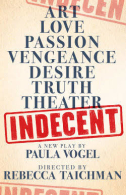
Indecent
Oslo
Sweat

Sandra: Sweat won the Pulitzer, but Doll's House got better reviews. Oslo could also take this, but I'm leaning toward Hnath's slow-growing hit.

Liz: I'd love to see Indecent win, but that's likely not going to happen. So my hopes fall on Doll's House, though I suspect Oslo will take it.

Wendy: This is an exciting category. It's fun that they're all American and all on Broadway for the first time (though both female playwrights should have been on Broadway long ago!). And it's fabulous that they're all strong nominees. But my vote goes to Sweat.


Revival, Musical
Falsettos
Hello, Dolly!
Miss Saigon


Sandra, Liz, Wendy: An easy one! Duh. Dolly.


Revival, Play
Jitney
The Little Foxes
Present Laughter
Six Degrees of Separation

Sandra: Present Laughter.

Liz: Can it please go to Jitney? I loved everything about that production--even though when I saw it, a senile old man sitting next to me mumbled and cursed under his breath through the entire first act, so I had to move. If a mumbly dude who's only half in his right mind can't totally derail a show for me, then believe me, it's a really fucking good show that deserves prizes.

Wendy: The Little Foxes.


Book of a Musical
Come from Away (Irene Sankoff and David Hein)
Dear Evan Hansen (Steven Levenson)
Groundhog Day (Danny Rubin)
Natasha, Pierre & the Great Comet of 1812 (Dave Malloy)

Sandra, Wendy, Liz: Steven Levenson.


Score
Come from Away (Irene Sankoff and David Hein)
Dear Evan Hansen (Benj Pasek and Justin Paul)
Groundhog Day (Tim Minchin)
Natasha, Pierre & the Great Comet of 1812 (Dave Malloy)

Sandra, Liz, Wendy: Hansen
Liz: This for me usually has less to do with quality than with ear-worminess, and lately, I cannot get "Sincerely Me" out of my head for more than an hour at a time, and when it goes away, it's only so "So Big/So Small" can get in there for a while to take a turn tormenting me. So there you have it.


Actor, Play
Denis Arndt, Heisenberg
Chris Cooper, A Doll's House, Part 2
Corey Hawkins, Six Degrees of Separation
Kevin Kline, Present Laughter
Jefferson Mays, Oslo

Sandra: Kevin Kline. It's his Fish Called Wanda moment....but on Broadway!

Liz: Oh, MAN what a revelation Denis Arndt was. Truly a magnificent performance that came and went too quickly and too early in the season. Would but that a huge upset be in order for this one. If not, though, whatever, they're all fine, yay to whoever wins.

Wendy: Chris Cooper.


Actress, Play
Cate Blanchett, The Present
Jennifer Ehle, Oslo
Sally Field, The Glass Menagerie
Laura Linney, The Little Foxes
Laurie Metcalf, A Doll's House, Part 2

Sandra: Laurie Metcalf. She deserved a Tony, as well, for The Other Place. She'll get it this year.

Liz: I too suspect--and hope very much--that it'll go to Laurie Metcalf.

Wendy: Laura Linney.


Actor, Musical
Christian Borle, Falsettos
Josh Groban, Natasha, Pierre & the Great Comet of 1812
Andy Karl, Groundhog Day
David Hyde Pierce, Hello, Dolly!
Ben Platt, Dear Evan Hansen

Sandra: Josh Groban surprised me with the depth of his performance, but Ben Platt will win.

Liz: If it doesn't go to Ben Platt, we are without a doubt living in the bizarre upside-down world I've secretly suspected we've been stuck in since the November election.

Wendy: Yup, it'll go to Platt.


Actress, Musical
Denee Benton, Natasha, Pierre & the Great Comet of 1812
Christine Ebersole, War Paint
Patti LuPone, War Paint
Bette Midler, Hello, Dolly!
Eva Noblezada, Miss Saigon

Sandra, Liz, Wendy: Bette Midler! Another easy one! But Sandra gives a special shoutout to Denee Benton, who made her feel much the same way Audra McDonald did years ago in Carousel.


Featured Actor, Play
Michael Aronov, Oslo
Danny DeVito, The Price
Nathan Lane, The Front Page
Richard Thomas, The Little Foxes
John Douglas Thompson, Jitney

Sandra: Nathan Lane.
Fun fact: Lane made his Broadway debut in the 1982 revival of Present Laughter!

Liz: Hell if I know with this one, but I'd love to see Thompson take it.

Wendy: Danny DeVito.


Featured Actress, Play
Johanna Day, Sweat
Jayne Houdyshell, A Doll's House, Part 2
Cynthia Nixon, The Little Foxes
Condola Rashad, A Doll's House, Part 2
Michelle Wilson, Sweat

Sandra: Cynthia Nixon, who will edge out the two Doll's House nominees

Liz and Wendy: Condola Rashad.


Featured Actor, Musical
Gavin Creel, Hello, Dolly!
Mike Faist, Dear Evan Hansen
Andrew Rannells, Falsettos
Lucas Steele, Natasha, Pierre & the Great Comet of 1812
Brandon Uranowitz, Falsettos

Sandra and Wendy: Gavin Creel.

Liz: Mike Faist.


Featured Actress, Musical
Kate Baldwin, Hello, Dolly!
Stephanie J. Block, Falsettos
Jenn Colella, Come from Away
Rachel Bay Jones, Dear Evan Hansen
Mary Beth Peil, Anastasia

Sandra: I'm torn here between Jen Colella and Mary Beth Peil.

Liz: Rachel Bay Jones.

Wendy: Jenn Colella.


Scenic Design, Play
David Gallo, Jitney
Nigel Hook, The Play That Goes Wrong
Douglas W. Schmidt, The Front Page
Michael Yeargan, Oslo

Sandra and Wendy: David Gallo.

Liz: Nigel Hook. Why hasn't "Nigel" become popular in the states like "Simon" has? Just wondering.


Scenic Design, Musical
Rob Howell, Groundhog Day
David Korins, War Paint
Mimi Lien, Natasha, Pierre & the Great Comet of 1812
Santo Loquasto, Hello, Dolly!

Sandra, Liz, Wendy: Natasha, Pierre & the Great Comet of 1812. Sandra rightly notes that the brilliantly immersive set is an important part of what makes this musical sing.

Costume Design, Play
Jane Greenwood, The Little Foxes
Susan Hilferty, Present Laughter
Toni-Leslie James, Jitney
David Zinn, A Doll's House, Part 2

Sandra and Liz: David Zinn

Wendy: Jane Greenwood.


Costume Design, Musical
Linda Cho, Anastasia
Santo Loquasto, Hello, Dolly!
Paloma Young, Natasha, Pierre & the Great Comet of 1812
Catherine Zuber, War Paint

Sandra and Liz: Linda Cho. The costumes? Like butter, but not nearly as smeary.

Wendy: Catherine Zuber.

Lighting Design, Play
Christopher Akerlind, Indecent
Jane Cox, Jitney
Donald Holder, Oslo
Jennifer Tipton, A Doll's House, Part 2

Sandra: Jennifer Tipton.

Liz: Christopher Akerlind.

Wendy: Donald Holder.


Lighting Design, Musical
Howell Binkley, Come from Away
Natasha Katz, Hello, Dolly!
Bradley King, Natasha, Pierre & the Great Comet of 1812
Japhy Weidman, Dear Evan Hansen

Sandra, Liz, Wendy: Bradley King.


Direction, Play
Sam Gold, A Doll's House, Part 2
Ruben Santiago-Hudson, Jitney
Bartlett Sher, Oslo
Daniel Sullivan, The Little Foxes
Rebecca Taichman, Indecent

Sandra: Sam Gold. Lots of predictions have Sher winning this one, but I hope they're wrong.

Liz: What Sandra says, but for Ruben Santiago-Hudson.

Wendy: What Sandra says, but for Rebecca Taichman.


Direction, Musical
Christopher Ashley, Come from Away
Rachel Chavkin, Natasha, Pierre & the Great Comet of 1812
Michael Greif, Dear Evan Hansen
Matthew Warchus, Groundhog Day
Jerry Zaks, Hello, Dolly!

Sandra and Liz: No one works with space quite as brilliantly as Chavkin does. She's incredibly deserving for how deftly she fills a huge theater with a piece born in a tiny Off Off Broadway house.

Wendy: Michael Greif.


Choreography
Andy Blankenbuehler, Bandstand
Peter Darling and Ellen Kane, Groundhog Day
Kelly Devine, Come from Away
Denis Jones, Holiday Inn
Sam Pinkleton, Natasha, Pierre & the Great Comet of 1812

Sandra: Andy Blankenbuehler, whose dances were the best part of Bandstand.

Liz: Maybe Pinkleton? No idea on this one.

Wendy: Peter Darling and Ellen Kane.


Orchestrations
Bill Elliott and Greg Anthony Rassen, Bandstand
Larry Hochman, Hello, Dolly!
Alex Lacamoire, Dear Evan Hansen
Dave Malloy, Natasha, Pierre & the Great Comet of 1812

Sandra: Larry Hochman.

Liz and Wendy: Alex Lacamoire.

Wednesday, June 07, 2017

Soot and Spit

JW Guido and Ensemble; Photo: Nina Wurtzel
Five years in the making, Our Voices' world premiere of Soot and Spit at the Ohio Theatre tells the story James Castle, a profoundly deaf man born in 1900, who makes a life of his art despite those seeking to discourage him -- redefining what it means to be disabled: something the production does as well.

Playwright Charles Mee (Obie winner, Big Love), who calls himself "an old crippled white guy" in the program notes, and Kim Weild (director and musical staging)--whose brother Jamie, deaf since birth, has also communicated through drawing--showcase diversity in both topic and casting with the lead role deftly played by deaf actor JW Guido (artistic director for New York Deaf Theatre) and two ensemble members (Karen Ashino Hara and Chris Lopes from "Orange Is the New Black") who have down syndrome. Bent over, curving his back like a Neanderthal, Guido shows Castle as stubborn and caustic, yet relentless in his drive to produce art.

The production offers a landscape view of Castle's life and uses bluegrass music (by John Hartford -- a self-taught fiddle player, with original compositions/orchestrations by Daniel Puccio), dancing and multimedia projections of Castle's artwork to give insight into his silent world. The malleable yet simple set by Matthew Imhoff transforms from Castle's home to his school to picnic grounds easily and becomes a film screen filled with written narration and 150 images (out of nearly 20,000) of Castle's artwork when needed.

Castle, who spent less than five years in school and never learned sign language, used soot from his fireplace and spit to create his art after his family was instructed by his old headmaster "to keep paper, pens, and inks away from him" and to "not to let him spend his time drawing" so he could learn to speak and sign. Mee intersperses local community moments, such as picnics and gunny sack races, amid Castle's childhood and adolescence, creating a palpable link to the artist's isolation in a world that exists around him. Unfortunately, the play lags at times -- especially during the second act where Castle's art comes alive around him -- when scenes become repetitive and difficult to understand. Ultimately, though, Mee educates us in a moving story about this almost forgotten artist whose perseverance inspires as much as his art does.

Produced by The Archive Residency, a collaboration between New Ohio Theatre and IRT Theater. 

Running time: 80 minutes. Through June 17 at New Ohio Theatre (154 Christopher St. in NYC). Performances are Wednesdays through Saturdays at 7:30 p.m. Special ASL interpreted performances for Soot and Spit are on June 8 at 7:30pm & June 10 at 2 pm, with an autism-friendly performance on June 17 at 2 pm.
  
For more information, visit http://NewOhioTheatre.org

Sunday, June 04, 2017

Animal

[spoilers throughout]

Watching Clare Lizzimore’s play Animal is an odd experience. You never quite know what’s going on, because Rachel, the main character, is unraveling, and partially because parts may or may not be real, or symbolic, or hallucinations. Unfortunately, the show—at least at the early preview I saw—doesn’t inspire the audience to spend much energy figuring things out.


(I don’t usually present my opinions as “the audience’s.” However, a lot of people fell asleep during the show. In the first row, an older man kept conking out, and his wife kept waking him up. Sometimes she’d have to nudge him a few times to get him to regain consciousness, and then he'd fall back to sleep anyway. She only gave up when she too fell asleep. It can’t have been fun for the actors.)

So, back to Rachel. She’s tired of taking care of her husband’s mom and actually commits elder abuse. She flirts with a crook who breaks into her home. She refuses to cooperate with her therapist.

Then it turns out that she isn’t really her husband’s mom's caretaker; instead, she has an infant child. The crook who breaks into her home is a hallucination with amazing abs. The therapist is real, but, in order to maintain the play's mystery, Lizzimore has him fail to mention that Rachel has post-partum psychosis until the big reveal at the end. The play would be way more interesting if we knew the diagnosis sooner. As it is, the play varies from boring to vaguely annoying. Only the scenes with the therapist work. (And there’s no way that anyone is letting this woman take care of a kid!)

Rebecca Hall is onstage throughout, talking and talking. It’s an impressive performance, but it’s also a lot of work for little return. Greg Keller as the therapist does a fine job. And the young Fina Strazza, as one of the more interesting hallucinations, gives a poised, subtle performance. The other actors are hard to judge as their roles are odd, at best.

The design is minimal, the lighting is fine, the costumes are appropriate. It’s difficult to judge the direction as it’s difficult to care.

Wendy Caster
(third row, tdf ticket)

Friday, June 02, 2017

In Memory of David Bell

Earlier this year we lost David Bell, respected playwright and Show Showdown cofounder, way too young (he was in his early 40s). If you'd like to read reviews of his play, The Play About the Naked Guy, click here, here, and here. To read a New York Times article on the founding of Show Showdown, featuring David, click here.


Aaron Riccio, an early Show Showdown contributor, has this to say:
David Bell was one of the humblest, most sincere people I ever had the pleasure of meeting, and I didn't even know him nearly as well as others, despite working with him on Show Showdown back in 2006. Back in the earliest days of this blog, we all had different motivations for covering theater, but David's--probably because he was also working as a playwright--came out of a loving and genuine place. He loved theater, and if you were abetting in that, he probably loved you a little, too. My relationship with David was largely professional--or whatever the word is for three guys racing to see the most theater in a calendar year--but it was always a joy to run into him at a performance, to get to hear his unique take on a show. And that, ultimately, is why I'll most miss David: he was a unique voice, taken far too soon.
Rest in peace, David Bell.